
Free Nutritious Meal Budget Deemed Too Large, Agency Ready to Recalculate
The National Nutrition Agency (BGN) is open to cutting the proposed budget for the Free Nutritious Meal (MBG) programme in 2027, which currently stands at Rp270 trillion. The figure is considered too large and will be recalculated as part of ongoing efficiency measures and a restructuring of the programme by the government.
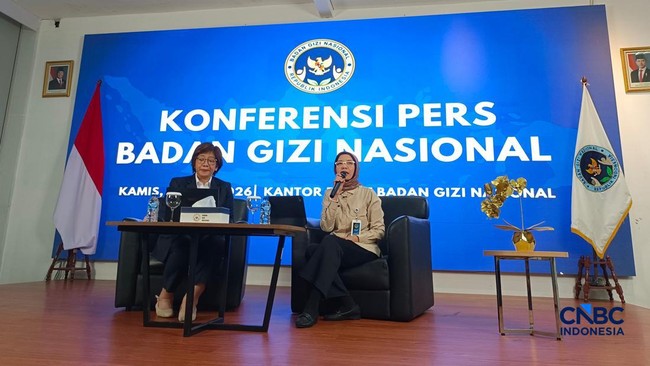
Deputy Head and spokesperson of BGN, Agustina Arumsari, stated that the indicative budget ceiling for 2027 was previously drafted based on an assumption of 81 million beneficiaries. “The 2027 budget is around Rp270 trillion, assuming around 81 million beneficiaries. But again, that was proposed by the previous administration,” Sari said during a press conference in Jakarta on Thursday (18/6/2026).
She explained that the figure is currently being re-evaluated together with the Ministry of Finance. The agency believes the MBG budget requirement can still be reduced through various efficiency measures being prepared. “For now, we consider that, looking at the data generally, or if we compare it with the National Medium-Term Development Plan (RPJMN), it is already far off. The RPJMN figure is not that high,” she stated.
Further discussions with the Ministry of Finance are scheduled over the coming weeks before the finalisation of the state budget for next year. Sari confirmed the agency cannot yet provide an updated budget figure as the evaluation is ongoing, but she reiterated that the Rp270 trillion requirement is deemed too large. The House of Representatives (DPR) has agreed to give BGN one month to restructure the proposal.
The agency targets completing the budget recalculation before the Financial Note and the 2027 Draft State Budget (RAPBN) are submitted by the government in August. Alongside the 2027 budget discussions, BGN is implementing efficiency measures for this year’s programme, including temporarily halting MBG distribution during the school holidays from 22 June to 13 July 2026.
According to Sari, this policy could save more than Rp3 trillion in incentives for the Nutritional Fulfilment Service Units (SPPG). “If we look at the number of operating SPPGs, which is 27,820, multiplied by the daily incentive over 18 days, we can achieve an efficiency of Rp3,004,560,000 on SPPG incentives. That is a significant figure,” she noted.
Additionally, BGN is refocusing MBG beneficiaries. The agency has identified 76 schools on Java Island with a total of 39,352 students deemed capable of meeting their own nutritional needs, thus removing them from the priority list. The budget previously allocated for these groups is planned to be redirected to more vulnerable groups, such as disadvantaged, frontier, and outermost regions (3T), pregnant women, breastfeeding mothers, and toddlers.
Sari also revealed that the 2026 BGN budget ceiling has been adjusted. From an initial ceiling of Rp268 trillion, the budget has been reduced to approximately Rp228.38 trillion following fiscal sharpening measures. “The initial ceiling was Rp268 trillion, then a sharpening of Rp38.25 trillion was applied in the first letter, followed by another Rp1.37 trillion. So, the remaining post-sharpening budget is Rp228.38 trillion,” she said, adding that this figure could decrease further as efficiency and beneficiary refocusing efforts continue.