
Free health screenings in East Jakarta schools frequently detect abnormal blood pressure and anaemia in students
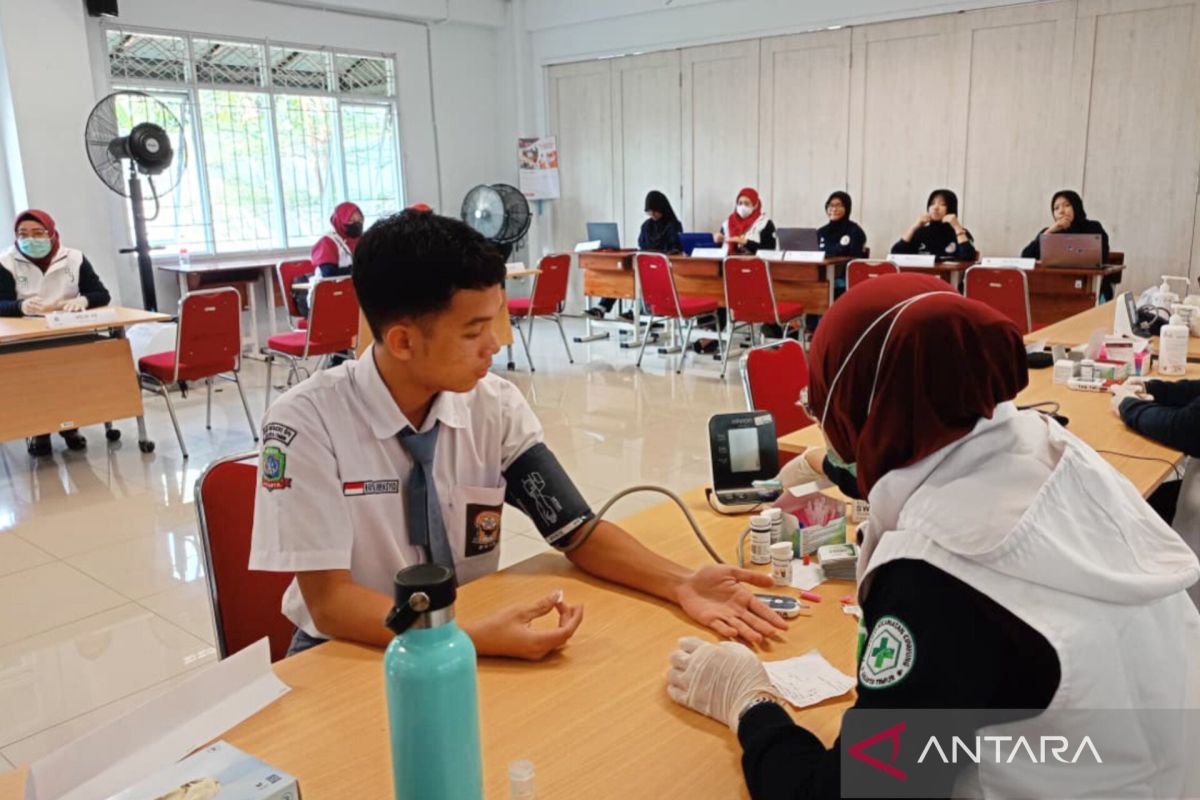
The implementation of the Free Health Screening (CKG) programme in a number of schools in East Jakarta has frequently uncovered problems of students with abnormal blood pressure and adolescents experiencing anaemia or low haemoglobin levels.
“Based on experience, some of the things we have found include blood pressure. Some schoolchildren’s blood pressure is no longer normal, so to speak, perhaps exceeding what is expected for their age,” said Head of the East Jakarta Health Sub-agency Arief Wahyudhy at SMKN 64 Cipayung, East Jakarta, on Wednesday.
These results are still preliminary findings because the series of CKG examinations at the school has not yet been fully completed.
“Based on the experience we have already gained during CKG in schools, because the CKG tests are not yet finished at the moment, perhaps we can recapitulate them by the end of the year,” Arief said.
He mentioned that one finding that has drawn considerable attention is blood pressure among schoolchildren.
During the examinations, a number of students were found to have blood pressure outside normal limits or not in line with the condition expected for their age.
“A number of adolescents were found to have low haemoglobin levels, requiring further attention,” Arief said.
According to him, CKG is not solely aimed at determining students’ health condition at the time of the examination. The programme also serves as a means of early detection of various health problems that may not yet be recognised by the children or their parents.
“Through this health screening, besides detecting, we also provide education on how to prevent it,” Arief said.
One issue that has received attention is anaemia among adolescent girls. The government has long had a programme of providing iron supplement tablets for adolescent girls as one effort to prevent and treat anaemia.
“With this screening, we remind them again how to consume them more regularly, more routinely, and so on, so that problems such as anaemia can be addressed,” Arief said.
“What causes it is our lifestyle patterns. Children nowadays are starting, for example, to consume fast food and so on, in which the nutritional adequacy is lacking, not meeting requirements such as iron and so on,” Arief explained.
Furthermore, he continued, there are also adolescents who follow overly strict diet patterns. If done without paying attention to the body’s nutritional needs, such diet patterns can potentially cause nutritional intake to become insufficient.
Arief therefore hopes that all students will take part in the free health screening programme thoroughly so that students’ health conditions can be fully identified.