
Free Health Screening Programme Reaches 73.8 Million Indonesians by July 2026
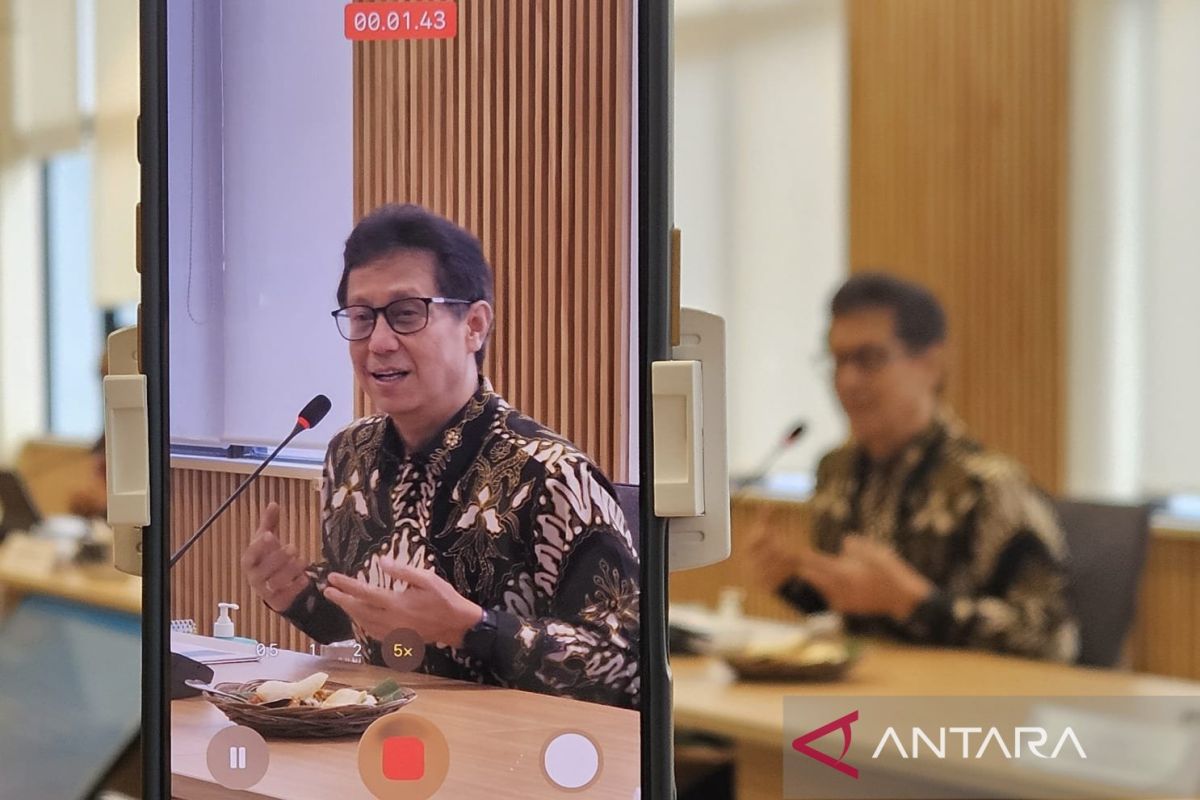
Jakarta (ANTARA) — The Ministry of Health said that as of July 2026, the Free Health Check programme (Cek Kesehatan Gratis, CKG) has reached 73.8 million people, of whom around 62.7 million were screened at community health centres (puskesmas) and in communities, and around 11.1 million children were screened at schools.
Health Minister Budi Gunadi Sadikin said in Jakarta on Tuesday that the figure is part of the 2026 coverage target of 130 million people. CKG in 2026, he said, focuses on follow-up for three health conditions — blood pressure, blood sugar and high cholesterol — as part of efforts to raise life expectancy and healthy life expectancy.
“Indonesia’s (life expectancy) was 72. Now it has risen to 74. By 2029 the target is 76 years,” he said.
Director General of Primary and Community Health at the Ministry of Health, Dr Maria Endang Sumiwi, said that under CKG 2026, coverage has increased across all age groups, with participants this year including 1.5 million newborns and 4.5 million pre-school children.
“We have carried out school CKG, although from the second week of August it will be much larger. For school-age children, coverage is 14.6 million compared with just 33,000 last year. For adults, by July last year it was 12 million; this year it is already 43 million,” she said.
In addition, she said, 9.7 million elderly people took part in CKG this year, compared with only 2.4 million in 2025.
Provinces with the highest coverage, she said, include Gorontalo, Southeast Sulawesi, Central Java, Banten and Lampung.
Regarding follow-up to CKG, she said data from the information systems of three puskesmas show that hypertension management ranges from 43 to 62 per cent.
Although coverage is higher than in 2025, Endang noted that challenges remain, including public ignorance of CKG, reluctance to be checked for fear of the results, or being too busy to find the time.
She also reminded the public to undergo CKG every year, because through the programme one can detect conditions that previously did not exist.
She gave the example that in 2025, around 36 million people did not have diabetes mellitus. Of those 36 million, 8.39 million were re-examined in 2026, and 188,000 of them turned out to have developed diabetes.
At the same event, health expert from the University of Indonesia, Dr Iwan Ariawan, said that if ignorance of one’s health condition is left unaddressed, an estimated 5.9 million cases of hypertension worsening into cardiovascular disease are expected by 2035.
“But with CKG, we can reduce this by 30 per cent. The rest are already beyond help because they already had hypertension before, already uncontrolled before,” he said.