
Free health screening enables early TB detection amid archipelagic geographic challenges
That morning, Doctor Reza was again crossing the waters of Ambon towards Masohi. It was not merely moving from one practice location to another; he made the journey to continue serving patients whose lungs were battling tuberculosis (TB).
Reza Pahlevi Amahoru is a pulmonologist serving patients in Maluku. He practises in Masohi for three days, then spends the following three days in Ambon. That is the rhythm he follows, moving from one island to another according to patient needs.
Having crossed so many times, the doctor born in Central Maluku is no longer a stranger to the staff at the port ticket counters.
“The port ticket officers probably know my face by now because I cross between Ambon and Masohi so often,” Reza said with a smile.
That day, a middle-aged man came to see Doctor Reza complaining of a persistent cough with bloody phlegm and prolonged fever. Armed with a referral letter from the community health centre, he immediately underwent an examination.
Suspecting the patient had tuberculosis, Doctor Reza promptly took action according to procedure. The man sought treatment only after his symptoms had become obvious. Yet not all health problems show signs from the outset. This is why early detection is crucial so that treatment can begin before the disease worsens.
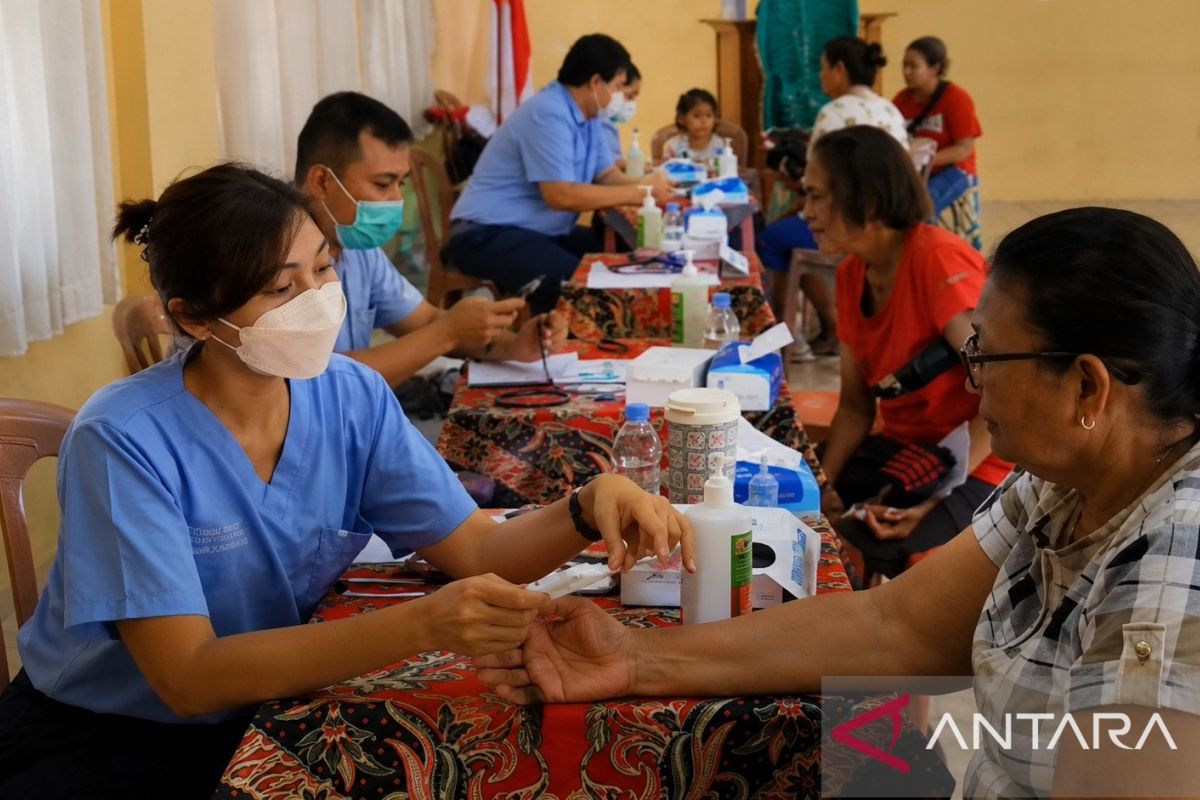
This is where the Free Health Screening Programme (CKG) comes in. Through first-level health facilities, CKG serves as a gateway for the public to monitor their health earlier, including detecting TB risk from an early stage.
“The free health screening programme and other health examination programmes are very helpful in detecting diseases, including tuberculosis,” Reza said.
Finding cases is only the first step. Patients confirmed positive for TB must be treated immediately and monitored until fully cured. TB treatment generally lasts six months, consisting of a two-month initial phase and a four-month continuation phase.
The lengthy treatment period makes patient adherence crucial to ensure the disease is truly resolved.
This challenge becomes even more complex in Maluku, a region that is largely sea and consists of islands. Reza is one of only 14 pulmonologists serving Maluku and North Maluku.
Amid limited medical personnel and geographical challenges of seas and remote islands, Reza and his colleagues take turns serving patients in Ambon and Masohi to ensure treatment is not interrupted.
Through the national programme, anti-tuberculosis drugs are indeed accessible free of charge at community health centres. However, undergoing six months of treatment is no easy matter. Six months may seem short on paper, but for patients who must swallow medication every day, struggle against side effects, and attend regular check-ups, every day is a long struggle.
Interestingly, the challenge often arises precisely when the patient’s condition begins to improve.
The cough subsides, appetite returns, and the body regains strength. The patient then feels cured and stops taking the medication prematurely.
The man who was Reza’s patient apparently did not adhere to his treatment. When examined again after therapy, the results still showed signs of infection.
In such a situation, Reza cannot simply repeat the prescription. The possibility of drug resistance must be confirmed so that the next treatment does not stall.
For Reza, this experience shows that the fight against TB does not stop once a diagnosis is made. Diagnosis must be followed by treatment, treatment must be accompanied by monitoring, and monitoring must lead to a cure.
Because TB that is not treated to completion is not only at risk of continuing to spread. A prolonged infection can also leave permanent damage to the lungs, one of which is bronchiectasis.
Source: jawawa.id (https://jawawa.id/newsitem/free-health-screening-enables-early-tb-detection-amid-archipelagic-geographic-challenges-1787788292)
Originally published by Antara (Indonesian) (https://www.antaranews.com/berita/5712767/ckg-deteksi-dini-tbc-di-tengah-tantangan-geografis-kepulauan), translated from Indonesian