
Free Education Scheme for Public Universities Nears Finalisation as Options Are Considered
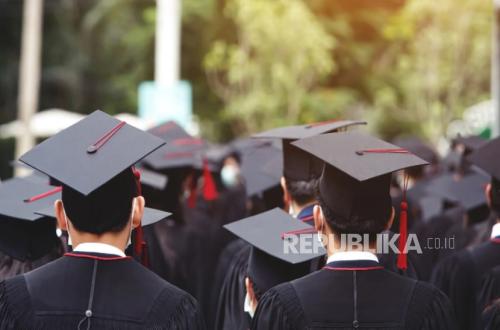
JAKARTA — The Coordinating Ministry for Human Development and Culture (Kemenko PMK) has begun finalising a free education policy covering levels from early childhood education (PAUD) to higher education. The matter was discussed at a ministerial-level meeting on Wednesday (14 October 2026), attended by Primary and Secondary Education Minister Abdul Mu’ti, Higher Education, Science and Technology Minister Brian Yuliarto, and Religious Affairs Minister Nasaruddin Umar.
President Prabowo Subianto had previously said he planned to make public education free, from primary school to university. He made the statement during a speech at the climax of the 28th anniversary celebrations of the National Mandate Party (PAN) at the Plenary Hall of the Jakarta International Convention Centre (JICC) in Senayan on Friday (18 September 2026). “I will soon hold a limited cabinet meeting. In principle, the cost of public education must be free. Public primary, junior secondary and senior secondary schools, as well as public universities, must be free,” he said.
Coordinating Minister for Human Development and Culture Sugiono said efforts were needed to develop the expansion of access to education around three main areas: waiving fees at public schools in stages; responding to a Constitutional Court ruling by extending access to pupils at private schools and religious education institutions; and refining targeted support to secure the right to education for children in disadvantaged, frontier and outermost (3T) regions.
“Free education is a manifestation of our commitment to providing fairness and equal opportunities for all Indonesian children, so that no child is unable to attend school because of financial barriers, or because a school is too far from home,” Sugiono said, as quoted by Republika on Friday (16 October 2026).
To develop a robust implementation roadmap, Sugiono urged all relevant agencies to promptly harmonise regulations and update data-management systems for programme recipients. This was essential, he said, to ensure eligibility criteria were clear and that future assistance was delivered accurately to the intended recipients.
Alongside expanding access for pupils, Sugiono placed particular emphasis on teachers. He said the quality of education services must go hand in hand with teachers’ welfare. Arrangements for the employment conditions and welfare of non-civil-service teachers must therefore be made a priority and formulated alongside the development of the education policy.
“We cannot talk about producing outstanding people while some of our children still lack the opportunity to learn, or while teachers’ welfare is not assured. This coordination is key to ensuring that the policy is ready to implement, measurable and fair to both students and educators,” he said.