
France Deploys Military to Secure Demonstrations
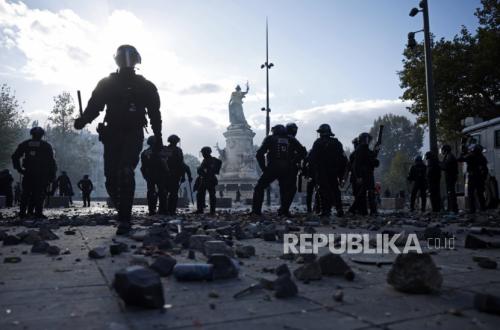
PARIS — The French government is preparing a large-scale security operation involving military personnel to anticipate a new wave of demonstrations on Saturday (24 October 2026). The move follows protests against the high cost of living that ended in rioting and looting in several major French cities last weekend.
Prime Minister Sébastien Lecornu pledged on Tuesday (20 October 2026) to deploy a substantial security force ahead of further demonstrations. The government has also acknowledged shortcomings in its handling of the previous unrest.
Interior Minister Laurent Nuñez said military personnel from Operation Sentinelle would be deployed to help secure the demonstrations. Their presence is intended to relieve police and the gendarmerie—France’s military police—of static guard duties, allowing them to focus on managing crowds and public disorder.
“We will deploy a large number of personnel,” Lecornu told parliament, according to Euronews on Tuesday.
Nuñez said military personnel would take over some guard duties at selected locations. This would give police greater freedom to respond to groups of rioters moving quickly from place to place.
Operation Sentinelle is a military mission launched in January 2015 to protect French territory against terrorist attacks. Around 10,000 military personnel are stationed across the country, including near places of worship, schools, tourist areas, railway stations and airports.
The troops were also involved in security operations for the Paris 2024 Olympic and Paralympic Games.
Nuñez said security forces would change their approach, prioritising rapid response and mobility. The strategy is intended to address the threat posed by small, fast-moving groups that could spark unrest at several locations.
The government is also considering banning demonstrations that have not been notified to the authorities if they are judged likely to disrupt public order. Even demonstrations notified to local authorities could be prohibited if there are strong indications that organisers cannot prevent violence.
Nuñez said, however, that security planning for peaceful demonstrations should take account of routes that avoid government buildings and shopping districts. Authorities would also step up intelligence-gathering to estimate turnout and identify groups considered likely to engage in violence.
The measures follow unrest on Saturday (17 October 2026), when demonstrations against rising living costs turned into clashes, vandalism and looting in several cities.
According to figures from the French Interior Ministry cited by Euronews, around 550,000 people demonstrated across the country, including about 110,000 in Paris.
There was also unrest in Marseille. Some demonstrators broke into the town hall, while businesses in various cities closed or protected their shopfronts in anticipation of looting.
The government previously reported that around 2,400 people had been arrested during the unrest. Security forces also faced criticism for being insufficiently prepared for the large number of demonstrators and the rapid escalation of violence.
The demonstrations have brought together people protesting against the high cost of living and rising fuel prices, as well as students demanding improvements to education.
Economic pressures have further inflamed the political climate amid debate over the state budget and the government’s austerity plans. Some groups say public services and education are not receiving adequate support.
The latest wave of protests has also revived memories of the gilets jaunes, or Yellow Vests, movement that emerged in 2018. It began with opposition to planned fuel tax increases and grew into a symbol of anger over government economic policies and social inequality.
President Emmanuel Macron has called for the right to express opinions to be respected, but said it must not be used to justify violence and destruction.
The government now faces the challenge of restoring order without disregarding the social grievances that have brought people onto the streets. The deployment of troops and the possible banning of demonstrations are part of efforts to prevent unrest from spreading again this weekend.