
FPG MPR RI Demands Constitutional Right to Fair Wages for Contract Teachers
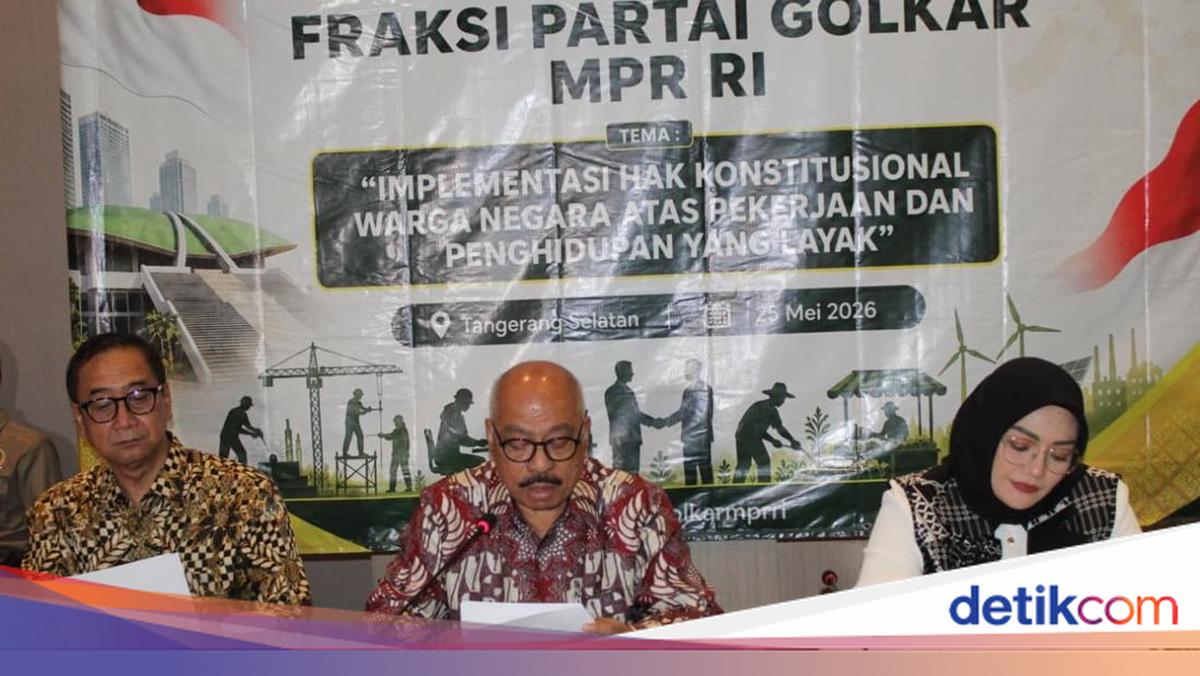
This was discussed at a public forum titled ‘Implementation of Citizens’ Constitutional Rights to Work and a Decent Livelihood’ in South Tangerang, Banten, on Monday (25 May). Attendees from the Golkar Party Faction (FPG) of the People’s Consultative Assembly (MPR RI) included FPG Chairman Melchias Markus Mekeng, Secretary Ferdiansyah, Treasurer Adde Rosi Khoerunnisa, Deputy Chairman Firman Soebagyo, and Deputy Secretary Muhammad Nur Purnamasidi. The controversy was also addressed by experts from relevant ministries, including the Minister of Higher Education, Science, and Technology, Professor Brian Yuliarto, accompanied by the Deputy Minister of Basic and Secondary Education, Professor Atip Latipulhayat, and the Director General of Teachers and Educational Personnel at the Ministry of Education, Culture, Research, and Technology, Professor Dr. Nunuk Suryani. Based on field data and facts analysed by FPG Golkar, FPG MPR RI Chairman Melchias Markus Mekeng identified four key issues in Indonesia’s education sector. ‘First, the paradox of budget allocation versus welfare. Why does the 20% education budget fail to significantly improve the welfare of contract teachers, lecturers, and other educational staff? Where does the budget go if their salaries in regions are only hundreds of thousands per month?’ Mekeng stated in his remarks on Tuesday (26 May 2026). Second, legal dualism, where the unclear status of contract teachers as either workers or educators creates legal loopholes as they are not protected by the Labour Law or comprehensive teacher and lecturer laws. Mekeng also noted obstacles to regional autonomy, leading to ministries shirking responsibility among themselves. ‘Fourth, issues with civil servant (ASN) recruitment. The PPPK scheme often fails to proportionally consider service tenure compared to cognitive test scores alone,’ he said. Mekeng stated that this situation contradicts the fourth paragraph of the 1945 Constitution, which states one of the nation’s goals is to educate the nation’s life. Yet, those who educate the nation should have a decent job and livelihood. ‘The problems of contract teachers, lecturers, and other educational staff—including wages below the living standard, uncertain legal status, and discrimination in civil servant (ASN) recruitment—cast a shadow over our national education system,’ he emphasised. He also highlighted stark discrimination between public and private schools. Furthermore, the constitutional mandate in Article 31(4) of the 1945 Constitution, which requires a minimum 20% education budget from the state budget, does not align with ground realities. Article 27(2) of the 1945 Constitution states that every citizen has the right to work and a decent livelihood. Contract teachers, as citizens, have the fundamental right to wages that support a dignified and decent life,’ he added. Article 28A also asserts that everyone has the right to life and to sustain it, which includes economic welfare protection for contract teachers as educators. Mekeng also cited Article 28D(1), which states that everyone has the right to legal protection, fair legal certainty, and equal treatment under the law. Moreover, Article 28D(2) states that everyone has the right to work and receive fair and decent remuneration and treatment in employment. Numerous strong regulations guarantee the welfare of education workers, including Law No. 20 of 2003 on the National Education System, which states that educators are professionals entitled to income above the minimum living standard and social welfare guarantees. Law No. 5 of 2014, in conjunction with Law No. 20 of 2003 on Civil Servants, governs the civil servant and government employee with contract scheme (PPPK). For FPG MPR RI, education issues are critical and must be addressed immediately. ‘Solving contract teacher issues cannot be left to a single ministry alone; inter-ministerial synergy is needed, particularly between the Ministry of Education, the Ministry of Higher Education, Science, and Technology, the Ministry of Finance, the Ministry of Home Affairs, and the Ministry of Administrative and Bureaucratic Reform. Each has strategic authority to advance the constitutional rights of contract teachers as citizens to work and a decent livelihood,’ he concluded. The event was also attended by the Deputy for Civil Service Human Resources of the Ministry of Administrative and Bureaucratic Reform (PANRB), Aba Subagja; the Minister’s Special Staff for Non-Tax State Revenue at the Ministry of Finance, M. Agus Rofiudin; the Director of Budget Regulation Harmonisation at the Budget Directorate General, Ministry of Finance, Kurnia Chairi; the Head of the Domestic Policy Strategy Agency at the Ministry of Home Affairs, Yusharto Huntoyungo, accompanied by the Head of the Regional Autonomy, General Government Policy, and Law Policy Strategy Centre, Chaerul Dwi Sapta.