
FPG MPR: Low Wages for Lecturers and Contract Teachers Violate 1945 Constitution Mandate
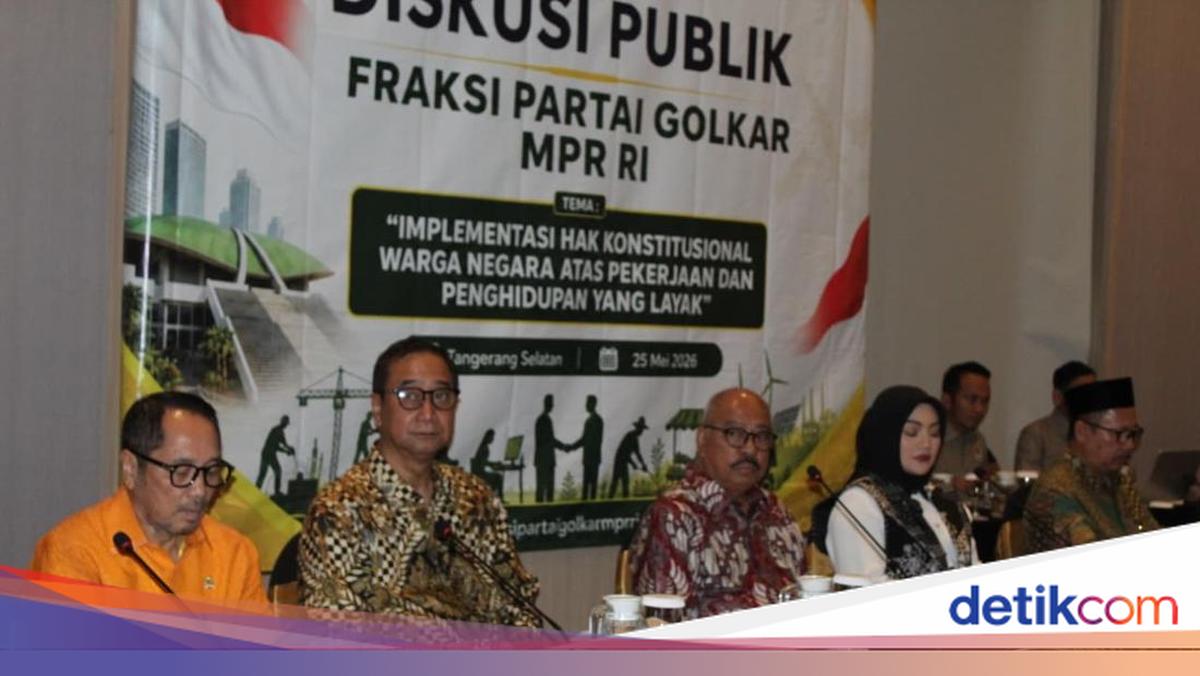
The Golkar Party Faction (FPG) of the Indonesian People’s Consultative Assembly (MPR) has strongly criticised the poor welfare of lecturers and contract teachers despite the constitutional mandate for a 20% education budget from the state budget. FPG argues that the legal uncertainty and low wages of educators have violated constitutional rights guaranteed under the 1945 Constitution. FPG MPR Chairman Melchias Markus Mekeng, M.H., stressed that the 20% national budget allocation for education is a strict constitutional requirement under the 1945 Constitution. This was reinforced by Constitutional Court Decision No. 24/PUU-V/2007 regarding the review of Law No. 20 of 2003 on the National Education System and the 2007 State Budget Law. Additionally, Constitutional Court Decision No. 13/PUU-VI/2008 clarified Article 31(4) of the 1945 Constitution, mandating that national education budget must be allocated at least 20% from the national budget (APBN) and 20% from regional budgets (APBD). ‘This is a binding constitutional mandate that cannot be delayed. While education budgets have increased annually, their allocation has not fully matched their effective use,’ Mekeng stated on Tuesday (26 May 2026). Mekeng made these remarks during a public discussion titled ‘Implementing Citizens’ Constitutional Right to Decent Work and Livelihood’ in South Tangerang, Banten, on Monday (25 May 2026). Mekeng noted that half of the budget is still consumed by central expenditures such as salaries and official education allowances across ministries and agencies, alongside non-essential items not directly related to education delivery. He said this hinders efforts to improve learning quality. ‘As a result, the Ministry of Basic and Secondary Education, Ministry of Higher Education, Science, and Technology, and local governments struggle to accelerate inclusive education quality improvements. This is evident in Indonesian students’ academic test results,’ he added. In response, Deputy Minister of Basic and Secondary Education Prof. Atip Latipulhayat, SH., LL.M., Ph.D., explained that current teacher issues are longstanding problems requiring fundamental regulatory solutions. He highlighted the ambiguous status of teachers, caught between bureaucratic roles as civil servants (ASN) and professional educator expectations. ‘Teachers are in an ambiguous position. Formally, they are civil servants, yet they are also professionals. Consequently, they prioritise administrative duties over substantive teaching responsibilities due to allowance implications,’ Prof. Latipulhayat said. He explained that administrative burdens often divert teachers’ focus from their core teaching duties, ultimately affecting national education quality. Regarding the fate of 548,271 non-civil servant teachers affected by contract staff regulations, Prof. Atip confirmed the ministry issued Education Letter No. 7 of 2026 on the Assignment of Non-Civil Servant Teachers in Government-Run Educational Institutions as a transitional policy until December 2026 to secure their status and salaries. Looking ahead, he proposed restructuring through a ‘teacher talent pool’ to centralise teacher formation and distribution, preventing overlaps in authority between central and local governments. Complementing this perspective, Minister of Higher Education, Science, and Technology Prof. Brian Yuliarto, S.T., M.Eng, emphasised the role of universities as economic drivers towards Golden Indonesia 2045 through the ‘Impactful Campus’ vision. He stressed that universities must be centres for solving community and industry issues, including through research commercialisation to create new jobs. Regarding higher education educators’ welfare, Prof. Brian highlighted the mismatch between the Government Employee with Work Agreement (PPPK) scheme and the characteristics of lecturer roles. ‘After review, PPPK limitations are unsuitable for lecturer positions. Therefore, we see no future recruitment of lecturers under PPPK,’ Prof. Brian stated. To improve qualifications, the Ministry of Higher Education, Science, and Technology now facilitates PhD studies for lecturers without requiring them to leave teaching duties, ensuring their income remains secure. Beyond lecturers, staff and lab technicians are being strengthened through competency programs to make the higher education ecosystem more professional, innovative, and tech-adaptive. The discussion underscored that aligning the 20% education budget allocation with professional and well-compensated educator management is essential to fulfil citizens’ constitutional right to decent work and livelihood.