
FPCI Urges Tangible Action on Renewable Energy Adoption
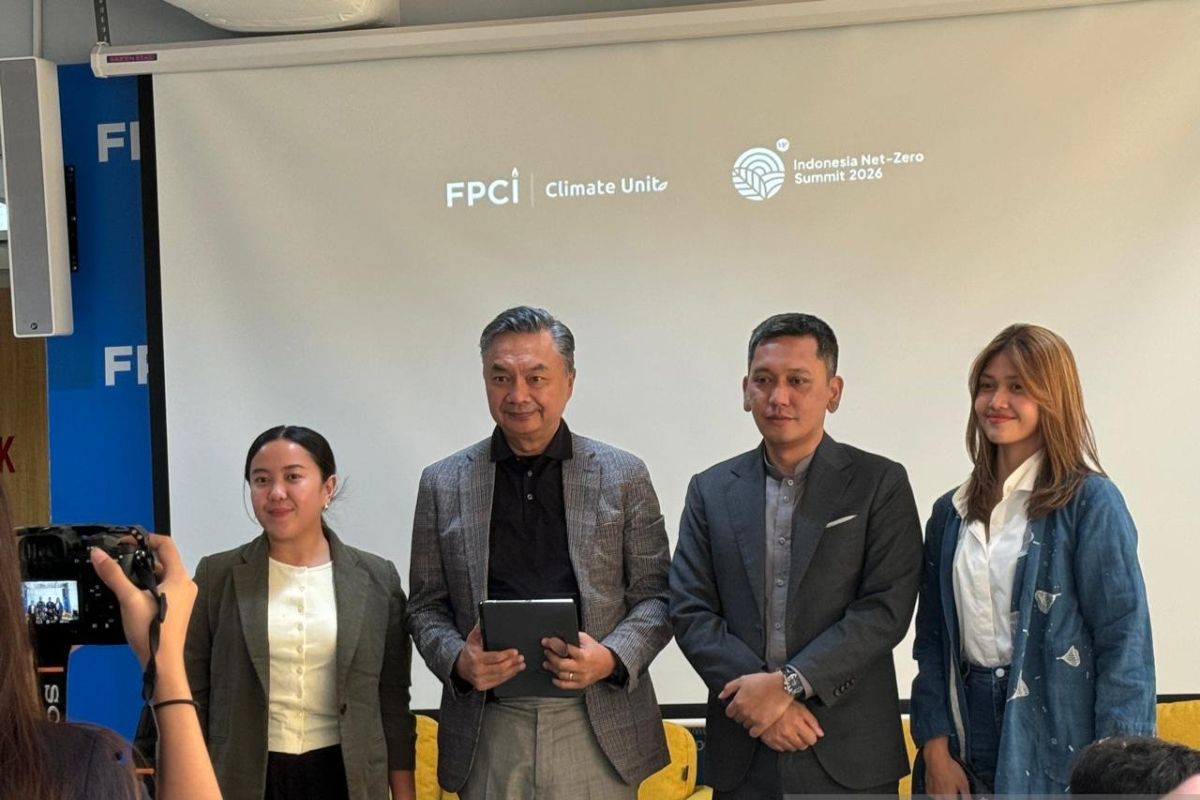
Jakarta (ANTARA) - Dino Patti Djalal, founder of the Foreign Policy Community of Indonesia (FPCI), is urging Indonesia to make real progress in adopting renewable energy, as many other countries around the world have done.
“Pakistan… within five years, rose from 2 per cent to 32 per cent (renewable energy). Brazil is already at 90 per cent (renewable energy), if I’m not mistaken. The increase has been quite drastic,” said Dino at a media briefing in Jakarta on Wednesday.
He also noted that Sri Lanka makes greater use of solar power, whilst Uruguay, which was previously dependent on fossil fuels, is now dominated by renewable energy.
Nevertheless, Dino stressed that this is not enough, because the energy transition from fossil fuels to renewables faces an even greater challenge: implementing the energy transition programme itself.
On 9 July, Indonesian President Prabowo Subianto revealed the government’s plan to build a number of solar power plants (PLTS) with a total capacity of 100 gigawatts within two years.
At the launch of the mandatory B50 programme at the KM 57 Rest Area on the Jakarta-Cikampek Toll Road in Karawang, West Java, the President explained that these solar plants are one way for Indonesia to build energy self-sufficiency while reducing carbon emissions.
Meanwhile, Putra Adhiguna, Managing Director of the Energy Shift Institute, urged Indonesia to focus on realising the use of renewable energy within the next 12 to 24 months.
“Politics in Indonesia sometimes changes — today it’s A, and two years later it has changed… when it comes to the energy transition, there is much we can do quickly… fine, 100 gigawatts, but pay attention to the small things as well. We want to see the needle move,” explained Putra.
At the same event, Novita Natalia Kusumawardani, Co-founder of Bicara Udara, said Indonesia could emulate Thailand, which has excellent coordination between central and city governments in tackling air pollution.
“The coordination between the central government and the city governments works, so the data used can be the same by using the same database, and the calculations are also the same,” said Novita.
In her view, this is something Indonesia could follow, as data in Indonesia is still scattered across various ministries and managed separately, and therefore has not been integrated into a single unified system.
“This can also serve as an example when we want to discuss emissions targets — we also need to look at what data is being used, and the methodology must be the same,” she added.
FPCI will hold the Indonesia Net Zero Summit (INZS) 2026 on 1 August in Jakarta under the theme “It’s Time to Deliver!”.
FPCI said the choice of theme reflects an important moment of momentum, when global and national climate commitments must begin to be translated into concrete action.