
Fourier Discusses the Shift Towards Integrated Systems in AI Infrastructure at Advanced Liquid Cooling Technologies 2026 in Taipei
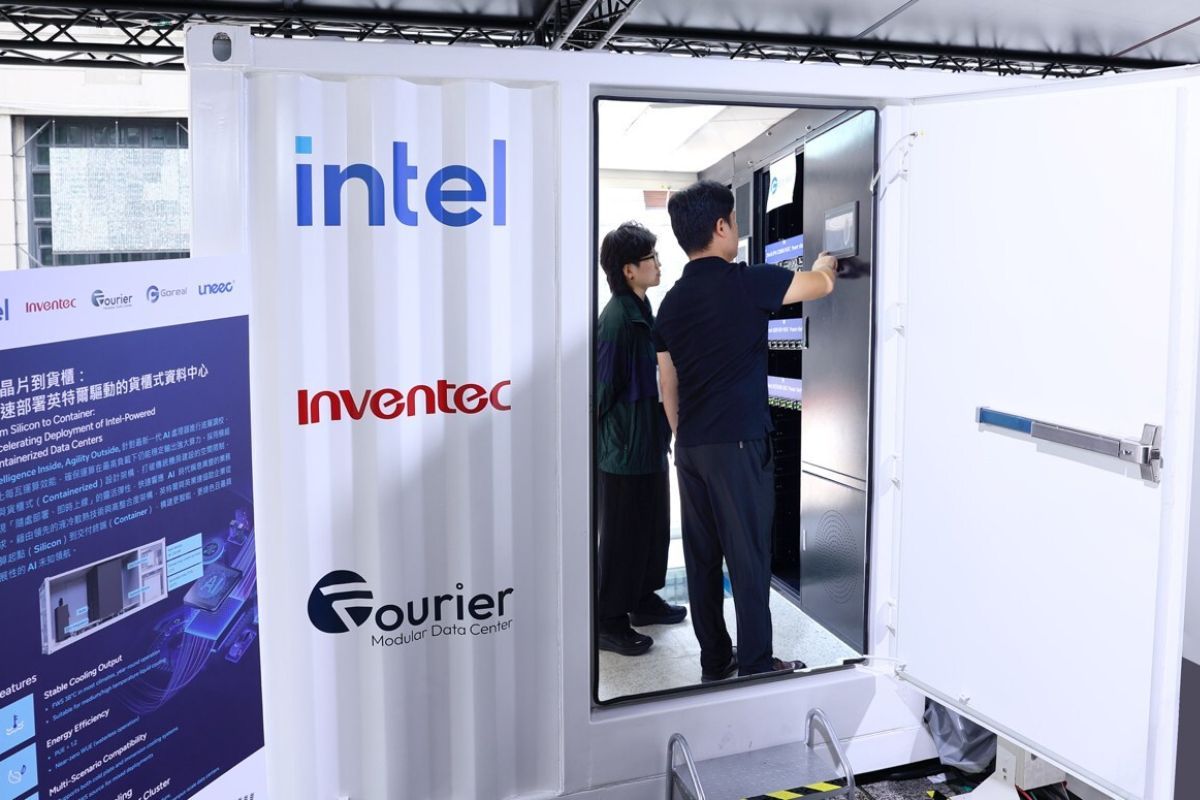
Taipei, (ANTARA/PRNewswire)- Fourier Data Center Solution Inc. (“Fourier”), a modular data center company focused on AI and high-performance computing (HPC) infrastructure, showcased its jointly developed integrated system architecture with Intel at the 2026 Advanced Liquid Cooling Technologies Conference.
The conference agenda highlighted structural changes in how the industry defines AI infrastructure. At the silicon and chip packaging levels, advancements in thermal interface technology continue to push the boundaries of heat transfer capabilities. Meanwhile, at the system level, Intel’s platform-based approach helps ecosystem partners expand their focus from individual components to integrated data center solutions. At the event, Fourier presented a 20-foot containerized modular data center as a complete picture of cooling, power, and computing system integration. The container can also be explored in person, allowing visitors to see the internal layout and operating system integration.
For Fourier, this shift changes the industry’s main challenge. The focus is no longer solely on a single device or subsystem, but rather on how cooling, power, and computing systems can be orchestrated as a unified architecture. Translating thermal innovations into deployable infrastructure is now a key value proposition.
Amidst the rapidly evolving AI infrastructure development cycle, implementation speed is becoming an increasingly important competitive advantage. Delays in compatibility, validation, and direct integration directly impact time-to-revenue. Discussions at the event also reflect the emergence of a more coordinated validation environment, as cooling technologies, power architectures, and system interfaces are aligned within a shared ecosystem to reduce large-scale integration barriers.
This reinforces Fourier’s core principle that implementation speed is the result of comprehensive system integration. Prefabrication, factory-based integration, and standardized modular design are not just engineering strategies, but also ways to accelerate delivery times, reduce on-site uncertainty, and support more scalable high-density infrastructure deployments.
Chief Revenue Officer at Fourier, Justin Cass, discussed the accelerating transition towards modular AI infrastructure, as well as the surge in demand for deployable integrated data center systems. According to him, AI infrastructure is now entering a phase where high density is a key requirement, liquid cooling plays an important role, and system integration determines competitiveness. The market no longer just needs incremental improvements on individual components, but ready-to-use systems that combine computing, cooling, and power into a single architecture that can be consistently deployed across different countries.
Looking ahead, as AI infrastructure evolves globally, industry trends are increasingly moving towards integrated systems and prefabrication. Fourier stated that it will continue to translate system-level innovations into deployable infrastructure, capable of meeting the speed and computing density needs of next-generation applications.