
Four New Rules for Indonesia’s Financial Industry Taking Effect in November: HSC–GWM
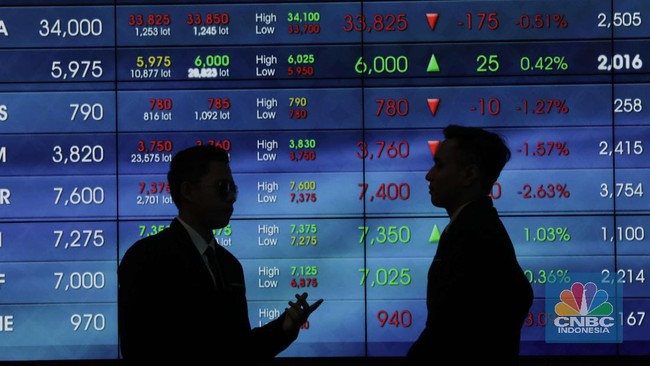
Jakarta, CNBC Indonesia – Several changes are coming into effect in Indonesia’s financial markets and industry in November 2026. They include a revamp of the Jakarta Composite Index (JCI) calculation, changes to stock surveillance mechanisms and a relaxation of bank liquidity rules.
On the stock market, the Indonesia Stock Exchange (IDX) is preparing several adjustments. These include removing shares with highly concentrated ownership from the JCI calculation, changing suspension procedures and leaving the list of shares eligible for short selling empty in November.
Bank Indonesia (BI), meanwhile, is beginning to lower the Statutory Reserve Requirement (GWM) to give banks greater liquidity headroom.
Here are the policy changes taking effect or targeted for implementation in November 2026.
1. HSC shares removed from the JCI
From 2 November 2026, the IDX will exclude 81 shares with high shareholding concentration (HSC) from the JCI calculation.
The policy follows an earlier rule excluding shares in PT Hasona Karya Sentosa (HSC) from the LQ45, IDX30 and IDX80 indices. Some large-cap shares in this category include PT Barito Renewables Energy Tbk (BREN), PT Dian Swastatika Sentosa Tbk (DSSA), PT DCI Indonesia Tbk (DCII) and PT Bayan Resources Tbk (BYAN).
Although excluded from the JCI calculation, the shares will remain tradable. Their removal will not automatically cause the index to fall, as the IDX can adjust the index divisor when its constituents change.
However, the weightings of the remaining shares will be recalculated, potentially increasing their influence on movements in the JCI.
In a simulation by CNBC Indonesia using data as at 20 October 2026, PT Bank Central Asia Tbk (BBCA)’s weighting rose from 8.97% to 9%, while PT Bank Rakyat Indonesia (Persero) Tbk (BBRI)’s increased from 7.78% to 9%.
PT Bank Mandiri (Persero) Tbk (BMRI)’s weighting rose from 5.57% to 6.95%, while PT Telkom Indonesia (Persero) Tbk (TLKM)’s increased from 3.59% to 4.48%.
In total, the combined weighting of the ten largest shares in the simulation increased from 39.83% to 46.79%. This means the remaining large-cap shares will have more influence on the JCI. These figures are based on a simulation and are not the IDX’s final official weightings.
2. IDX to change UMA and share-suspension mechanisms
The IDX also plans to change its stock-trading surveillance mechanism by making less use of Unusual Market Activity (UMA) announcements and share suspensions.
When it detects signs of price manipulation, the exchange will prioritise investigations and action against securities accounts suspected of violations, rather than immediately halting trading in the share as a whole.
IDX President Director Jeffrey Hendrik said the exchange could announce which shares were under investigation, including the relevant trading period and parties involved.
The IDX could also freeze specific securities accounts during an investigation. This would allow trading in the shares to continue and prevent other investors, particularly retail investors, from losing access to transactions. The new mechanism is targeted for implementation in November 2026, following consultations with exchange members.
3. No shares eligible for short selling in November
The IDX has also removed all shares from the list of securities eligible for short selling for November 2026.
Under IDX Announcement No. Peng-00206/BEI.POP/10-2026, dated 28 October 2026, five shares were removed: ASII, BBCA, BRPT, BUMI and INDF.
As a result, no shares will be on the short-selling list in November.
Short selling allows investors to sell borrowed shares in the hope of buying them back at a lower price. The mechanism began a phased introduction on 15 September 2026, after being postponed several times.
The empty list for November does not mean that short selling has been permanently abolished.
The IDX also recorded that 11 shares had been removed from the list of margin-eligible securities: PT Makmur Berkah Amanda Tbk (AMAN), PT Bintang Samudera Mandiri Lines Tbk (BSML), PT Petrindo Jaya Kreasi Tbk (CUAN), PT Bank Oke Indonesia Tbk (DNAR) and PT Dian Swastatika Sentosa Tbk (DSSA).
The other shares are PT Indomobil Sukses Internasional Tbk (IMAS), PT Esta Indonesia Tbk (NEST), PT Brigit Biofarmaka Teknologi Tbk (OBAT), PT Putra Mandiri Jembar Tbk (PMJS), PT Sinergi Multi Lestarindo Tbk (SMLE) and PT Trimegah Sekuritas Indonesia Tbk (TRIM).
4. BI begins lowering the Statutory Reserve Requirement (GWM)
In the banking sector, BI is beginning to lower the Statutory Reserve Requirement (GWM) to strengthen rupiah liquidity.
From 1 November 2026, the GWM for conventional commercial banks will fall from 9% to 8%. For Islamic commercial banks and Islamic business units, it will drop from 7.5% to 6.5%.
The reductions will continue on 1 December 2026, when the respective rates will fall to 7% and 5.5%.
The GWM is the minimum reserve that banks are required to maintain at BI. By lowering the requirement, BI is giving banks more room to manage liquidity and support lending and financing.
5. MSCI to conduct another review in November
Alongside domestic rule changes, Indonesia’s stock market will face a regular MSCI index review in November 2026.
According to MSCI’s timetable, the index review results will be announced on 12 November 2026, with changes to index composition taking effect on 1 December 2026.
The review is being closely watched because changes to index composition can prompt portfolio adjustments by global investors who use MSCI as a benchmark.
The attention comes as MSCI is scrutinising several issues in Indonesia’s stock market, particularly ownership transparency and suspected coordinated trading.
On 15 October 2026, MSCI opened a consultation on the possibility of downgrading Indonesia from Emerging Market to Standalone Market status.
That classification decision is a separate process from the November index review and will be announced no later than June 2027.
Source: jawawa.id (https://jawawa.id/newsitem/four-new-rules-for-indonesias-financial-industry-taking-effect-in-november-hsc-gwm-1793587848)
Originally published by CNBC Indonesia (https://www.cnbcindonesia.com/research/20261102071454-128-781341/ini-4-aturan-baru-di-industri-keuangan-ri-berlaku-november-hsc--gwm), translated from Indonesian