
Four Legal Experts Assert Kerry Riza Should Be Acquitted, Here Is Why
Jakarta – Several legal experts from various universities have assessed that Muhammad Kerry Adrianto Riza, the defendant in an alleged corruption case concerning oil governance and refinery products, should be acquitted.
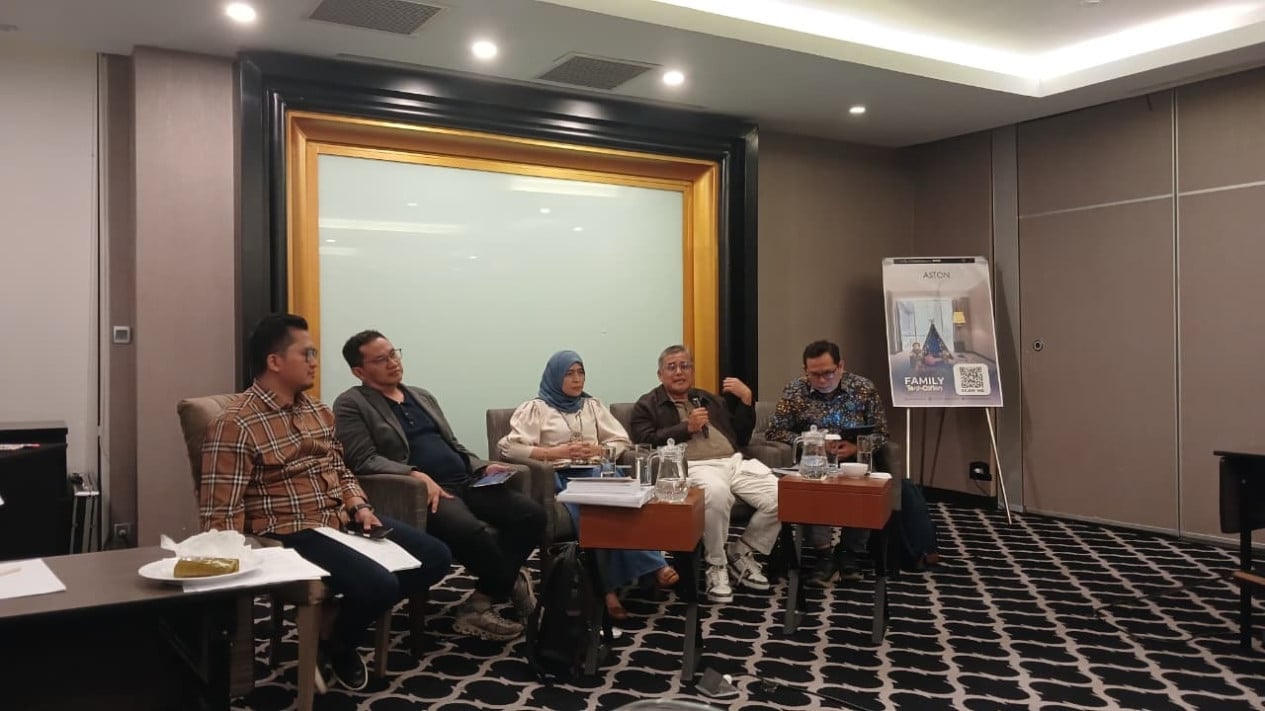
The legal experts contend that the criminal elements charged by the public prosecutor against Kerry Riza have not been proven. This assessment was expressed by UI criminal law professor Topo Santoso, UI legal expert Febby Mutiara Nelson, Muhammadiyah University of Jakarta legal expert Chairul Huda, and Brawijaya University criminal law expert and chairman of the Indonesian Association of Criminal Law and Criminology Lecturers (Asperhupiki) Fachrizal Affandi during a seminar on Kerry Riza’s verdict in Jakarta on Monday, 1 June 2026.
Topo Santoso emphasised that a single unproven criminal element charged against Kerry should be sufficient to secure his acquittal. Moreover, Topo stated that numerous criminal elements remain unproven in Kerry Riza’s case, and therefore the verdict should be acquittal.
“In criminal law it is straightforward – one unproven element is sufficient for acquittal; there is no need for multiple unproven elements,” he stated when asked by moderator Imam Nasef what the verdict for Kerry Adrianto Riza should be.
In his presentation, Topo highlighted several fundamental weaknesses in Kerry Riza’s verdict at the first instance court, or the Jakarta Corruption Court (Tipikor), ranging from the element of unlawfulness, state financial loss, complicity, to causal relationship (causality), which he contended were unproven.
“Even a single unmet element constitutes acquittal, and I concur with what Judge Mulyono stated in his dissenting opinion – several elements were not satisfied: unlawfulness, enrichment of self and corporation, state financial loss, and furthermore the mens rea was absent, not to mention the causality,” he said.
Topo noted that the role of academics is to critique and analyse court verdicts based on applicable legal theory, concepts, and principles. According to him, a case that does not meet the elements of corruption should not be forced into a corruption charge.
“If someone is indeed corrupt – bribing, soliciting bribes, offering gratuities to influence policy and so forth – or extortion in office and the like, then the law applies. However, if there is no corruption, it should not be fabricated as corruption. If it is a civil matter, it should not be elevated into a corruption case. If it is an administrative irregularity or deviation, it should not be stretched into a corruption case,” Topo said.