
Four Key Leadership Traits of the Prophet Required by the Nation
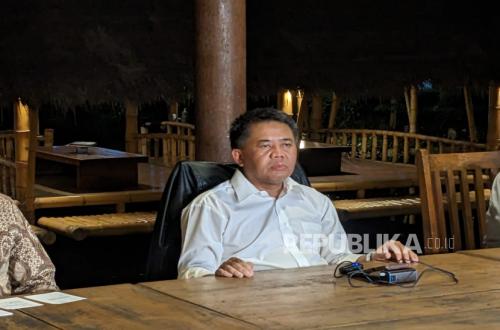
The Chairman of the Shura Council of the Prosperous Justice Party (PKS), Sohibul Iman, has asserted that Indonesia requires leadership capable of transforming the nation’s vast potential into tangible national strength. According to Sohibul, the measure of leadership success is not merely based on the scale of resources possessed, but on the ability to convert that potential into capacity, productivity, and progress.
Sohibul shared this view during a Focus Group Discussion (FGD) on Leadership and National Strategic Environment held by the MPP PKS in Jakarta on Tuesday (15/09/202<0xE2><0x80><0x89>6). He assessed that Indonesia’s current challenges do not stem from a lack of potential, but rather because the real capacity generated does not yet fully reflect the magnitude of its human resources, natural resources, and institutional strength.
“Good leadership is leadership that is capable of multiplying existing potential,” Sohibul stated in a written release. To this end, he believes that leaders must not merely act as administrators who maintain the status quo, but must serve as value creators capable of discovering, organising, and developing the nation’s strengths to foster new capacities.
From an Islamic leadership perspective, Sohibul highlighted four primary characteristics exemplified by the Prophet Muhammad (PBUH): Shiddiq, Amanah, Fathanah, and Tabligh. Shiddiq emphasises the importance of honesty and integrity; Amanah demands responsibility and the ability to uphold trust; Fathanah reflects competence and skill; while Tabligh requires openness, communication, transparency, and exemplary conduct.
According to Sohibul, Shiddiq and Amanah serve as the foundation for preserving and nurturing what the nation already possesses, whereas Fathanah and Tabligh provide the basis for developing new capacities. “Leadership must be able to nurture what already exists and develop what does not yet exist. Therefore, it is not just about maintaining, but also about creating progress,” he said.
He assessed that improving the quality of national leadership must go hand-in-hand with reforming the political system and leadership recruitment mechanisms, ranging from General Elections and Presidential Elections to Legislative and Regional Elections. Democracy must not stop at the mechanism of producing contest winners, but must be capable of producing leaders who are of high integrity, competent, trustworthy, and possess a strong national vision.
Amidst Indonesia’s vast territory and diversity, Sohibul also emphasised the importance of a leadership type capable of building national solidarity. He described this as a ‘solidarity maker leader’—a leader capable of embracing and consolidating various forces, as well as transforming diversity into collective energy for national advancement.
However, he warned that solidarity must not turn into permissiveness. Indonesia needs leaders who can embrace others without losing firmness, be firm without being divisive, maintain stability without causing stagnation, and develop without losing sight of core values. “Ultimately, national leadership must be able to transform Indonesia from a nation of rich potential into an Indonesia with truly strong capacity,” concluded Sohibul.
Source: jawawa.id (https://jawawa.id/newsitem/four-key-leadership-traits-of-the-prophet-required-by-the-nation-1789574269)
Originally published by Republika (https://khazanah.republika.co.id/berita/tlgqtq483/empat-karakter-kepemimpinan-utama-rasulullah-ini-yang-dibutuhkan-bangsa), translated from Indonesian