
Four Key Facts in the PT TPL Transfer Pricing Case Allegedly Costing the State Rp 2 Trillion
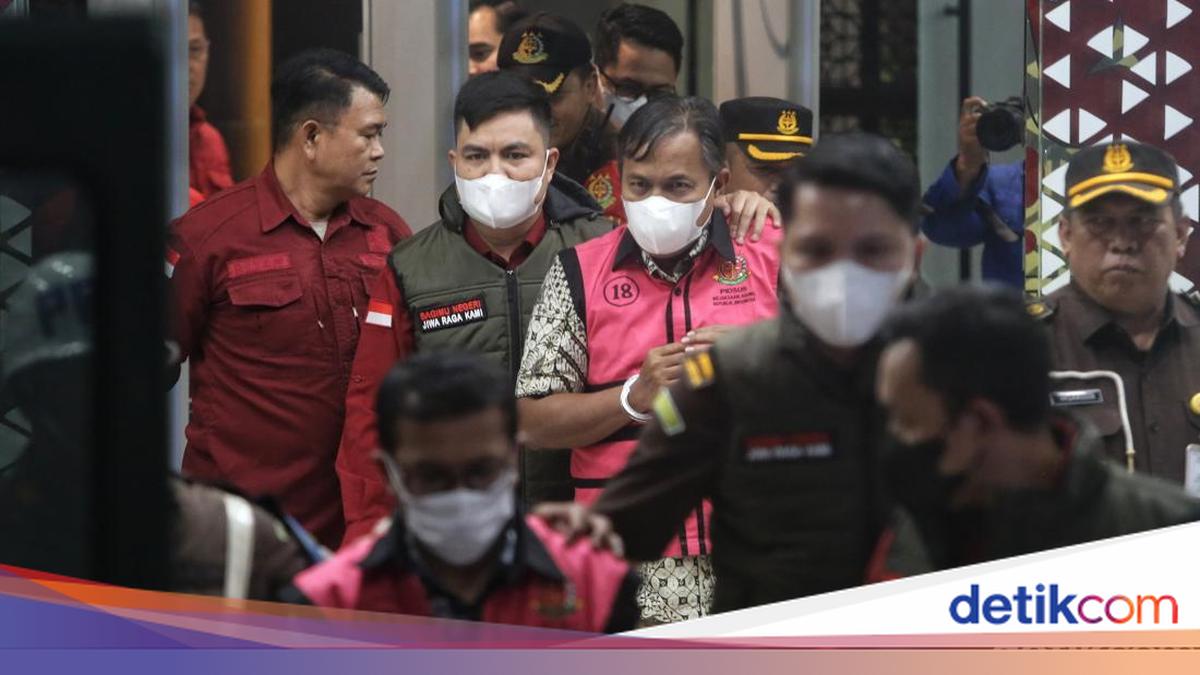
The Attorney General’s Office (Kejagung) has named two employees of the Ministry of Finance’s Directorate General of Taxes as suspects in an alleged transfer pricing corruption case involving PT Toba Pulp Lestari (TPL) Tbk. The case is believed to have been ongoing for years and to have caused state losses running into trillions of rupiah.
Director of Investigations at the Junior Attorney General for Special Crimes, Saiful Bahri Siregar, revealed that the practice was carried out by manipulating export reports for pulp commodities in order to reduce corporate tax liabilities.
- Manipulation of Dissolving Pulp Exports as Paper Grade Pulp
The main modus operandi in this case is under invoicing, or reporting a selling price below its actual value. PT TPL allegedly deliberately reported their export products as paper grade pulp or bleached hardwood kraft pulp (BHKP), when the products actually shipped were dissolving pulp (DP).
BHKP is a raw material for HVS paper, books and tissues, whose price tends to be lower and fluctuates with the global paper market. Dissolving pulp, by contrast, is a premium specialist product for the textile (rayon) and chemical industries that commands a higher selling price due to its cellulose purity.
“The facts obtained show that PT TPL, which operates in the pulp processing and forestry industry, has since 2008 carried out export sales of pulp to its affiliates by means of under invoicing, reporting the product at the export stage from Indonesia as paper grade pulp or bleached hardwood kraft pulp, or BHKP,” said Saiful Bahri at a press conference at the Kejagung Round Building in South Jakarta on Thursday evening (12/8/2026).
“In fact, in terms of characteristics, use and market price, the product is dissolving pulp. The HS (harmonized system) code has actually changed,” he continued.
Saiful said the manipulation was intended to make the reported selling value lower so that the tax paid to the state would also be reduced.
“So that the value of PT TPL’s products is reduced from their actual value, PT TPL has unlawfully, from the 2018-2025 period, reported sales of pulp products as products they are not to PT Asia Pacific Rayon or its affiliated companies,” he explained.
- Two Tax Audit Supervisors for PT TPL Named as Suspects
To facilitate its scheme, PT TPL allegedly colluded with tax officials. The Kejagung has named two tax audit supervisors, with the initials BP and SR, as suspects.
Suspect BP served as supervisor in the tax audit of PT TPL for the 2020 and 2023 tax years, while suspect SR was the supervisor for the 2024 tax year audit. Both are alleged to have deliberately ignored audit procedures to cover up the company’s manipulation.
“Suspects BP and SR, to fulfil the unlawful requests of PT TPL, did not carry out their duties and functions as supervisors, namely supervising, reviewing and examining the audit working papers and audit reports, so that these were not based on the audit programme that had been prepared by the suspects,” Saiful said.
- PT TPL Routinely Gave Money to the Two Tax Supervisors
Based on the investigation findings, PT TPL is known to have routinely given money to the two tax officials. The money was provided so that the tax supervisors would alter the pattern of PT TPL’s tax calculations, making them appear normal despite the manipulation of export prices.
“For these acts, the suspects received sums of money from PT TPL. Every year they made payments to these officials, or suspects, to change the pattern of tax calculations,” Saiful said.
However, he has not yet disclosed details of the amounts received by the suspects from PT TPL. Saiful said his office is still conducting further investigation into the matter.
“The amounts will differ from year to year. They will be revealed in the indictment at trial,” he added.
- State Losses of up to Rp 2 Trillion
The illegal cooperation carried out by PT TPL from 2008 to 2025 has had an impact on state revenue. The reduction in corporate tax that should have been received by the state has resulted in improper losses.
Although the exact figure is still awaiting the official calculation by auditors, Saiful stated that the provisional loss figure based on evidence found during the investigation amounts to Rp 2 trillion.
“The state financial loss in this case is still in the process of being calculated by the audit team, and provisionally, from the results of our investigation, a loss of Rp 2 trillion has been obtained,” said Saiful Bahri.
The two suspects are currently being detained for the next 20 days at the Salemba Detention Centre branch of the Attorney General’s Office. The Kejagung has confirmed that it will continue to investigate the matter.
For their actions, the two suspects are charged under Article 603 or Article 604 in conjunction with Article 20 letter a or c of Law Number 1 of 2023 concerning the Criminal Code, in conjunction with Article 18 of Law Number 31 of 1999 concerning the Eradication of Corruption, in conjunction with Law Number 20 of 2001 concerning Amendments to Law Number 31 of 1999 concerning the Eradication of Corruption.
Source: jawawa.id (https://jawawa.id/newsitem/four-key-facts-in-the-pt-tpl-transfer-pricing-case-allegedly-costing-the-state-rp-2-trillion-1786622036)
Originally published by detikcom (https://news.detik.com/berita/d-8617172/4-hal-diketahui-di-kasus-dugaan-transfer-pricing-pt-tpl-rugikan-negara-rp-2-t), translated from Indonesian