
Four Judges in Pertamina Case Reported to KY and Bawas MA for Oppression
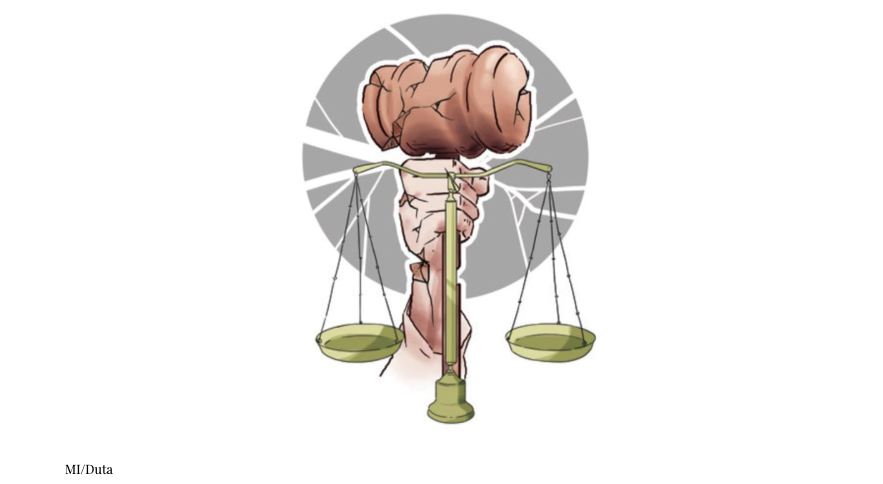
The beneficial owner of PT Orbit Terminal Merak (OTM), Muhamad Kerry Adrianto Riza, has reported four out of five members of the judicial panel that tried the alleged corruption case involving the management of crude oil and refinery products at PT Pertamina (Persero) to the Judicial Commission (KY) and the Supreme Court Supervisory Body (Bawas MA). The four judges reported to the KY and Bawas MA are the panel chair Fajar Kusuma Aji, Khusnul Khatimah, Adek Nurhadi, and Sigit Herman Binaji (member judge). Thus, only the member judge Mulyono Dwi Purwanto was not reported by Kerry to the KY and Bawas MA.
Not only Kerry, but two other defendants in the Pertamina case, namely OTM President Director Gading Ramadhan Joedo and Commissioner of PT Jenggala Maritim Nusantara, Dimas Werhaspati, have taken similar steps.
“Today we are reporting to both institutions. What we are reporting is the judicial panel that tried Kerry’s case, except for the fourth member judge who gave a dissenting opinion, we did not report. But the four others we reported all, both to the KY and Bawas, regarding allegations of ethical code violations committed by the Judicial Panel,” said Kerry’s lawyer, Didi Supriyanto, after submitting the report at the Bawas MA building in Jakarta on Monday (6/4/2026).
Didi said the report was filed by his side because the four judges are suspected of violating the ethical code in the Pertamina trial. Didi even claimed that the four judges have oppressed his client.
“These four judges, based on the evidence we presented in this complaint, have acted oppressively towards the defendants by violating the principles of behaving fairly, with high discipline and professionalism as mandated by the Code of Ethics Guidelines and Judges’ Behaviour Guidelines,” he emphasised.
Didi detailed various alleged ethical violations by the four judges. First, the four judges appeared to force the trial process to exceed reasonable time limits. Even the verdict session on Friday (27/2/2026), which coincided with the month of Ramadan, lasted until around 4:00 AM WIB, entering the pre-dawn fasting time.
“We went until 4:00 AM when it was almost time for the fasting pre-dawn meal during the fasting month, that’s when it finished,” he revealed.
Second, the judges gave very limited time, no more than 30 minutes, to Kerry and his team to read their defence note or plea. Whereas, the plea is a very important matter for the defendants to defend themselves in the trial process. The judges also limited the defendants from presenting mitigating witnesses and experts to only about 7 hours.
“Meanwhile, the public prosecutors took months, almost 5 months, to present witnesses and then experts. These are things we consider unreasonable and also suspected ethical code violations, so we were forced to report to Bawas and KY,” he said.
Didi emphasised that the Judicial Panel should decide a case based on the facts of the trial. However, Didi assessed that the four reported judges decided the Pertamina case only based on the indictment letter and the prosecutor’s demands, without considering the trial results, let alone the defendants’ defences.
“So we consider this the decision is misguided, not in accordance with the facts in the trial,” he said.
Kerry’s other lawyer, Imam Nasef, stated that the four judges were reported to the KY and Bawas MA because they were deemed to have acted oppressively towards his client.
“We assess that these four Judicial Panel members have acted oppressively, towards the three defendants, Kerry, Gading, and Dimas,” he said.
Imam said the four judges acted unfairly and unprofessionally. One of them, Imam highlighted the many errors in writing the verdict decree. In the verdict decree, in writing, the sentence for Kerry is 15 years, but in words it is stated as 13 years.
“Then the most fatal one, in the verdict there are many errors, typing errors, and even the most fatal is in the verdict decree regarding the length of the sentence. So if you look at the verdict decree specifically for Kerry’s verdict, the number is written as 15 years, but in words it is 13 years,” said Imam.
Imam emphasised that the verdict decree is confusing and creates legal uncertainty. Whereas judges are required not to make any errors, no matter how small, especially in the verdict decree.
“If we refer to the judges’ behaviour and ethics guidelines, judges are required not to make any errors, especially related to the verdict decree. This has violated those guidelines, so we hope as mentioned earlier that a thorough examination will be conducted by Bawas and the Judicial Commission,” he said.
Imam hopes that the KY and Bawas MA will follow up on their report thoroughly. Imam also asked the KY and Bawas MA not to hesitate to impose sanctions on the four judges if proven to have violated the ethical code.
“Our hope is of course that it will end with sanctions, although we know precisely that this report will not impact the verdict, but at least it will impact the ethical code sanctions that will be imposed later,” he said.
Imam also hopes that those ethical violations will be corrected by the Jakarta High Court in the verdict related to the appeal filed by Kerry and his team.
“For the verdict, those errors we hope will also be corrected at the appeal level that we are filing now by the appeal panel judges,” he said.
Previously, Kerry and his team had also submitted a letter to President Prabowo Subianto. In the letter, Kerry and his team requested clemency and legal protection from President Prabowo. In addition, Kerry and his team have also submitted a request to Commission III of the DPR to hold a public hearing (RDPU).
“So all the efforts we have submitted are actually