
Four Indonesians Survive Drone Attack on Gas Carrier Aura in the Black Sea
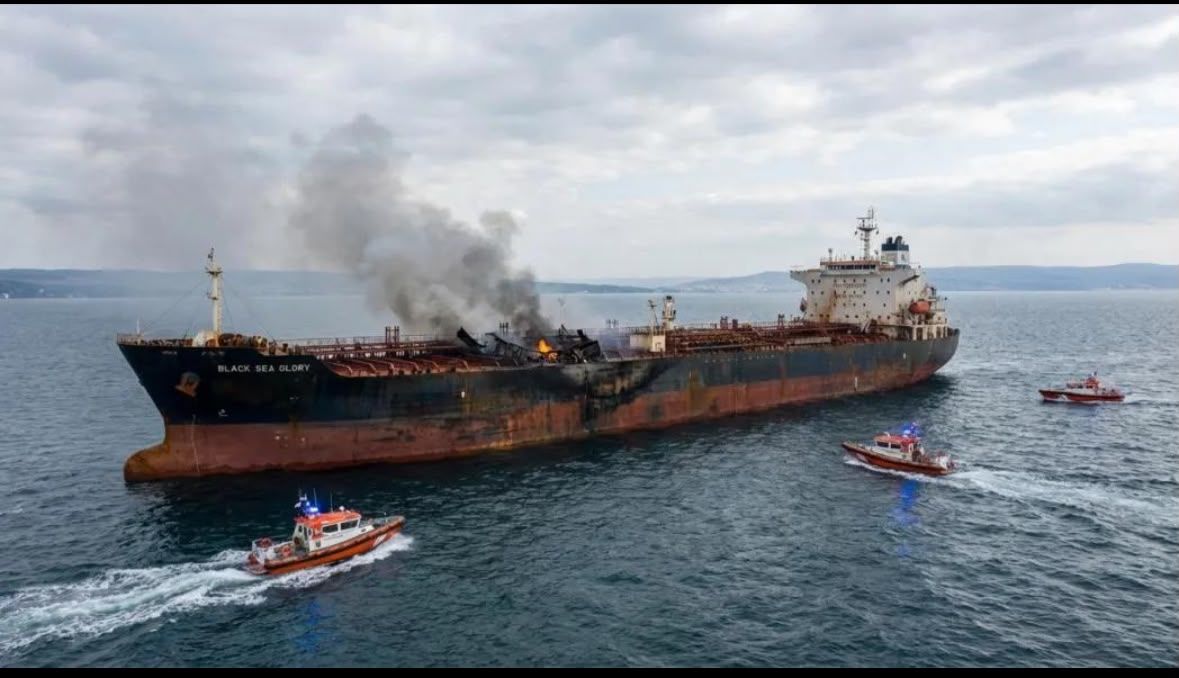
Four Indonesian nationals working as crew members aboard the LPG tanker MT Gas Aura survived a drone attack in the Black Sea near Kavkaz, Russia, on 15 July 2026. The four Indonesians were unharmed in the incident, which caused severe damage to the vessel.
The Indonesian Embassy in Ankara confirmed it has provided assistance and protection to the four crew members since receiving reports of the attack. “The four crew members are confirmed safe and uninjured in the incident,” the embassy stated.
The embassy received the report through its Citizen Protection Hotline on 15 July 2026. Indonesian representatives subsequently coordinated with the crewing agency, the shipowner, the crew members’ families, the Indonesian Ministry of Foreign Affairs, and relevant authorities in Türkiye.
The severe damage to the Gas Aura caused the passports, seafarer’s books, and several important documents belonging to the four Indonesians to be burned or lost. This situation temporarily hampered the process of disembarkation and repatriation of the crew.
To resolve the documentation issue, the embassy facilitated the issuance of Travel Documents in Lieu of Passports (SPLP). Indonesian representatives also communicated with the Ministry of Foreign Affairs of the Republic of Türkiye to obtain immigration facilitation and sent the travel documents to Trabzon.
“We continue to coordinate the repatriation process for the crew members to Indonesia so that it can proceed safely, smoothly, and as quickly as possible,” the embassy said.
On 21 July 2026, the four crew members successfully disembarked from the vessel and were in Trabzon, Türkiye, to arrange their repatriation to Indonesia. The embassy stated it continues to monitor the development of the case.
The Gas Aura is a Panama-flagged LPG carrier. Following the attack, the crew were evacuated to the LPG carrier Gas Nero. Turkish maritime authorities reported that two Filipino crew members who were injured were later transferred from the Gas Nero to a Turkish Coast Guard helicopter off the coast of Sinop on 16 July.
The Gas Nero was also subsequently attacked by a drone while sailing in the Black Sea. The attack triggered a fire in one of the vessel’s forward tanks. Turkish authorities deployed firefighting tugboats to handle the blaze and subsequently directed the Gas Nero to Trabzon for repairs.
The attacks on both vessels add to the risks for commercial shipping in the Black Sea, a region affected by the Russia-Ukraine conflict. Civilian vessels and crews of various nationalities continue to operate along the shipping route despite facing security threats.
Several reports regarding the Gas Aura incident have claimed that the attack was carried out by the Ukrainian military. However, available information does not yet provide independent confirmation of the party responsible for the attack.
Therefore, determining the responsible party must await investigation and verifiable evidence. The Indonesian government also needs to obtain official information regarding the chronology of events to ensure protective measures for Indonesian citizens.
The case demonstrates the importance of protecting Indonesian seafarers working on international commercial vessels, particularly those operating in high-risk areas. In addition to ensuring crew safety, incident handling also includes assistance with travel documents, access to necessary services, and repatriation to Indonesia.
The Indonesian Embassy in Ankara stated it will continue to provide assistance to the four Indonesian nationals and ensure the repatriation process proceeds safely. The Gas Aura incident also serves as a reminder that armed conflict can directly impact civilian workers carrying out economic activities on international shipping routes.