
Four Facts About Disaster Funds at BNPB Becoming a Project-Cutting Racket
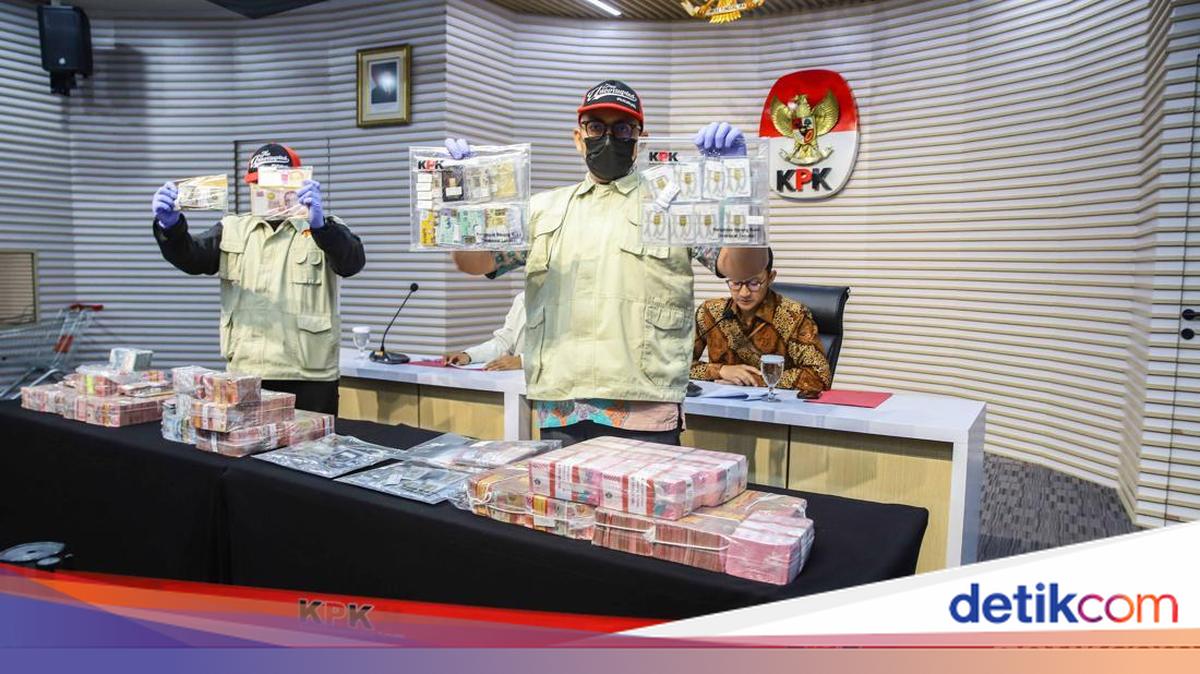
The Corruption Eradication Commission (KPK) has uncovered an alleged bribery case linked to procurement using disaster emergency funds at the National Disaster Management Agency (BNPB). The case is an irony amid the many disasters affecting communities.
The KPK initially named four people as suspects in the alleged bribery involving procurement funded by the disaster emergency allocation. They are suspected of receiving Rp 4.8 billion, 325 grams of gold, and cash in Singapore and US dollars.
Acting Director of Investigations at the KPK, Achmad Taufik Husein, initially said the alleged corruption case at BNPB was divided into two clusters. In the first, the KPK named Bima Setiawan, an expert adviser and younger brother of former BNPB chief Suharyanto, as a suspect in an alleged conflict of interest in procurement using disaster emergency funds.
The people named in the case were:
Gery Prasetiawan, a private-sector figure;
Syifa Nrika Ghifarian, a private-sector figure;
Gabriel Purwaka Sigit, head of the BNPB sub-directorate for aid management and emergency funds, as well as the procurement commitment-making official (PPK);
Bima Setiawan, an expert adviser and younger brother of BNPB chief Lieutenant General Suharyanto; and
Richard Erlangga, an adviser to Suharyanto.
In the second cluster, the KPK suspects that private-sector vendors paid bribes in connection with procurement using disaster emergency funds. Four people were named as suspects in this cluster:
Richard Erlangga (RIC), an expert adviser to the then BNPB chief;
Gabriel Purwaka Sigit (GPS), head and PPK of the BNPB Subdirectorate for Aid Management and Emergency Funds;
Syifa Nrika Ghifarian (SNG), a private-sector figure; and
Gery Prasetiawan (GER), a private-sector figure.
“In the 2026 procurement process, RIC, as an expert adviser to the BNPB chief, allegedly requested a fee from suppliers so that vendors would receive the procurement contracts in question,” Taufik said.
He said PT Trans Lintas Selaras had agreed to pay the fee. The KPK suspects Richard received Rp 2.38 billion in bribes from Gery, the director of PT TLS, between January and September 2026.
“During the same period, GER also allegedly gave Rp 140 million to GPS, head and PPK of the BNPB Subdirectorate for Aid Management and Emergency Funds,” he said.
Gabriel is also suspected of receiving money and goods from a BNPB vendor, including:
Rp 1.7 billion in cash;
US$7,500 (about Rp 133.9 million);
S$9,000 (about Rp 125 million);
56 gold pieces weighing 133 grams; and
gold savings weighing 192 grams.
In total, the alleged bribes in the second cluster amounted to Rp 4.4 billion and 325 grams of gold. Richard has been charged under Article 12(a), Article 12(b) or Article 12(i) of the Law on the Eradication of Corruption.
Gabriel has been charged under Article 12(a), Article 12(b) or Article 12B of the law. Syifa and Gery, as alleged bribe-givers, have been charged under Article 605(1)(a), Article 605(1)(b) or Article 606(1) of the Criminal Code.
1. An irony amid disasters
The KPK is investigating alleged corruption in the use of the disaster emergency fund (DSP) at BNPB. It says the alleged misuse of BNPB’s DSP is an irony at a time when Indonesia is being hit by numerous disasters.
“The alleged corruption in the use of emergency funds is an irony in the circumstances facing Indonesian communities, who are dealing with various disasters and need assistance,” KPK spokesperson Budi Prasetyo said at a press conference at the KPK’s Merah Putih building in Kuningan, South Jakarta, on Friday (16 October 2026).
Budi said an emergency must not be exploited by any party as an opportunity to make a profit. In a disaster emergency, he said, all parties should act in the interests of the public.
“Emergency funds are provided to respond to urgent needs that require a swift and well-targeted response. Their use must also be accountable,” Budi said.
“Because this concerns people’s safety and the necessities of life for the wider community, it must not become a source of easy money for parties seeking personal gain,” he added.
Budi said the KPK supports all government efforts to manage disasters, including ensuring that aid and budgetary support are used effectively for people in need.
He said the emergency fund has a sizeable budget, reflecting the government’s commitment to disaster response and management.
“Enforcement in this case should also be understood as an effort to ensure that government duties are not undermined by alleged corruption committed by individuals,” Budi said.
“Through this enforcement action, the KPK reiterates that disaster management must be wholly oriented towards the public interest, not the interests of certain parties,” he said.
2. Search of former BNPB chief’s office
Acting Director of Investigations Achmad Taufik Husein said searches were conducted over two days, on 14 and 15 October 2026. One of the locations searched was the office of former BNPB chief Lieutenant General Suharyanto.
“Several BNPB officials’ offices have been searched, including the head of the agency’s office, as well as offices in the deputy-level directorates and several procurement offices, including the office of GSP as PPK,” Taufik said at a press conference at the KPK’s Merah Putih building in Kuningan, South Jakarta, on Friday (16 October 2026).
3. Corruption proceeds allegedly used to buy shares
Achmad Taufik Husein said Bima was suspected of involvement in a conflict of interest because he was affiliated with several vendors in direct-appointment procurement. He said Bima allegedly used funds from the procurement to buy shares in another company.
“In the use of BNPB’s DSP for the procurement in question, funds channelled to a company affiliated with BMS were used for personal purposes, including the purchase of shares in PT MDLA (PT Medela Potentia) by PT AVE (Alfa Veritas Energizer),” Taufik said.
“PT AVE’s shareholding amounts to 150.4 million shares (1.07 per cent), valued at Rp 206 per share as of 13 October 2026, or Rp 30.98 billion,” he added.
Taufik said the DSP is a government reserve set aside for use in disaster emergencies. Its disbursement is flexible, but must meet one of four conditions.
“The first is the declaration of a state of emergency; this is the first criterion for disbursement of the DSP,” Taufik said.
The second is the declaration of a specific emergency status. The third is an assessment by the BNPB chief that a disaster poses a significant risk. The fourth is a need to provide humanitarian assistance abroad.
He said the DSP had been used to respond to several disasters in Indonesia, including forest and land fires in Kalimantan and Papua, a major earthquake in East Nusa Tenggara (NTT), and floods in Aceh and Sumatra.
BNPB had selected a number of suppliers for goods and services through direct appointments under a collaborative work plan (RKK), he said. This was intended to enable procurement to be carried out quickly once a disaster emergency had been declared.
“This includes using the DSP as a supporting budget allocation,” he said.
4. Probe into former BNPB chief’s role
The KPK is coordinating with the Indonesian Military’s Military Police Centre (Puspom TNI) in its investigation into alleged corruption involving BNPB’s disaster emergency funds. As part of the coordination, the KPK has explained former BNPB chief Lieutenant General Suharyanto’s position to Puspom TNI.
“When the case was presented, his position was also explained to our TNI colleagues who attended on the 13th and, in greater detail, on the 14th. Investigators from the relevant unit were also present, and the status of the KPK’s case handling was explained,” Taufik said.
“We have examined the role of the younger brother, gathered several pieces of supporting evidence, and are convinced that this also involves a state official within BNPB,” he added.
Taufik said the KPK had also explained to Puspom TNI the charges applied to the suspects, including Article 12(i) of the Corruption Law, which concerns conflicts of interest involving state officials within BNPB.
“We explained to Puspom TNI that suspects had been named and the case had moved to the investigation stage. It was established that the KPK’s authority to investigate corruption offences requires the involvement of a state official,” Taufik said.