
Four defendants in LPEI corruption case face sentencing today
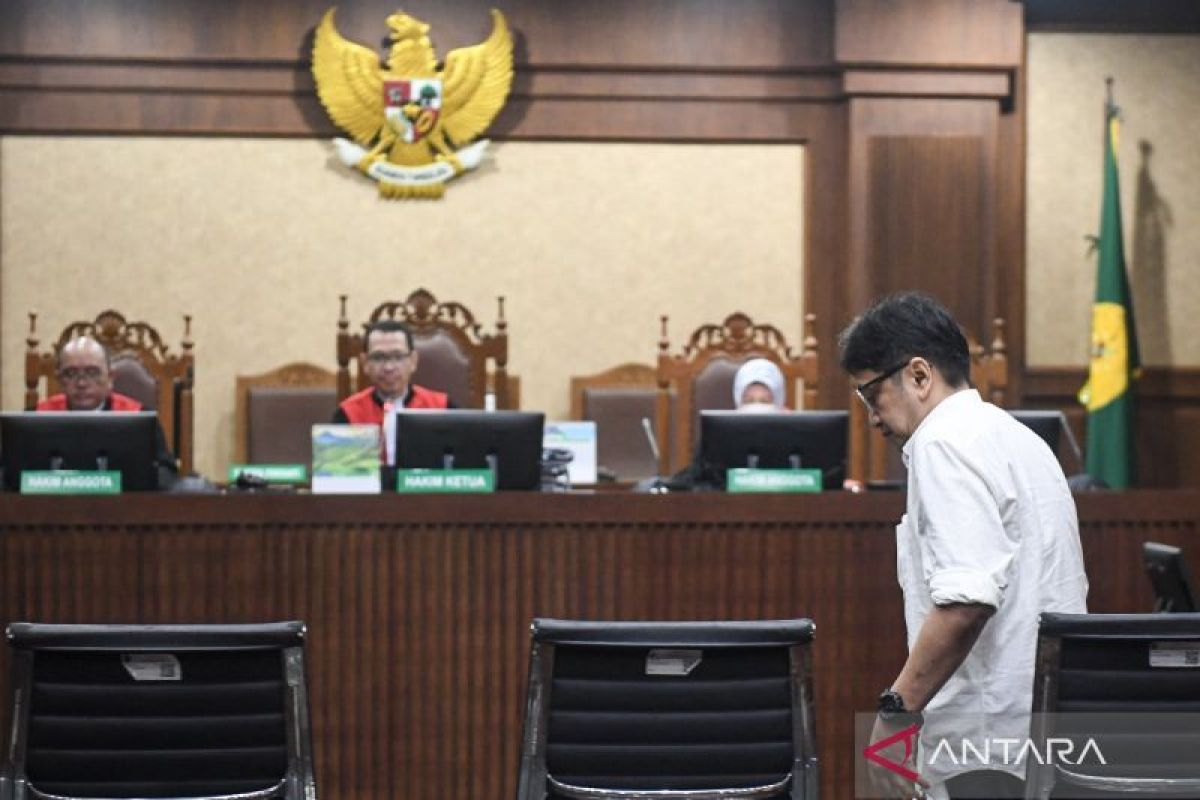
Jakarta (ANTARA) - Four defendants in the alleged corruption case involving national export financing by the Indonesia Export Financing Institution (LPEI) for the 2015–2023 period are undergoing their sentencing hearing at the Corruption Court of the Central Jakarta District Court on Tuesday.
The four defendants are Dwi Wahyudi, former Managing Director I of LPEI for the 2009–2018 period; Ryan Wahyudi, former Sharia Financing Relation Manager I at the LPEI Sharia Financing Department for the 2015–2018 period; Liu Raymond, Director of PT Tebo Indah (TI); and Handoko Limaho, the beneficial owner of PT TI and PT Pratama Agro Sawit (PAS).
“Ryan Wahyudi et al. (LPEI case), agenda: verdict,” said Andi Saputra, Spokesperson for the Central Jakarta District Court, to reporters.
According to the Case Tracking Information System (SIPP) of the Central Jakarta District Court, the hearing was scheduled for 10:00 WIB in the Muhammad Hatta Ali courtroom, presided over by a panel of judges led by Edward Agus.
In this case, the four defendants are accused of causing state losses of approximately Rp992.82 billion. Consequently, Dwi Wahyudi and Ryan Wahyudi have each been sentenced to 8 years and 6 months in prison, respectively. Meanwhile, Handoko faces a 11-year prison sentence, and Liu Raymond faces 13 years.
The four defendants are also required to pay a fine of Rp1 billion each, with a provision that failure to pay will result in an additional 190 days in prison.
Specifically for Handoko and Liu, prosecutors have demanded additional penalties in the form of restitution payments of Rp346.47 billion and Rp646.35 billion, respectively. Should these payments not be made, Handoko faces an additional 5 years and 6 months in prison, while Liu faces 6 years and 6 months.
The defendants are alleged to have participated in a series of interconnected criminal acts, viewed as a continuous unlawful act intended to enrich Handoko Limaho and Liu Raymond.
The actions began when Handoko and Liu applied for financing facilities using feasibility study documents and asset valuation reports from a Public Appraisal Office (KJPP) which, according to the indictment, listed oil palm plantation areas that did not match actual conditions.
Handoko and Liu are also accused of using fiduciary deed documents for inventory and accounts receivable that did not align with audited financial statements, and of applying for the disbursement of financing facilities using supporting documents consisting of fictitious invoices and contracts.
For their actions, the four defendants face criminal penalties regulated under Article 603 or Article 604 in conjunction with Article 20 letter c of the National Criminal Code, in conjunction with Article 8 of Law Number 31 of 1999 on the Eradication of Corruption Crimes, as amended by Law Number 20 of 2001.