
Four Criteria for National Electric Motorcycles According to Coordinating Ministry for Economic Affairs
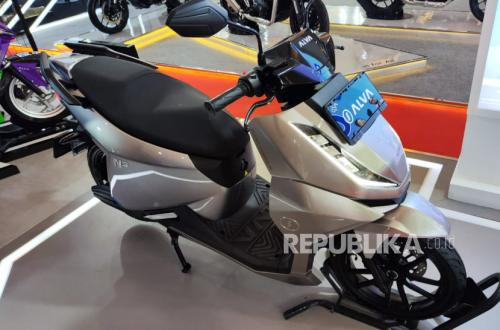
The Coordinating Ministry for Economic Affairs has revealed four criteria that must be met for a vehicle to be included in the National Electric Motorcycle (Molinas) category. These requirements are directed at strengthening the electric vehicle ecosystem while enhancing the competitiveness of domestic industry.
The four Molinas criteria are: local content (TKDN) above 60 percent, including in main components such as the power train, frame/structure, plastics, and body panels; design and engineering developed domestically; use of nickel-based batteries to support national downstreaming; and an affordable price suited to the domestic market.
Assistant Deputy for Industrial Development at the Coordinating Ministry for Economic Affairs, Atong Soekirman, said the four criteria must be met simultaneously by motorcycles entering the Molinas category. According to Atong, the development of Molinas is not only focused on the vehicle product but is also directed at building national industrial capability in design, engineering, manufacturing, technology, and supply chains.
“The main focus of Molinas is to build domestic capability in design, engineering, manufacturing, technology, and supply chains,” Atong said in Jakarta on Thursday.
He assessed that opportunities for developing national electric motorcycles remain wide open because the number of conventional motorcycles in Indonesia has reached 145.25 million units. Meanwhile, the number of electric motorcycles as of December 2025 has only reached 229,554 units.
The government estimates that demand for electric motorcycles will continue to increase in the coming years. By 2028, total demand for electric motorcycles is projected to reach 1.5 million units.
“Total demand for electric motorcycles in 2028 is estimated to reach 1.5 million units,” Atong said.
In addition to encouraging the use of electric vehicles, the Molinas Programme is also projected to have an economic impact. The government estimates that the programme can save fuel oil (BBM) subsidies amounting to Rp82.2 trillion in the 2027–2037 period, assuming 11 million electric motorcycles are in operation by 2037.
The Molinas ecosystem is also estimated to generate economic value of up to Rp150 trillion throughout 2026–2031. The programme has the potential to create around 215,000 jobs in the manufacturing, components, battery, and charging infrastructure sectors.
Atong added that the development of Molinas can also help strengthen the trade balance through oil import substitution estimated at Rp45 trillion.
Previously, President Prabowo Subianto inaugurated the National Electric Motorcycle and its supporting ecosystem at the production facility of PT Ilectra Motor Group (ALVA) in Cikarang, Bekasi Regency, West Java, on Thursday (13/8/2026).
“Bismillahirrahmanirrahim, on this afternoon, Thursday, 13 August 2026, by the grace of Almighty God, I, Prabowo Subianto, President of the Republic of Indonesia, officially launch the national electric motorcycle and its supporting ecosystem,” Prabowo said at the Molinas launch event in Cikarang.
At the event, Prabowo was accompanied by a number of ministers and business representatives, including industry players who have mass-produced electric motorcycles in Indonesia.
Source: jawawa.id (https://jawawa.id/newsitem/four-criteria-for-national-electric-motorcycles-according-to-coordinating-ministry-for-economic-affairs-1787298812)
Originally published by Republika (https://ekonomi.republika.co.id/berita/tk3yvj348/empat-kriteria-motor-listrik-nasional-menurut-kemenko-perekonomian), translated from Indonesian