
Four Countries Whose National Anthems Have No Lyrics
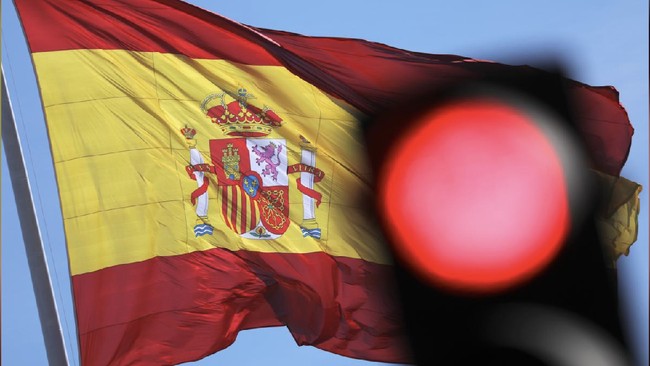
National anthems generally have lyrics reflecting a country’s history, identity and spirit of unity. However, not all national anthems have words.
Four countries officially have national anthems that are purely instrumental: Spain, San Marino, Bosnia and Herzegovina, and Kosovo.
World Atlas reports that each country has different reasons for keeping its anthem without lyrics. These range from a long history and differences in ethnic and linguistic identities to political considerations; the absence of words has become a way to preserve the meaning of unity.
Although various efforts have been made to add lyrics, none has resulted in an official text being adopted to date.
- Spain: Marcha Real, a national anthem since the 18th century
Marcha Real, meaning “Royal March”, is one of the world’s oldest national anthems still in use. Its music was recorded in a Spanish military handbook in 1761 and was officially designated Spain’s March of Honour by King Charles III on 3 October 1770.
Despite being used for centuries, the anthem has no official lyrics. One reason is the difficulty of reaching agreement on words that could represent all Spaniards, including communities with distinct cultural and linguistic identities, such as Castilians, Catalans, Basques and Galicians.
Several attempts have been made to add lyrics. Eduardo Marquina wrote one version during the reign of King Alfonso XIII, while José María Pemán composed another in 1928, which was later associated with Francisco Franco’s regime. Neither version was ever officially adopted as the national anthem’s lyrics.
The most recent attempt took place in 2007–08, led by the Spanish Olympic Committee. After receiving about 7,000 public submissions, a jury selected lyrics written by Paulino Cubero.
The plan attracted widespread attention but also drew opposition from Catalan and Basque nationalist groups, which objected to the message in the lyrics. In January 2008, the Spanish Olympic Committee cancelled the plan after no consensus could be reached.
Since then, Marcha Real has continued to be played without words.
- San Marino: Terra di Libertà, given an official name in 2025
San Marino adopted its national anthem in 1894. The music was composed by Italian composer and violinist Federico Consolo, based on a 10th-century hymn.
For more than a century, the composition had no official title and was known simply as the national anthem of the Republic of San Marino.
On 26 September 2025, the government of San Marino finally gave it the name Terra di Libertà, meaning “Land of Freedom”. The title is taken from the opening of unofficial lyrics written by Giosuè Carducci, the Italian poet who won the Nobel Prize in Literature in 1906.
Carducci’s lyrics have been taught in some San Marino schools and are sometimes sung informally. However, the text has never been adopted as part of the official national anthem.
The 2025 change of name therefore did not alter the anthem’s status. At state ceremonies, football matches and other official events, Terra di Libertà is still played as an instrumental piece.
Unlike other countries facing political or linguistic divisions, San Marino has kept its anthem without lyrics because the words that were written were never officially adopted.
- Bosnia and Herzegovina: Intermeco and the challenge of unity
The current national anthem of Bosnia and Herzegovina was composed by Dušan Šestić in 1998 and officially adopted by the country in 2001.
It is widely known as Intermeco, although its official name is simply the national anthem of Bosnia and Herzegovina. It replaced Jedna si jedina, which had drawn objections from some members of the Serbian and Croatian communities because it was considered to reflect Bosniak identity too strongly.
From the outset, the new anthem was designed without lyrics to avoid identity-related disputes in a society comprising three main ethnic groups: Bosniaks, Serbs and Croats.
An attempt was made to add lyrics. In February 2009, a parliamentary commission received a draft written by Šestić and Benjamin Isović. One of its main messages was a call to move together towards the future.
However, parliament never approved the draft. One issue was that it did not mention the country’s two constitutional entities, the Federation of Bosnia and Herzegovina and Republika Srpska, or its three main ethnic groups.
A further effort in 2016–18 also came to nothing. As of 2026, the national anthem of Bosnia and Herzegovina still has no official lyrics.
- Kosovo: Europa, chosen to embrace diverse communities
Kosovo adopted its national anthem, Europa, on 11 June 2008, several months after declaring independence from Serbia on 17 February 2008.
The anthem was composed by Mendi Mengjiqi and selected through an open competition. The decision to leave it without lyrics was deliberate, so that it could represent Kosovo’s population, which comprises diverse linguistic and ethnic groups.
Most people in Kosovo speak Albanian, while other communities use Serbian, Bosnian, Turkish, Romani and other languages. Writing lyrics in any one language could risk creating the impression that one group was being given priority over others.
Before Kosovo had its own national anthem, Albania’s anthem, Himni i Flamurit, was widely used at informal events. Some people in Kosovo still sing it at sporting events and civic activities.
Europa, meanwhile, is used in international competitions, including sporting events organised by FIFA.
By choosing an instrumental composition, Kosovo has sought to make its national anthem a shared symbol not tied to any particular linguistic group.