
Fortifying the Coast for 30 Years: Bangka Belitung Officially Begins Drafting the Provincial RPPEM 2026-2055
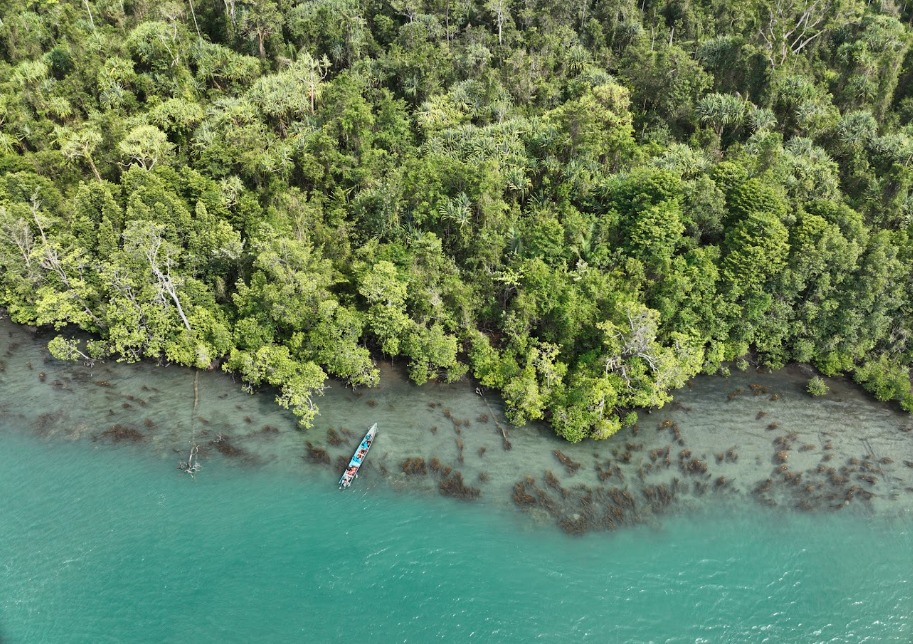
The Bangka Belitung Provincial Government has officially opened the drafting process for the Regional Mangrove Ecosystem Protection and Management Plan (RPPEM) for the period 2026-2055. The Kickoff Meeting, held in Central Bangka on Wednesday (3/6/2026), marks a significant milestone in strengthening mangrove ecosystem governance within the province and serves as the commencement of the regional planning series.
The Acting Regional Secretary of Bangka Belitung, Ferry Apriyost, emphasised that this step is a direct follow-up to the mandate of Government Regulation Number 27 of 2025 regarding the Protection and Management of Mangrove Ecosystems. “Bangka Belitung has a high urgency to establish an integrated management plan due to its archipelagic characteristics and heavy reliance on coastal ecosystems,” he stated.
According to the Decree of the Minister of Environment Number 3438 of 2025 regarding the National Mangrove Map (PMN), Bangka Belitung possesses approximately 69,606 hectares of mangrove ecosystems. While this does not rank the province among the largest mangrove owners in Indonesia, these areas are not immune to threats, ranging from land conversion for shrimp ponds, hydrological disturbances, and illegal tin mining to potential degradation caused by climate change and extreme abrasion.
“Particularly on the eastern coast of Bangka Island, which experiences high wave intensity and currents, mangroves serve as a shield against abrasion and tidal flooding. It is hoped that coastal communities will also work together to maintain the sustainability of the mangrove ecosystem in Bangka Belitung,” said Ferry.
In drafting the RPPEM, the government is adopting the Mangrove Landscape Unit (KLM) approach, which manages the mangrove ecosystem as a single entity spanning from land to sea. This approach does not follow administrative boundaries but is based on ecological relationships that form an interconnected environmental system, including socio-economic aspects.
Based on the Decree of the Minister of Environment Number 3330 of 2025 regarding the Indicative Map of Mangrove Landscape Units, Bangka Belitung contains two KLM units: the Bangka Coastal KLM, covering 61,056 hectares, and the Belitung Islands KLM, covering 26,495 hectares. Through the KLM approach, the government hopes to minimise policy overlaps and strengthen inter-regional coordination to ensure ecosystem sustainability.
Onrizal, a member of the National RPPEM Drafting Expert Team and a tropical forest ecology expert from the University of North Sumatra (USU), explained that a landscape-based approach is key to ensuring consistent management policies. He noted that the greatest hurdle in coordination is usually not technical, but rather a lack of alignment in fundamental working principles.
During the technical presentation, Onrizal emphasised the importance of mutual understanding in this landscape-based approach to avoid discrepancies among policymakers. He identified five critical points that must be agreed upon: the perception between KLM and administrative boundaries, baseline data as a common reference, consensus on protection and cultivation functions, a shared fundamental plan, and specific measurable performance targets.
“We must agree to use a single reference data source, namely the 2025 National Mangrove Map (PMN), so there is no further debate regarding the status of areas on the ground,” he asserted.
Simultaneously, the Acting Head of the Bangka Belitung Environmental and Forestry Service (DLHK), Amransyah Muslimin, stated that the Regional RPPEM will serve as a strategic instrument to align environmental protection with economic development. The legal certainty and carbon economic value provided by the 30-year RPPEM plan will not only focus on ecological aspects but also provide legal certainty for businesses and coastal communities.
One major potential target is its role as a Natural Coastal Defence for coastal areas. “Imagine if we had to build wave breakers along the entire coast of Bangka Belitung because there were no mangroves; it would cost trillions. Furthermore, we used to find crabs easily without needing to breed them; now, even fish are becoming scarce,” he remarked.
The Kickoff event also featured perspectives from local environmental practitioners. A success story was shared by SD Negeri 24 Sungai Liat, which actively involves students in rehabilitation activities, earning the school an Adiwiyata award—a government recognition for schools that successfully implement environmental care movements.
Heti Rukmana, a representative from SD 24 Sungai Liat, described how the school actively collaborates with various parties to support environmental activities. Through these efforts, it is hoped that a ‘green generation’ will emerge, one that is deeply concerned with the preservation of mangrove ecosystems.
“Nature does not need 100 discourses; it only needs one real action. Our main target is educating the students. We want to instil environmental awareness from an early age,” said Hesti. Synergy among all stakeholders remains the key.
Source: jawawa.id (https://jawawa.id/newsitem/fortifying-the-coast-for-30-years-bangka-belitung-officially-begins-drafting-the-provincial-rppem-2026-2055-1781103259)
Originally published by Media Indonesia (https://mediaindonesia.com/nusantara/899151/menyusun-benteng-pesisir-30-tahun-bangka-belitung-resmi-memulai-penyusunan-rppem-provinsi-2026-2055), translated from Indonesian