
Fortifying Children Against LGBT Behaviour: How to Instil Age-Appropriate Gender Understanding
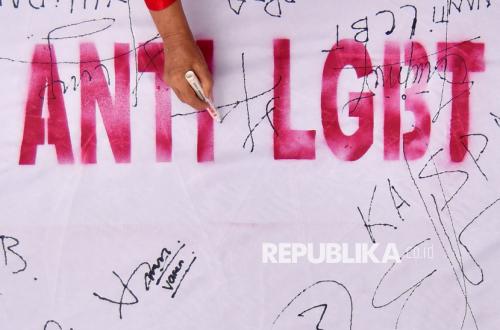
A paediatrician and child development consultant, Dr Angga Wirahmadi, has stated that the campaign promoting lesbian, gay, bisexual and transgender (LGBT) behaviour is increasingly targeting children and teenagers, even being inserted into cartoons and children’s series. He described this trend as worrying because it can damage children’s moral foundations and increase the spread of sexually transmitted diseases.
Dr Angga said the LGBT campaign among the teenage population is a concerning issue. If left unchecked, it could lead to a rise in sexually transmitted diseases among Indonesian teenagers. “Indeed, this LGBT issue is currently on the rise among our teenage population. We can see the impact. The impact is an increase in infectious diseases, which I mentioned earlier, such as HIV, which can cause disability or death. So this is a very concerning matter,” Dr Angga said during a media discussion held by the Indonesian Paediatric Society (IDAI) on Tuesday (21/7/2026).
According to Dr Angga, early detection of risky sexual behaviour, including LGBT, in teenagers can be carried out using the HEEADSSS approach, which includes an assessment of sexuality aspects. Through this method, healthcare workers can explore sexual orientation, sexual activity, and risky behaviours that increase the risk of disease transmission, such as HIV. “In the HEEADSSS, there is a section on sexuality. There we can explore the orientation or risky behaviours currently experienced by the teenager. Whether their orientation is normal or deviant,” Dr Angga said.
He explained that if a teenager is found to have an LGBT orientation, healthcare workers will ask whether they have engaged in risky sexual behaviour. This step is part of early detection so that intervention can be provided more quickly to prevent the emergence of infectious diseases like HIV. “If the orientation is as mentioned, LGBT, then we ask whether they have ever engaged in risky sexual behaviour. That way, we can detect it early and intervene, hopefully before infectious diseases like HIV appear,” Dr Angga stated.
Dr Angga emphasised the importance of an active role for parents in providing sexual education to their children to prevent deviant LGBT sexual orientation. He said that early education will build a strong foundation within the child. “Prevention certainly starts from the family. It starts as early as possible by instilling religious values, because no religion supports LGBT. So when should we start? As early as possible, because when a child is still young, they will listen to their parents,” he said.