
Fortified rice should be healthy, not misleading
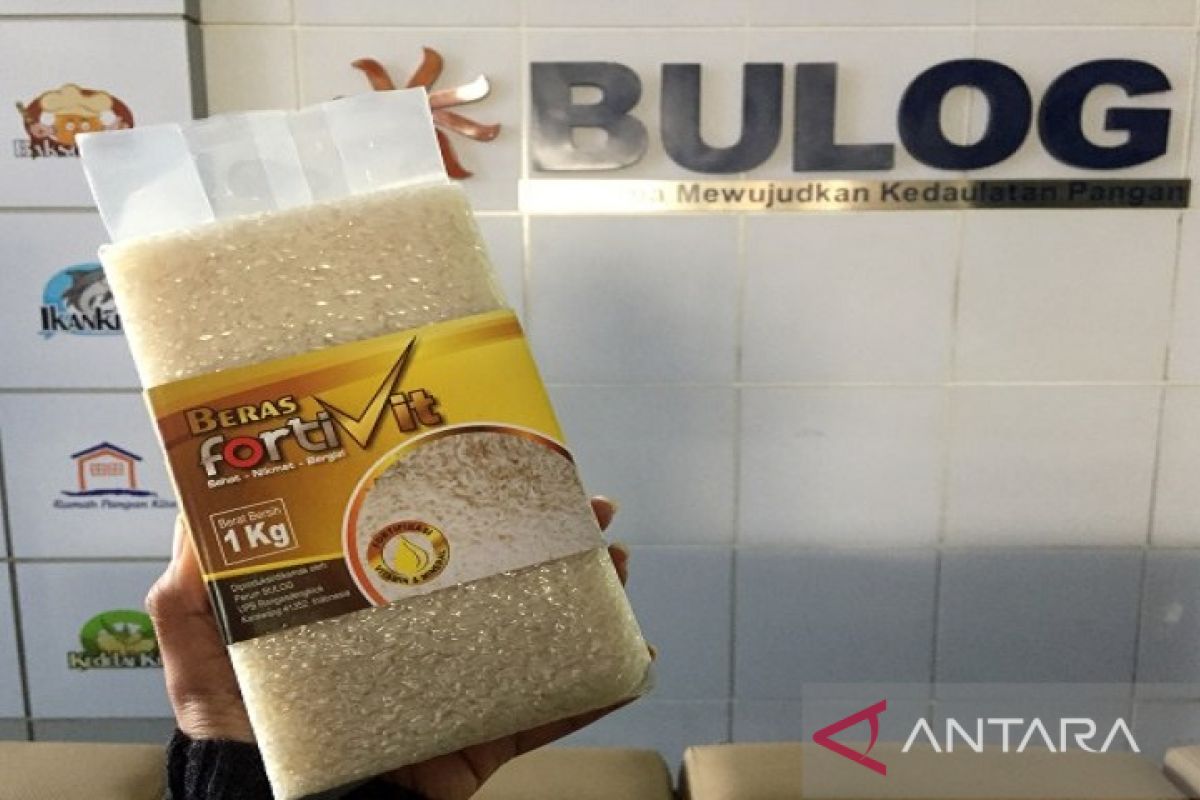
The greatest goal of fortification is not to create packaging that appears healthier, but to ensure that the community truly receives the promised nutritional benefits.
Jakarta (ANTARA) - Few food products are as integral to the lives of the Indonesian people as rice. Every day, millions of families serve it at the dining table, using it as sustenance for school children, meals for workers, and a source of energy for vulnerable groups such as pregnant women and the elderly.
For this reason, when rice began to offer the promise of additional vitamins and minerals through fortification, the public embraced it as part of an effort to improve the nation’s nutritional quality. However, that hope has suddenly turned into anxiety. The controversy surrounding fortified rice emerged after the government withdrew 25 brands of fortified rice from circulation due to alleged failure to meet applicable regulations. This step was taken as an effort to protect consumers, while also asserting that the use of the term “fortification” must comply with existing provisions.
This case goes beyond mere administrative labelling issues. What is at stake is not just the text on the packaging, but the trust brought home with every kilogram of rice. It raises a more fundamental question: how can a product carrying a health message actually cause public doubt?
This is where the core problem lies. Fortified rice is not a flawed product. On the contrary, fortification is a long-recommended strategy to help address micronutrient deficiencies in society. The problem arises when “fortification” claims are used without meeting established standards. When promises on packaging no longer align with the technical specifications of the product, it is not just the reputation of a single brand that is eroded, but also the trust in the overall food consumer protection system.
Ironically, Indonesia does not lack a legal architecture. From the Food Law to the Indonesian National Standard (SNI), the state has built a sufficiently complete regulatory framework to ensure that every fortification claim can be held accountable. The issue is no longer whether rules are available, but whether those rules are monitored, verified, and enforced consistently.
Regulatory Architecture
The entire legal framework governing fortified rice actually forms a complementary consumer protection system. Here is a synthesis of the primary regulations.
First, consumer protection begins with the right to accurate information. Article 4, letter c of Law No. 8 of 1999 on Consumer Protection asserts that every consumer has the right to obtain true, clear, and honest information regarding the goods they purchase. This principle is strengthened by Article 96, paragraph (1) of Law No. 18 of 2012 on Food, which states that food labelling aims to provide true and clear information to the public before purchase or consumption. In the context of fortified rice, these two regulations emphasise that claims of added vitamins and minerals are not merely marketing strategies, but promises that must be accountable to consumers.
Second, the state builds safeguards so that promises on packaging do not remain mere slogans. Article 21 of Government Regulation (PP) Number 69 of 1999 on Food Labelling and Advertising permits the use of terms such as “added”, “enriched”, or “fortified” only if it is actually performed during processing and does not mislead consumers. This provision is strengthened by Article 4, paragraph (2), letters d and e of Government Regulation Number 86 of 2019 on Food Safety, which regulates food sanitation requirements, including the implementation of traceability systems and the prevention of nutritional degradation throughout the food chain.
Meanwhile, Article 3, letters d and e of Presidential Regulation Number 66 of 2021 regarding the National Food Agency (Badan Pangan Nasional) places the agency in the role of fulfilling food nutritional requirements and implementing food safety standards. This series of policies demonstrates that consumer protection depends not only on the contents of the packaging but also on the governance that oversees products from upstream to downstream.
Third, all these legal commitments culminate in scientific proof. Article 33, paragraph (2) of the National Food Agency Regulation Number 1 of 2023 on Fresh Food Labelling requires that nutrient claims in fortified foods be supported by laboratory analysis results to ensure they meet tolerance limits as a basis for nutritional claim verification. Meanwhile, Article 3, paragraph (5), letter e of the National Food Agency Regulation Number 2 of 2023 on Quality Requirements and Labelling of Rice establishes fortified rice as an official category of special rice subject to specific quality and labelling requirements. This is further reinforced by SNI 9372:2025, which regulates quality requirements, testing methods, and marking, ensuring that quality, nutritional content, and fortification claims can be scientifically verified.
When read as a single entity, these regulations build three pillars of consumer protection—honesty of information, certainty of quality, and scientific proof—which should serve as the foundation for restoring public trust in fortified rice.
In the public sphere, the term “fortified rice” is often understood simply as rice with added vitamins. However, the definition is much stricter.
Circular Letter of the National Food Agency Number 02/HK.02.05/D/7/2025 emphasises that the term “fortified rice” may only be used for products that meet all provisions of SNI 9372:2025, ranging from raw materials, composition of vitamin B1, folic acid, vitamin B12, iron, zinc, production processes, storage, packaging, to labelling, all of which must be proven through laboratory testing.
These standards emphasise that fortification is not merely adding vitamins to rice, but ensuring that the fortificant kernels are mixed uniformly.