
Fortified rice requires large-scale mills for quality control
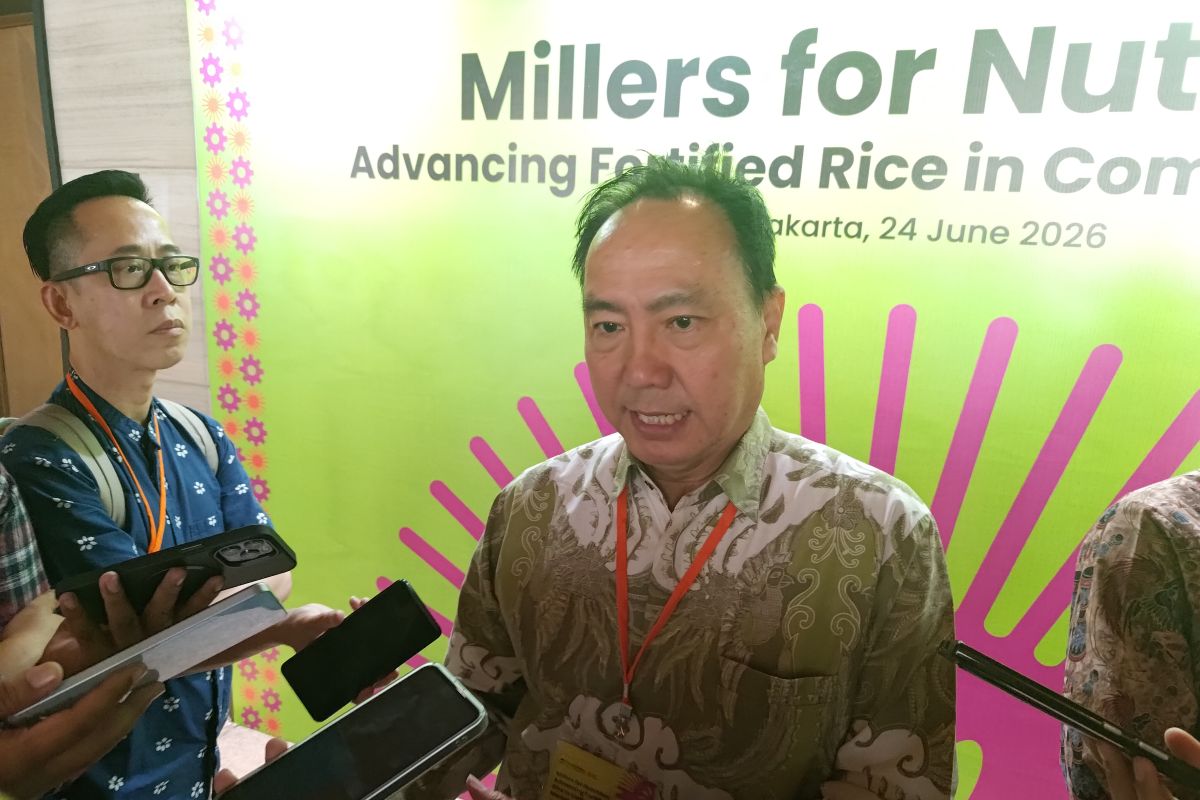
Jakarta (ANTARA) - The global food fortification coalition Millers for Nutrition (M4N) believes the development of fortified rice in Indonesia must start with large-scale rice mills to make quality control and programme implementation easier.
“There are over 100,000 rice mills. The challenge is quite significant because many are small-scale. So we start with the large ones first to make it easier to maintain quality,” said M4N Advisory Board member Budianto Wijaya in Jakarta on Wednesday.
He noted that the rice milling industry differs from other food industries that have already adopted mandatory fortification, such as wheat flour and cooking oil. The wheat flour industry is relatively easier to supervise due to a limited number of producers, whereas rice mills are widely dispersed with varying scales of operation.
Budianto said these challenges mean the development of fortified rice must be carried out in stages, prioritising businesses with adequate production capacity and quality control systems. However, he assessed that there are no significant technological barriers to producing fortified rice in Indonesia.
“Technologically, we are actually ready. This has been done in many countries for a long time. There are no technical problems,” he said.
He explained that the main challenges currently relate to strengthening the industrial ecosystem, including the readiness of fortified rice kernel (FRK) producers, regulators, and the supervision system. Budianto noted that domestic FRK producers are still limited, even though FRK is the main component in producing fortified rice through blending with milled rice.
Increasing FRK production capacity is necessary so that the development of fortified rice can reach more rice mills and support future market expansion, given the vast and dispersed structure of the national rice milling industry.
In addition, Budianto said synergy among stakeholders is an important factor for the development of fortified rice to proceed more quickly and sustainably. “The government has issued policies that encourage this direction,” he revealed.
The government has included food fortification in the 2025-2029 National Medium-Term Development Plan (RPJMN) as part of efforts to improve the nutritional quality of the population. The National Food Agency (Bapanas) has also issued operational guidelines for fortified rice policies and regulations to support programme implementation in the field.
Meanwhile, from the rice industry side, PT Thara Jaya Niaga Director Diyan Anggraini said industry players are beginning to build production readiness for fortified rice through collaboration with rice mills in various regions. “Today, alhamdulillah, there are already 1,700 mills that intend to become fortified rice mills,” said Diyan.
According to her, these mills are members of the Indonesian Fortified Rice Millers Association (P2B Nutrisia), which was formed to support the development of the fortified rice ecosystem while strengthening distribution and production efficiency in various regions. She said the involvement of rice mills across different areas is expected to strengthen industry readiness and accelerate the expansion of fortified rice production if market demand continues to increase.