
Fortified Rice Producers Falsely Claim Nutritional Benefits, Authorities Say
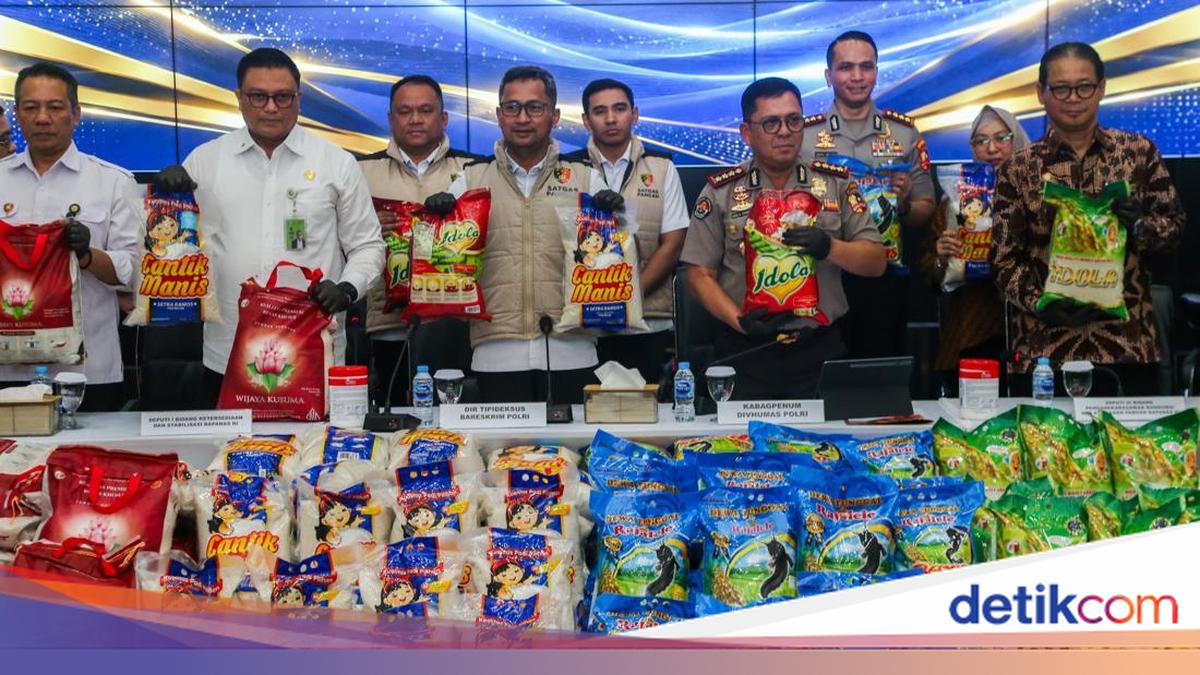
Bareskrim Polri and the National Food Agency (Bapanas) have exposed fraudulent practices by fortified rice producers that claimed their products were highly nutritious, when in fact the claims were bogus. The speciality rice was sold at exorbitant prices to generate substantial profits.
Bapanas Deputy for Food Availability and Stabilisation Hermawan made the remarks at a press conference at Bareskrim Polri headquarters in South Jakarta on Wednesday (21 October 2026). He said laboratory tests showed that 90% of the nutritional claims made for fortified rice sold on the market did not match the facts or were fictitious.
“After laboratory testing, it turned out that all the nutritional content claims were untrue; 90% of them were incorrect,” Hermawan said in his presentation.
“Some products did not contain any vitamins at all, while others had levels far below what the public expected, such as zinc and vitamin B,” he added.
Hermawan said producers had not only manipulated vitamin content but had also misled consumers about the quality of the rice used. In 90% of cases, fortified rice advertised as premium grade was found to be made from medium-grade rice.
“Of the products examined by the Bapanas and Bareskrim teams, 90% were claimed to be premium fortified rice, but in fact they were medium-grade rice,” he said.
He explained that, based on production costs, medium-grade rice priced at Rp 13,500 per kilogram would require only about Rp 1,000 in additional costs for 1% vitamin kernels to make it into fortified rice. This means a reasonable selling price should be around Rp 14,500 per kilogram.
“However, what we found in the field was an average price of Rp 23,000 to Rp 57,000. The profits are therefore enormous. This is what has left consumers feeling they have been cheated,” Hermawan said.
In response to the findings, Bapanas has instructed the Regional Food Safety Competent Authorities (OKKPD) to take firm action against producers found to have committed fraud.
“As the central competent authority for food safety, Bapanas has instructed OKKPD to revoke licences. We have also ordered products to be withdrawn from circulation and production to be halted,” he said.
Hermawan said the withdrawals were one reason stocks of rice had temporarily run out at some modern retail outlets recently. He nevertheless assured the public that rice remained available at traditional markets at normal prices.
Bareskrim Polri’s Director of Special Economic Crimes, Senior Commissioner Suhasto, said producers had deliberately exploited the absence of a government-set retail price ceiling (HET) for fortified rice to maximise profits. As it is classified as speciality rice, producers are free to set their own prices.
“The problem is that fortified rice currently has no retail price ceiling. Producers can raise prices as much as they want, according to their respective profit targets. You can imagine the profits they make,” Suhasto said.
He said some producers were suspected of deliberately using rice supplies available on the market to make fortified rice, relying on nutritional claims on the packaging despite laboratory results showing that the contents did not match those claims.
“Once we examine it and find that the information on the packaging is inaccurate, it is the public who ultimately suffer,” he added.
Bareskrim Polri’s Sub-directorate I chief, Senior Commissioner Dery Agung Wijaya, added that the lack of price controls had sent the price of packaged fortified rice soaring.
“A 5-kilogram bag costs between Rp 63,000 and Rp 138,000. Premium rice is Rp 14,900 per kilogram and medium-grade rice Rp 13,500 per kilogram. That means each bag can generate a profit of between Rp 23,000 and Rp 37,500,” Dery said.
The enforcement action follows up on President Prabowo Subianto’s Asta Cita programme and National Police Chief General Suyudi Ario Seto’s instructions under the ‘Police Care for Food’ Quick Wins programme.
Bareskrim Polri and the Food Task Force are continuing their investigation and gathering evidence to identify those responsible for the alleged fraud.