
Fortasbi views EUDR regulations as an opportunity to strengthen palm oil farmer data collection
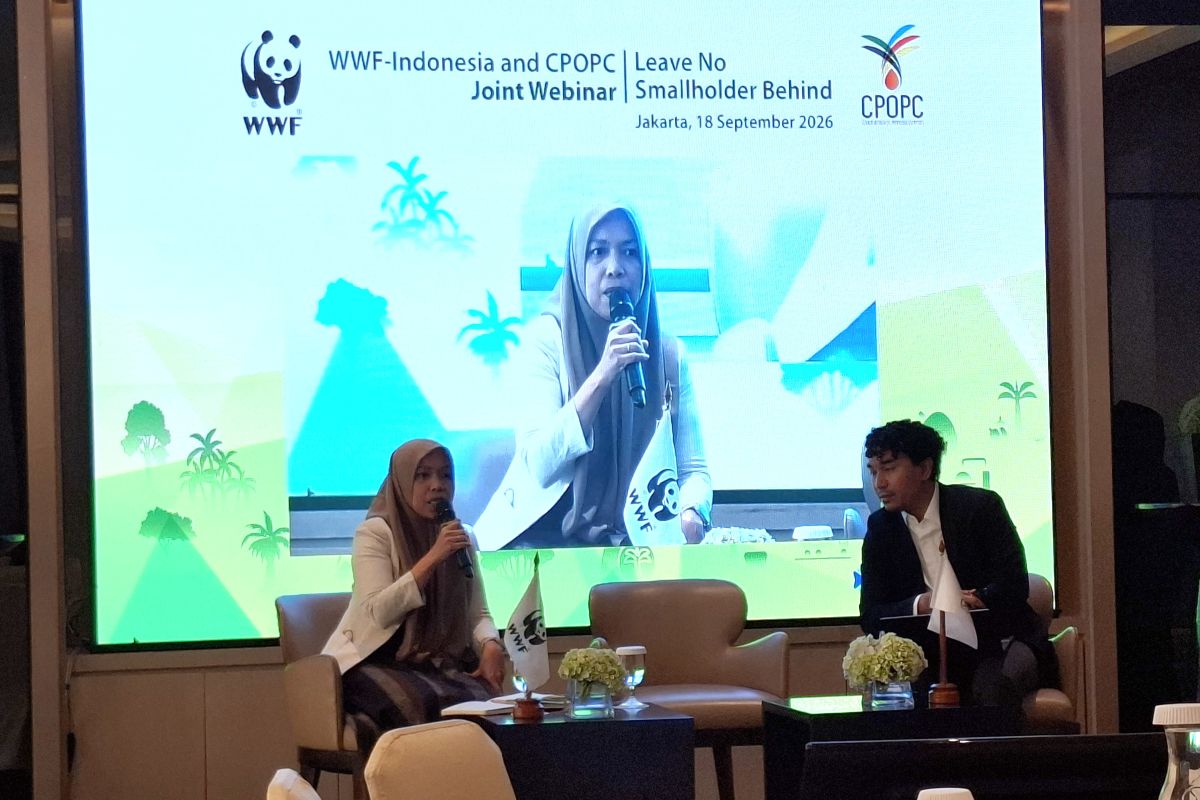
Jakarta (ANTARA) - The Indonesian Sustainable Palm Oil Farmers Forum (Fortasbi) believes that preparations for the implementation of the European Union Deforestation Regulation (EUDR) can be utilised as an opportunity to strengthen the data collection of palm oil farmers, ensuring that government support is more precisely targeted.
The Head of Fortasbi Secretariat, Rukaiyah Rafik, stated that strengthening data is one of the opportunities that can be leveraged during the transition to EUDR, in addition to meeting the requirements for traceability and legality for farmers.
“The EUDR is a challenge, but we can also use it as an opportunity. We do not reject the EUDR because we also realise there are positive aspects to its implementation,” Rukaiyah said during a panel discussion in Jakarta on Friday.
The EUDR covers seven commodities, including palm oil, and aims to ensure that products entering the EU market meet deforestation-free requirements and are produced in accordance with the regulations applicable in the country of origin.
The panel discussion, titled “Smallholders on the Ground: Challenges and Opportunities in the Transition to EUDR Compliance,” was organised by WWF-Indonesia, the Council of Palm Oil Producing Countries (CPOPC), and Competere, and addressed the readiness of smallholders to face the EUDR.
According to Rukaiyah, a more comprehensive database is required to identify farm locations, plantation conditions, and productivity, as well as the need for assistance, so that the government can determine the specific services required by each farmer.
“If we have farmer data, the government can provide services to them. From that data, we can see productivity, what they need, who lacks legality, and who still requires training,” she said.
Rukaiquoah noted that plantation mapping is a fundamental stage as it relates to data collection, plantation business administration, and traceability.
However, the ability of farmers to conduct mapping varies, necessitating capacity building and technical support.
“The first obstacle is mapping, followed by legality, and then traceability. If we want farmers to be involved in the system, these issues must be resolved,” she added.
She also assessed that strengthening farmer organisations is vital so that farmers can manage plantations sustainably in the long term while maintaining a stronger position to access assistance and services.
Rukaiyah mentioned that strengthening both data and institutional capacity could transform the transition towards global sustainability demands into an opportunity to increase the productivity and sustainability of smallholder palm oil plantations.
Data from the Ministry of Agriculture shows that by 2025, smallholder palm oil plantations will reach approximately 6.93 million hectares. This sector serves as a livelihood for around 3.04 million farmers in Indonesia.
On the other hand, the government has also developed an electronic system for the Plantation Business Registration Certificate for Cultivation (e-STDB).
The Directorate General of Plantations dashboard records 315,275 farmers and 411,733 plantations currently in the process or already issued, covering an area of 797,764.55 hectares. A total of 225,281 STDBs have been issued nationally.
Within this system, the STDB issuance process includes farmer and plantation data collection, mapping, data verification, and analysis of overlapping plot maps, leading up to the issuance of documents.
The STDB serves as legal administrative proof for plantation businesses and can assist farmers in accessing government coaching, including replanting and marketing.
Support for farmer data collection is also being strengthened through the Palm Oil Plantation Revenue Sharing Fund (DBH).
Minister of Finance Regulation Number 10 of 2026 sets the ceiling for the Palm Oil DBH at a minimum of four per cent of the state revenue used as the basis for distribution, allowing these funds to be used, among other things, for the collection of smallholder farmer data.
In addition to data collection, the use of the Palm Oil DBH under this regulation includes support for Indonesian Sustainable Palm Oil (ISPO) certification, the formulation and implementation of regional sustainable palm oil action plans, and other activities to strengthen plantation governance.
Source: jawawa.id (https://jawawa.id/newsitem/fortasbi-views-eudr-regulations-as-an-opportunity-to-strengthen-palm-oil-farmer-data-collection-1789743463)
Originally published by Antara (Indonesian) (https://www.antaranews.com/berita/5748061/fortasbi-nilai-eudr-jadi-peluang-perkuat-pendataan-pekebun-sawit), translated from Indonesian