
Former Transmigrants in Merauke Find Value in Gotong Royong Culture
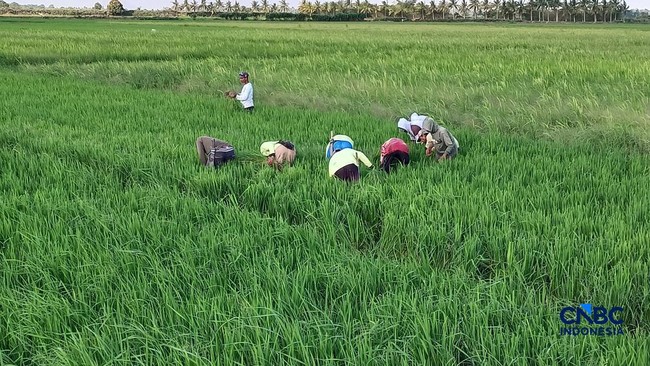
In the midst of modernisation and increasingly individualistic city life, the culture of gotong royong is still alive in the easternmost part of Indonesia. In Kurik District, Merauke, South Papua, the spirit of mutual assistance remains part of residents’ daily lives, especially among farmers who are mostly migrants from Java. For Abdul Rokhim, a farmer now settled in Merauke, gotong royong is not just an old tradition to be preserved, but a way of life that keeps people connected to one another in their adopted land. In former transmigration areas like Kurik, newcomers come from different backgrounds but are united by the same fate: all are migrants, all work the rice fields, and all are building new lives in Papua. “Gotong royong is still strong here. Because this is an ex-transmigration area, the majority are newcomers. So, it is common that when people migrate to the same place, they become like siblings; it is still very strong here,” said Abdul Rokhim when met by CNBC Indonesia at his rice field in Candra Jaya Village, Kurik District, Merauke, South Papua. Abdul recounted that the agricultural area in South Papua, particularly Merauke, is indeed inhabited by many newcomers. They come from various regions in Java, including Central Java, East Java, and West Java. Life as fellow migrants has fostered a strong sense of togetherness. Amidst the expanse of Merauke’s rice fields, gotong royong lives on in a very tangible form. When planting season arrives, farmers help each other work the land so that tasks are completed quickly. The system is simple: today they help a neighbour’s field, and tomorrow they receive help on their own land. According to him, this method allows planting work to be finished faster. “During planting season, we help each other, so it is quick, so it can be done in half a day, then we can move on to help the next place,” he said. For Abdul, this work pattern is nothing new. In his village, gotong royong has become a kind of social agreement that runs naturally. Farmers do not always have to rely on daily labourers or spend large sums of money to complete work in the fields. They simply help each other and take turns. Amidst the ongoing challenge of agricultural production costs, gotong royong also holds significant economic value. Abdul admitted that the culture of mutual assistance allows farmers to reduce expenses, especially when they do not have enough money to pay for labour. “Clearly, gotong royong is important in my view, to strengthen brotherhood, to strengthen ties, to lighten our workload. Especially from a financial perspective. So, for example, if I want to work the land and do not have money, I ask a friend or neighbour or relative to help, we just help each other and take turns, we do not spend money, just effort. That is one way gotong royong helps financially,” he said. Not only does it reduce costs, but gotong royong also makes work in the fields faster. During planting season, speed is often a deciding factor, especially when farmers must race against the season and water conditions. “Gotong royong also helps in terms of speed,” said Abdul. The culture of mutual assistance apparently does not stop at the rice fields. In residential areas, gotong royong is still visible when a neighbour builds a house. Residents will come to help, especially when lifting wood and installing the roof frame, a job that is difficult to complete alone. “In the housing environment, it is indeed very strong, like when we build a house. It still exists,” he said on Friday (3/7/2026). He then recounted how residents usually gather to help with a neighbour’s house construction. “Gotong royong still exists. So, when building a house, especially installing the roof frame, the foundation of the roof. Usually, neighbours are informed, and we work together to lift the wood. Because if you rely on just two or three carpenters, you cannot afford to pay them,” he explained. Abdul’s story shows that gotong royong in Merauke is not merely village romanticism, but a foundation that keeps the social life of the community running. In former transmigration areas, relationships between residents are built not only by proximity of residence but also by a shared fate as migrants who must support one another.