
Former Minister's House Raided Amidst Liquor Corruption Scandal and 'Ghost Bar' Modus Operandi
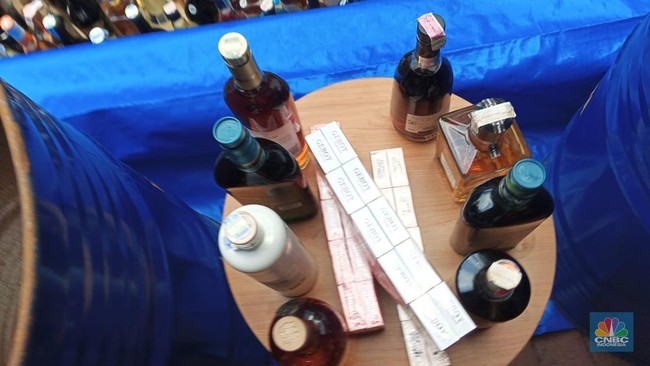
A former minister has caused a sensation in India due to a large-scale liquor corruption case. As reported by The Week, V. Sengkthil Balaji, a former minister of the Indian state of Tamil Nadu, has been implicated in a massive corruption scandal involving the state-owned liquor monopoly, the Tamil Nadu State Marketing Corporation (TASMAC). The case has shocked India after investigators revealed alleged mafia practices that have reportedly persisted for years.
The Directorate of Vigilance and Anti-Corruption (DVAC) conducted raids at 41 locations linked to Balaji and his associates, including his residence in the Karur District. According to investigator reports, Balaji and six others formed a syndicate that manipulated the state’s liquor distribution and licensing systems between 2021 and 2025. Investigators suggest the case involves more than just bribery; it is a corruption network that has eroded state revenue through the manipulation of tenders, business permits, and liquor distribution.
One of the most significant findings is the existence of ‘ghost bars’. During investigations across six major regions, out of 857 bars recorded in official documents, 284 bars were found to be officially closed on paper but were allegedly still operating without renewing licences or paying government obligations. As a result of these practices, the state is estimated to have lost at least over 32 crore rupees (approximately Rp 60.8 billion) in just three regions during 2022-2023. Investigators suspect that local TASMAC officials colluded with bar owners to violate tender rules and leak state revenue.
Another shocking discovery is the alleged existence of a ‘shadow managing director’. The DVAC accuses a businessman named Rathesh Raj Shanmugavel, who holds no official government position, of wielding significant influence over decision-making within TASMAC. He is alleged to have controlled various key policies, ranging from the approval of liquor brands permitted for sale to the manipulation of bar tenders and the transfer of regional officials to protect his group’s interests.
The syndicate is also alleged to have profited directly from consumers. According to investigators, between 2021 and 2025, various liquor brands were sold at prices 10 to 100 rupees above the Maximum Retail Price (MRP). For imported drinks, the price difference was reported to reach as much as 500 rupees per bottle. The proceeds from these mark-ups allegedly did not enter the state treasury but instead flowed to the perpetrators’ network as illegal funds. Furthermore, investigators found evidence of manipulated transport tenders, the use of shell companies, and money laundering through transactions involving bottle suppliers and distillery companies.