
Former Minister Chose to Sell Rice in Glodok, Keeping it a Secret from His Family
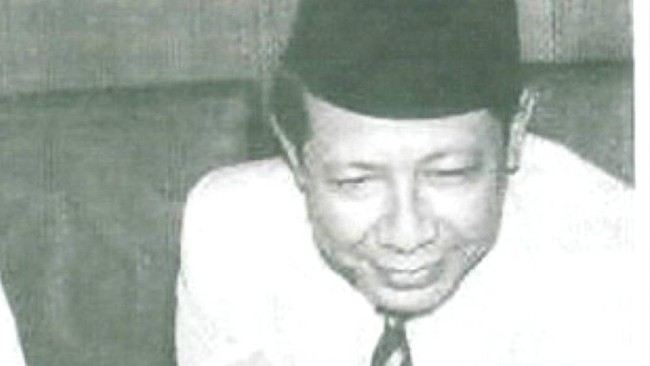
The lives of former state officials after leaving government positions often attract public attention. While some continue to enjoy various facilities, others choose to lead simple lives and even work to meet their daily needs.
One well-known story in Indonesian history is that of the former Minister of Religious Affairs, Saifuddin Zuherm. After leaving his government post, he was known for maintaining a simple lifestyle. It is even noted that Saifuddin Zuhri once sold rice in a traditional market.
Saifuddin Zuhri served as the 10th Minister of Religious Affairs of the Republic of Indonesia. He assumed office following his inauguration on 2 March 1962 and served until 1967.
After his ministerial term ended, Saifuddin Zuhri remained active in politics, serving as a member of the DPR-GR from the Nahdlatul Ulama (NU) faction. His political career continued as a member of the DPR following the 1971 General Election. Despite holding significant positions in government, his life story after his ministerial tenure remains a fascinating part of his journey.
As cited in the book Sang Pendoa: Para Kiai Fenomenal Pengayom Kedamaian Umat (2023), during the 1980s, Saifuddin took on a new profession as a rice trader in Glodok Market, Jakarta. He performed this routine almost every day.
Every day at 09:00 WIB, after performing the Dhuha prayer, he would drive his own car, transporting sacks of rice to his trading stall. This trading venture was kept strictly secret from his family. His wife and children only knew that Saifuddin always returned home with money, but they were unaware of the source of that income.
The former minister’s secret was eventually uncovered when one of his sons accidentally caught him serving customers in Glodok Market.
Trading was not a new concept for Saifuddin. In his autobiography, Berangkat dari Pesantren (198ly), he recounted that in 1942, following the birth of his first child, he had sustained himself by selling anything that could generate income—ranging from second-hand clothes and scrap household goods to cigarettes.
Refusal of Official Residence and Donation of Private Home
Saifuddin’s spirit of integrity and simplicity was deeply rooted even during his time as a minister. For the father of Lukman Hakim Saifuddin (the Minister of Religious Affairs during the Cabinet Kerja era), a ministerial position was a sacred mandate that must not be abused for personal enrichment.
He demonstrated this principle by refusing official housing facilities. Despite being legally entitled to and repeatedly urged to occupy a luxurious official residence, he firmly refused, choosing instead to live in his private home. “If I did that, it would be greed. If the Minister of Religious Affairs is greedy, what about others… my stance was firm. Since then, I have continued to live in my own house,” he stated at the time.
He subsequently chose to pay for his own house in the Kebayoran Baru area of South Jakarta through instalments to maintain his principle of independence. Remarkably, once the mortgage was fully paid, he chose to donate the property for the social interests of Nahdlatul Ulama.
Saifuddin Zuhri’s journey of service ended when he passed away on 25 February 1986 after a battle with illness. Decades have passed since he left his office, yet the uncompromising integrity and true simplicity he bequeathed remain an enduring example for the nation’s officials.
Source: jawawa.id (https://jawawa.id/newsitem/former-minister-chose-to-sell-rice-in-glodok-keeping-it-a-secret-from-his-family-1791017474)
Originally published by CNBC Indonesia (https://www.cnbcindonesia.com/news/20261003132508-4-773048/mantan-menteri-pilih-jualan-beras-di-glodok-keluarga-tidak-tahu), translated from Indonesian