
Former Minister Caught Selling Rice in Glodok Without Telling His Family
The fortunes of state officials after they leave office always attract public attention. Some enjoy a luxurious retirement, while others have to struggle to make ends meet.
One of the most celebrated stories is that of former Indonesian Religious Affairs Minister Saifuddin Zuhri, who chose an exceptionally simple life and was eventually discovered selling rice at a traditional market.
As a matter of historical record, Saifuddin Zuhri served as Indonesia’s 10th Religious Affairs Minister, taking office on 2 March 1962 and leaving the post in 1967. After his ministerial tenure, he returned to politics as a member of the DPR-GR for the Nahdlatul Ulama (NU) faction, and later became a member of the House of Representatives following the 1971 election.
But fortunes change. After he had fully retired from politics and government, his life was far from affluent.
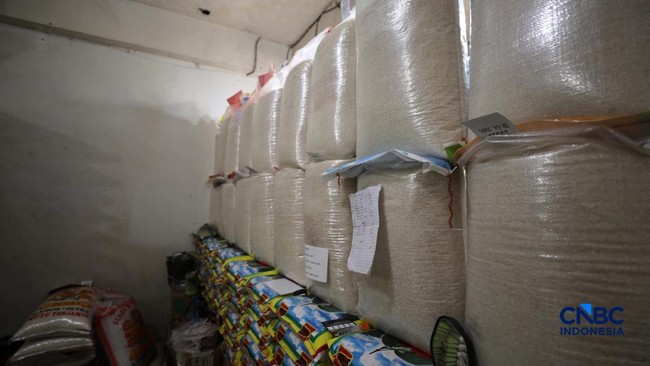
According to the book Sang Pendoa: Para Kiai Fenomenal Pengayom Kedamaian Umat (2023), in the 1980s Saifuddin took up a new occupation as a rice trader at Glodok Market in Jakarta. He did this almost every day.
At 9am, after performing the Dhuha prayer, he would drive himself to his stall, transporting sacks of rice in his car.
He kept his trading activities strictly secret from his family. His wife and children knew only that Saifuddin always came home with money, but had no idea where his income came from.
The former minister’s secret was eventually exposed when one of his sons accidentally saw him serving customers at Glodok Market.
Selling goods was not new to Saifuddin. In his autobiography, Berangkat dari Pesantren (1984), he wrote that in 1942, when his first child was born, he had made ends meet by selling whatever he could for cash, from second-hand clothes and used household furniture to cigarettes.
Rejected official residence and donated his own home
Saifuddin’s integrity and simple way of life were deeply rooted even when he was still a minister. For the man who was also the father of Lukman Hakim Saifuddin, Religious Affairs Minister in the Working Cabinet, a ministerial post was a sacred trust that must not be abused for personal enrichment.
He put that principle into practice by refusing an official residence. Although he was entitled to the facility and was repeatedly urged to move into the luxurious government house, he firmly declined and chose to live in his own home.
“If I did that, I would be greedy. If the Minister of Religious Affairs is greedy, what about the others? My position was firm. From then on, I continued to live in my own house,” he said at the time.
He chose to pay for a home in the Kebayoran Baru area of South Jakarta in instalments, in order to uphold his principle of independence. Moreover, once the mortgage had been paid off, he donated the house to Nahdlatul Ulama for social purposes.
Saifuddin Zuhri died on 25 February 1986 after a period of illness. Decades have passed since he left office, but the uncompromising integrity and genuine simplicity he embodied remain a lasting example for the country’s public officials.