
Former Mining Land in Sulawesi Reveals Microbes That Could Help Restore the Environment
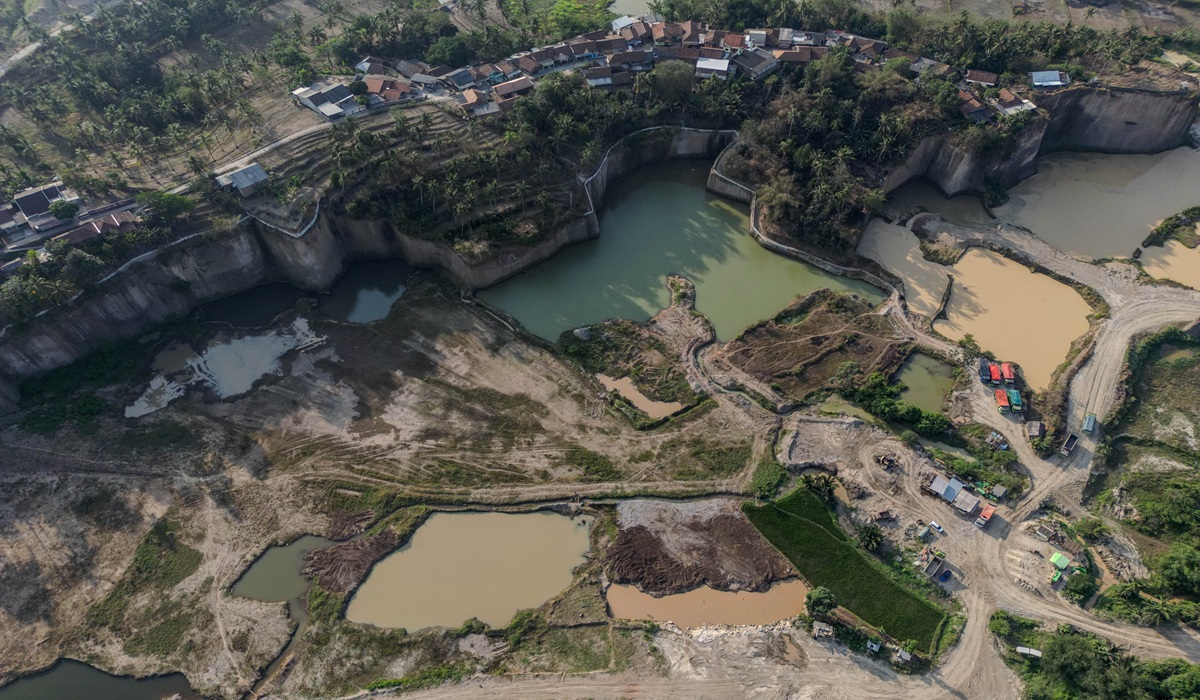
Former mining land is often viewed as a dead area that has lost its environmental carrying capacity. However, a recent discovery at the Poboya gold mining area in Central Sulawesi disproves that assumption. Research into soil DNA has revealed that the area still harbours a resilient microbial community with considerable potential for environmental restoration.
Dr. Rahadian Pratama, a lecturer at IPB University, explained that the presence of vegetation is the key factor in restoring soil bacterial communities. Interestingly, vegetation is considered far more dominant in influencing soil microbiome health than the history of mining activity itself.
“Former mining soil turns out not to be entirely poor in species. Replanting, or revegetation, is a highly promising route for microbial recovery on former mining land,” said Rahadian during a webinar titled “When Vegetation ‘Disguises’ the Traces of Mining: The Story of Poboya’s Soil DNA”, organised by the Department of Biochemistry at IPB University together with Dynata Inovasi Corporalab.
The finding was obtained through soil microbiome analysis using advanced Oxford Nanopore Sequencing (ONT) technology with a metagenomic approach. This method allows researchers to map the composition of microorganisms in detail whilst also examining the genetic potential stored within the soil.
Based on the analysis of samples, the research team discovered a consortium of microbes with specialised metabolic abilities to survive in environments contaminated with heavy metals. One notable example is bacteria from the genus Variovorax.
Rahadian stressed that this genomic analysis provides concrete evidence of the potential for indigenous bioremediation in Sulawesi’s soil. This comes as welcome news for efforts to restore land affected by mining, where local microbes could be harnessed to accelerate the return of ecosystem functions.
Furthermore, the research highlights the importance of preserving genomic wealth in the Wallacea region. Sulawesi, as part of Wallacea, holds extremely rich genetic resources that remain under-researched. Rahadian recommended that microbiome monitoring be carried out routinely, not only on former mining land but also on land converted for agricultural use.
With the use of Nanopore sequencing technology, opportunities to unlock the secrets of below-ground biodiversity are opening up ever wider. This step is expected to serve as a foundation for policy in future science-based environmental restoration strategies. (IPB University/Z-1)