
Former Malaysian PM’s House Arrest Halted Despite Paying Rp223bn Fine: Why?
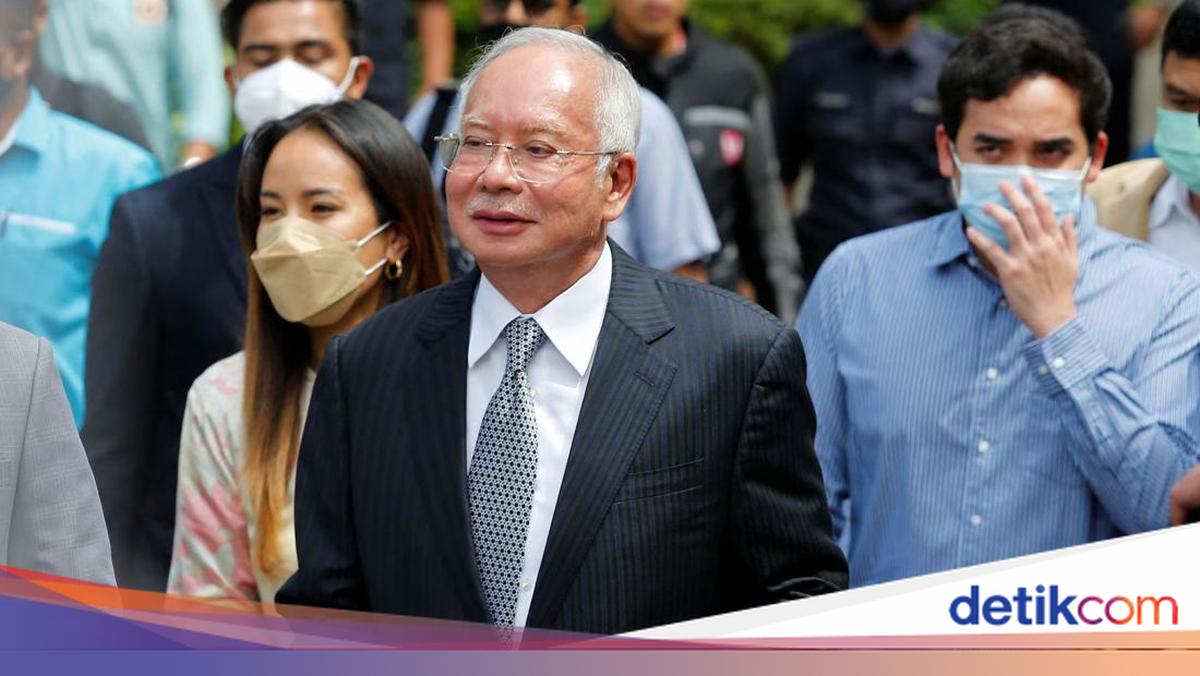
Former Malaysian Prime Minister Najib Razak has paid a fine of 50 million ringgit, equivalent to Rp223.4 billion, to qualify for house arrest. However, he must remain in prison despite a court ruling allowing him to serve the remainder of his sentence under house arrest after paying the fine.
According to The Straits Times and Reuters on Friday (6 November 2026), Malaysia’s Attorney General’s Chambers (AGC) temporarily suspended the house-arrest arrangement on 6 November, the same day Najib’s fine was paid and the High Court issued an order directing his release into house arrest.
“In this matter, the implementation of house arrest … must be temporarily suspended pending further investigation and clarification,” the Attorney General’s Chambers said in a three-page statement, as quoted by Reuters.
Najib’s lawyers have objected to the AGC’s move. They say every condition set by the King in the pardon has been met and there is no legal basis for their client to remain in prison. They have demanded Najib’s immediate release and placement under house arrest.
In its statement, the AGC questioned how Malaysia should enforce royal pardons and court orders. The outcome could determine when Najib begins a separate 15-year prison sentence linked to the multibillion-dollar 1Malaysia Development Berhad (1MDB) corruption scandal.
At the heart of the dispute is whether payment of the fine concludes Najib’s sentence in the SRC International corruption case, or merely allows him to serve the remainder under house arrest until 23 August 2028. He has served a 12-year sentence since August 2022. A royal pardon in 2024 halved the sentence and reduced the fine from RM210 million to RM50 million.
A second royal pardon, issued in September 2026 by the King, Sultan Ibrahim, was conditional and allowed him to serve the remainder of his sentence under house arrest, provided he paid the fine and met other requirements.
The AGC said the case raised complex legal questions about the implementation of royal pardons and court orders, and described the situation as unprecedented.
“During this period, Najib’s detention status must remain unchanged at his current place of detention, subject to the authority and directions of the relevant authorities,” the statement said.
The AGC stressed that its decision was not intended to oppose or overturn the King’s decree, but to ensure that the royal pardon and court order were implemented in accordance with the law.
The AGC said further legal review was needed to determine whether payment of the Rp223.4 billion fine merely allowed Najib to serve the remainder of his SRC International sentence under house arrest, or effectively brought the sentence to an end.
The distinction is significant because Najib faces a separate sentence in the 1MDB case, which, under the court ruling, is due to begin only after the SRC sentence has been completed in full.
The AGC is also examining the legal effect of the High Court order of 6 November, which directed Najib’s immediate release while requiring him to remain under house arrest until 23 August 2028, as well as the court’s rejection on 14 October of his application to defer the 1MDB sentence.
The AGC said clear and definitive legal clarification was needed before further action could be taken. Najib’s fine was paid on 6 November by his party, UMNO, which raised the money through public donations.
On the same day, Home Minister Saifuddin Nasution Ismail designated Najib’s residence on Jalan Langgak Duta as a prison under the Prisons Act 1995, a legal step intended to allow him to serve his sentence under house arrest.
Source: jawawa.id (https://jawawa.id/newsitem/former-malaysian-pms-house-arrest-halted-despite-paying-rp223bn-fine-why-1793987452)
Originally published by detikcom (https://news.detik.com/internasional/d-8742024/eks-pm-malaysia-batal-jadi-tahanan-rumah-meski-bayar-denda-rp-223-m-kenapa), translated from Indonesian