
Former KPU Chairman Explains Origins of KPU Regulation 19 During Gibran Diploma Lawsuit Hearing
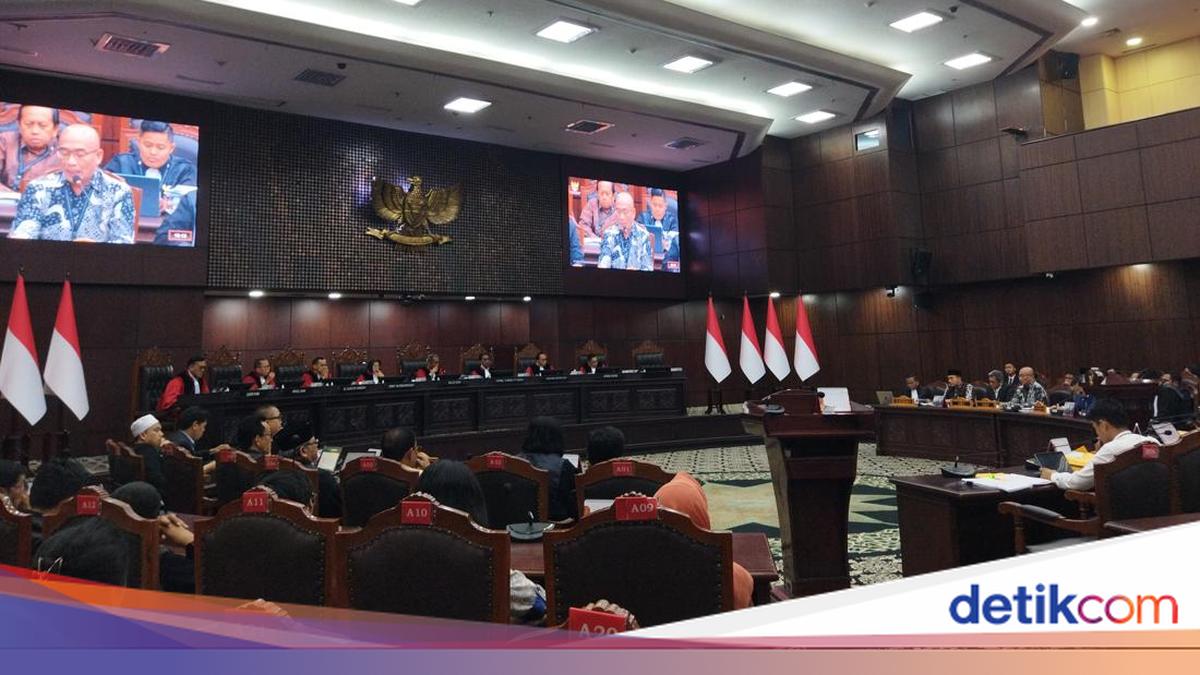
The KPU presented former KPU Chairman Hasyim Asy’ari as a witness in the dispute over the 2024 Presidential and Vice-Presidential Election results (PHPU). In his testimony, Hasyim explained the origins of the drafting process for KPU Regulation (PKPU) Number 19 of 2023.
The hearing for case number 01/PHPU.PRES-XXIV/2026, concerning Gibran Rakabuming Raka’s diploma, took place at the Constitutional Court building on Thursday (1/10/202<0xA0>26) evening. Hasyim detailed the chronology of the formation of Article 18, paragraph 3 of KPU Regulation Number 19 of 2023.
Hasyim explained that when drafting this regulation, the KPU utilised the mechanism stipulated in the KPU Regulation on the Formation of KPU Regulations. He noted that several procedures were involved in the formation of the regulation.
“First, it naturally begins with planning, then determining who prepares the draft, and after being discussed internally within the KPU, a series of activities are conducted, such as public testing, and then, a consolidation with the law-making bodies, namely the DPR and the government, followed by a hearing with the DPR and the government,” Hasyim explained.
“Furthermore, after obtaining approval, we proceed with the promulgation process to the ministry with the relevant authority, starting with harmonisation. Once it is deemed sufficient and harmonised, the promulgation process is carried out. That is roughly the procedure,” he continued.
Hasyim explained that the idea for formulating PKPU Number 19 of 2023 emerged during coordination meetings with several parties, particularly from the Ministry of Education, Culture, Research, and Technology (Kemendikbudristek). He stated that Kemendikbudristek repeatedly reminded the KPU to include specific wording in Article 13 of PKPU Number 19 of 2023.
“Because of past experiences, many prospective legislative candidates applied for university equivalence letters but were unable to provide proof of their previous levels of education,” Hasyim revealed.
Kemendikbudristek, according to Hasyim, stated that such matters needed to be regulated. The Ministry noted that it had already issued regulations regarding proof of graduation for upper secondary education or its equivalent in the form of a certificate (SK), while for university graduates from abroad, the form is also an SK or a decree.
“Therefore, if there is an SK from a ministry stating that someone has completed higher education, then that alone is sufficient as a requirement,” HHM said.
Hasyim further noted that under the Ministry of Education regulations at the time, this rule was actually intended for students graduating from schools abroad who wished to continue their studies in Indonesia.
“So, initially, there was no connection to candidacy requirements,” he said.
However, Hasyim stated that because the regulations regarding graduation certificates were stipulated in law, those rules were used as candidacy requirements. From those regulations, the idea was formulated into the norms of PKPU Number 19 of 2023, Article 13.
Hasyim also stated that during the hearings and the harmonisation process led by the ministry in charge of legal affairs, all parties present had provided opinions and assessments that the norms drafted by the KPU in the KPU Regulation were harmonised.
Hasyim emphasised that there was no intention from the KPU to favour any candidate through the regulations created. “There was no intention, no view, and no motive to pass someone through or to facilitate anyone in this situation,” he added.
The lawsuit was filed by former Deputy Minister of Law and Human Rights Denny Indrayana along with 11 other petitioners. The application was submitted on 10 September 2026 and officially registered by the Constitutional Court on 17 September 2026 under case number 01/PHPU.PRES-XXIV/2026.
The preliminary examination of the application was held at the Constitutional Court on Monday (21/9/2026).
The respondent in this lawsuit is the KPU, with Bawaslu as the related party. There are 12 petitioners in this lawsuit, including Brahma Aryana, Ansufri ID Sambo, Denny Indrayana, Fachrul Razi, Tyasno Sudarto, Slamet Soebijanto, Hanafie Asnan, Soenarko MD, drg. Moeryono, H.M. Subhan, Bonatua Silalahi, and Dra. Tiurma M.S. Sihombing.
The petitioners argue that the alleged failure to meet Gibran Rakabuming Raka’s educational requirements only came to light recently, and they claim the information was temporarily concealed. The petitioners stated that if the trial evidence shows Gibran meets the educational requirements, the Court may affirm the validity of his candidacy. Conversely, if the evidence shows the requirements were not met, they expect the Court to issue a disqualification ruling.
“The petitioners only request a fair opportunity so that the legal truth regarding the fulfilment of Gibran Rakabuming Raka’s educational requirements at the time he was established as a vice-presidential candidate can be tested through an open, impartial, transparent, and accountable evidentiary trial,” he concluded.
Source: jawawa.id (https://jawawa.id/newsitem/former-kpu-chairman-explains-origins-of-kpu-regulation-19-during-gibran-diploma-lawsuit-hearing-1790870121)
Originally published by detikcom (https://news.detik.com/berita/d-8688589/eks-ketua-kpu-jelaskan-awal-mula-pkpu-19-di-sidang-gugatan-ijazah-gibran), translated from Indonesian