
Former KPU Chair: Open Proportional System Leaves Five Electoral Injustices
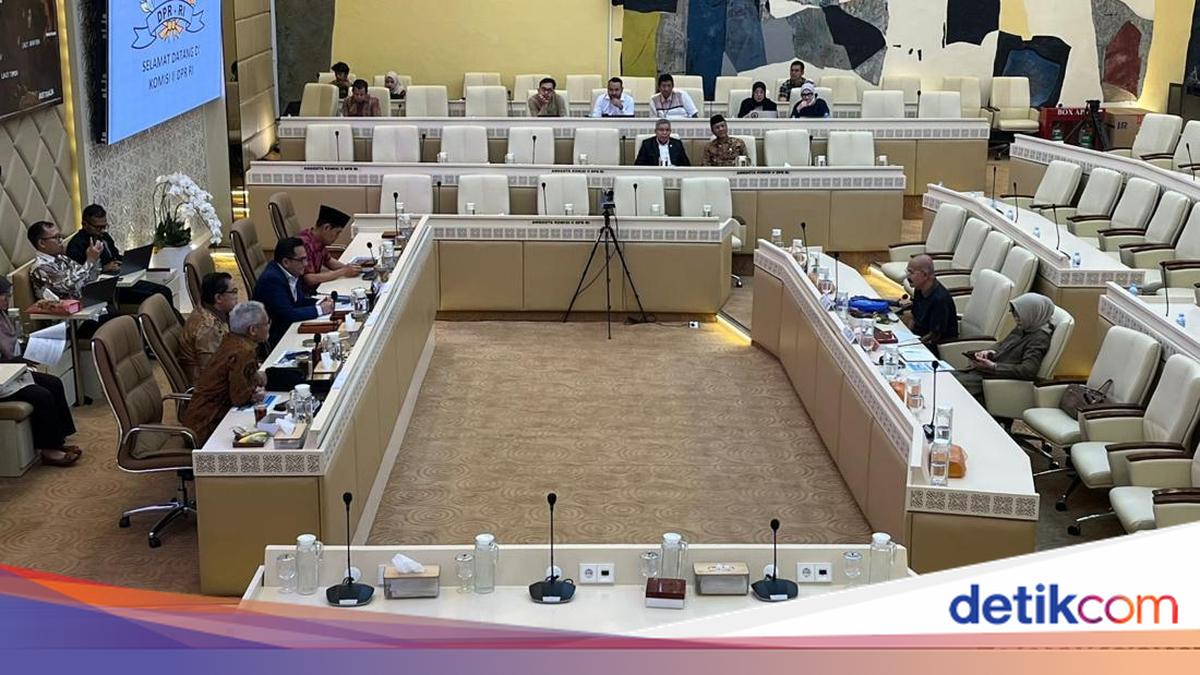
Ramlan Somal expressed these concerns during a hearing with Commission II of the House of Representatives (DPR) to discuss the Draft Election Law at the parliamentary complex in Senayan, Jakarta, on Tuesday (2/6/2026). He argued that several issues prevent the principle of fairness from being realised in elections.
“I have evaluated the open proportional electoral system. To be frank, my conclusion is that the open proportional system is a muddled system. Not just a mixture, but muddled,” said Ramlan. He noted that because political party cadres in the DPR and the government often act as players in the system, the current framework leaves behind five forms of electoral injustice. “Our elections are free, but not yet fair—free but not fair. The evidence of this unfairness lies in these five injustices.”
The first injustice, according to him, relates to the allocation of DPR seats in each province, which fails to guarantee equal representation. He noted that some provinces receive more seats than their population proportion warrants, while others are under-represented. “There is over-representation in some provinces, where seats are more numerous than the population, yet there are provinces where the population exceeds the seats received. This is an issue that has remained unresolved from the 2004 to the 2024 elections,” he stated. Ramlan cited Brazil as an example, where parliamentary seats are allocated based on both population and land area to maintain regional equality. He suggested that while Indonesia attempts to consider land area, the practice remains inconsistent.
Secondly, he highlighted campaign finance regulations, stating they fail to ensure fair competition among electoral participants. He noted that many aspects of campaign funding remain unregulated, masking underlying injustices.
Thirdly, Ramlan argued that the equality of voter value has not been fully realised. He claimed that votes cast for individual legislative candidates carry more weight than votes cast for political parties. “For instance, voting for a specific candidate is more sovereign than voting for a party. Even though the principle is ‘one person, one vote, one value,’ the reality of our election law is that voting for a candidate holds more sovereignty.”
Fourthly, he pointed to millions of valid votes that are not converted into seats because the receiving parties fail to meet the parliamentary threshold. He argued this violates the principle of ‘one person, one vote, one value.’ “Valid votes that are not counted—those obtained by parties that do not reach the threshold—have consistently exceeded 10 million since the 2009 election. In 2009, there were 19.9 million valid votes not converted into seats; the lowest was in 2014 at under 3 million; and in 2024, it was 17.7 million,” he said.
Fifthly, Ramlan highlighted the use of state facilities by incumbents for campaign purposes, noting that public budgets and state apparatus are frequently utilised for electoral interests. Finally, he identified vote-buying practices as a serious, unresolved issue in the Indonesian electoral system. He expressed hope that the DPR and the government could address these various problems through the revision of the Election Law.