
Former KPPU Chairman Criticises Decision on Online Loan Case
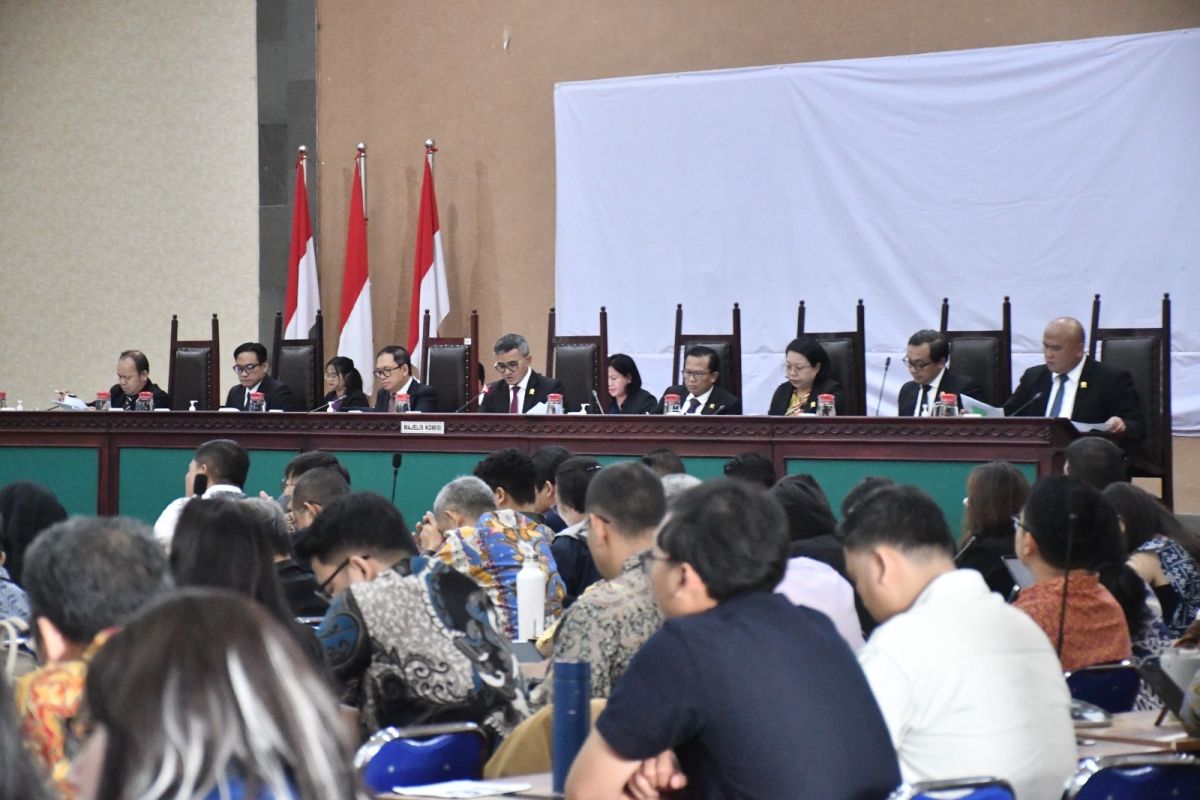
Jakarta (ANTARA) - Former Chairman of the Business Competition Supervisory Commission (KPPU), Kurnia Toha, has highlighted the KPPU’s decision against 97 online lending businesses, which were fined a total of Rp755 billion.
“There are several considerations by the commission panel and the handling of the trial that I believe were not entirely appropriate,” said Kurnia Toha in Jakarta on Friday.
He stated that one key issue is the KPPU’s reference to Article 101 of the Treaty on the Functioning of the European Union (TFEU), which prohibits anti-competitive agreements.
“The KPPU did not refer to that article in its entirety,” he said.
He explained that Article 101 of the TFEU does address prohibitions on cartels, price fixing, and restrictions on competition.
The commission panel deemed the code of conduct of the Indonesian Joint Funding Fintech Association (AFPI) to constitute price fixing.
Based on this analysis, the KPPU concluded that the 97 respondents violated Article 5 of Law No. 5 of 1999 regarding price fixing.
He clarified that Article 101 of the TFEU also exempts violations if they benefit consumers and if competition among businesses remains viable.
In this Indonesian case, consumers are undoubtedly benefited as loan interest rates have become lower.
“Moreover, businesses are still competing, evidenced by their continued advertising across various media to expand their customer base,” said the lecturer from the Faculty of Law at the University of Indonesia.
In his view, if competition persists and consumers benefit, the businesses involved as respondents in this case should be acquitted.
He believes such aspects were overlooked in the examination and by the commission panel in the case registered as 05/KPPU-I/2025.
“If it benefits consumers, it aligns with Article 50 of Law No. 5 of 1999 on the Prohibition of Monopolistic Practices and Unfair Business Competition,” he said.
He explained that this article classifies actions benefiting consumers as improvements in societal living standards.
He assessed that the AFPI’s provisions on loan interest rate caps, prompted by the Financial Services Authority (OJK), are essentially just behavioural rules or a code of conduct.
The KPPU failed to prove that after the code was adopted, there was any agreement or coordination among businesses regarding online loan interest rates.
“After the code of conduct—which the panel viewed as a price agreement—was established, it should also be proven whether there were rules imposing penalties for non-compliance and rewards for adherence,” he said.
He added that the KPPU panel also disregarded testimony from a former OJK official who instructed industry players to lower loan interest rates to avoid burdening consumers.
He noted that although the directive was verbal, it should still be regarded as the regulator’s intent from a state institution, which businesses as industry operators must follow.
“This was not considered by the panel. However, going forward, it would be advisable for businesses to request written directives from the regulator,” he said.
As is known, the KPPU penalised 97 peer-to-peer lending platforms deemed to have violated Article 5 of Law No. 5 of 1999.
The KPPU Commission Members have decided that the 97 online lending companies must pay a total fine of Rp755 billion.