
Former KPK Official Doubts Asset Forfeiture Bill Will Solve State Loss Recovery Issues
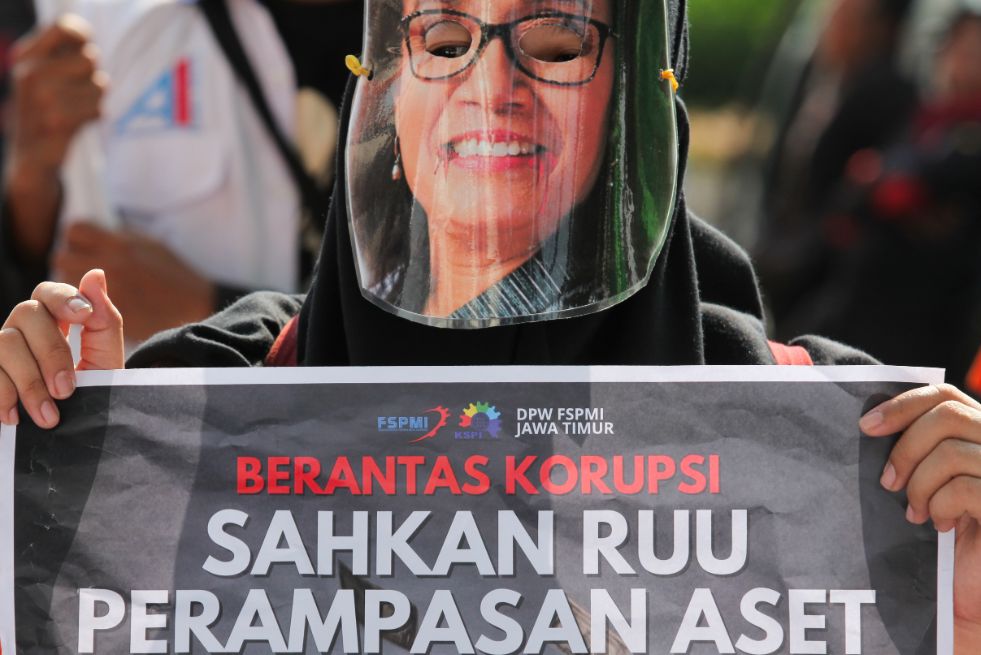
The former Deputy Chairman of the Corruption Eradication Commission (KPK), Amien Sunaryadi, has highlighted concerns regarding the objectives behind the ratification of the Asset Forfeiture Bill. Amien believes that the drafting of the Asset Forfeiture Bill will not be effective if the government and the House of Representatives (DPR) do not clarify the direction and the primary assumptions behind its formation.
Amien emphasised that if the Asset Forfeiture Bill is designed solely to increase the recovery of state financial losses, this regulation may not necessarily be the correct answer. According to him, the state must conduct in-depth research to determine whether low asset recovery is caused by a weak law enforcement system or because state loss calculations have historically been inaccurate.
“If the goal is to increase the level of state financial loss recovery, then the Asset Forfeiture Bill is not necessarily the solution. It is necessary to research first whether the low recovery of state losses is due to weaknesses in recovery efforts, or whether those state financial loss figures were previously calculated arbitrarily,” Amien stated during a Public Hearing (RDPU) with Commission III of the DPR RI at the Parliament Complex, Senayan, Jakarta, on Monday (14/9/2026).
He added that if the Asset Forfeiture Bill is intended to eradicate economic-motivated crimes and organised crimes—such as corruption, narcotics, online gambling, and Human Trafficking (TPPO)—the focus of the regulation should not be limited to the forfeiture of crime proceeds alone. Instead, he argued, the legislation should also cover the forfeiture of assets that have the potential to be used to commit criminal acts.
Furthermore, Amien believes the Asset Forfeiture Bill should not be made a priority if its primary motivation is merely to meet the obligations of the United Nations Convention against Corruption (UNCAC).
Amien revealed fundamental facts underlying his legal analysis regarding crime eradication in Indonesia. One of his main points of concern is the persistent prevalence of corruption, drugs, online gambling, and human trafficking across various eras.
“Efforts to eradicate corruption from the era of Bung Karno, Pak Harto, Pak SBY, to Jokowi, have always failed at the end of each presidency,” said Amien.
He also lamented the lack of comprehensive research specifically evaluating the effectiveness of the Corruption Crime Law (UU Tipikor) from the era of Perppu Number 24 of 1960, Law Number 3 of 1971, to Law Number 31 of 1999 in conjunction with Law Number 20 of 2001. According to his research, the most dominant type of corruption in Indonesia is bribery. Unfortunately, law enforcement officers are seen to prefer pursuing charges related to state financial losses.
“Law enforcement always pursues state financial losses. However, if corruption involving state financial losses that does not constitute criminalisation is investigated more deeply, it will certainly reveal the distribution of money that falls under the definition of bribery,” he asserted.
Amien revealed that bribery-type corruption is most prevalent within the circles of law enforcement, financial auditors, permit holders, and political power brokers. However, the handling of these bribery practices often fails to function properly.
Amien urged law enforcement to shift the focus of corruption eradication from state financial losses to the prosecution of bribery. He cited other countries that have successfully cleaned themselves of corruption by consistently eradicating bribery rather than focusing on calculating state losses.
Additionally, he highlighted public perception that calculations of state financial losses are often exaggerated, arbitrary, and prepared behind closed doors. This factor of state loss is, according to him, a major obstacle when Indonesia attempts to pursue the assets of corruptors abroad.
“The pursuit of assets abroad based on state financial losses does not meet the principle of dual criminality, which is why support from other countries remains very minimal,” Amien concluded.