
Former KPK Official: Auditing Corruption Losses Should Not Be Monopolised by BPK
The former Deputy Chairman of the KPK, Amien Sunlamaryadi, believes that the calculation of state financial losses in corruption cases must not be monopolised by the Audit Board of Indonesia (BPK). He stated that the involvement of other parties is necessary.
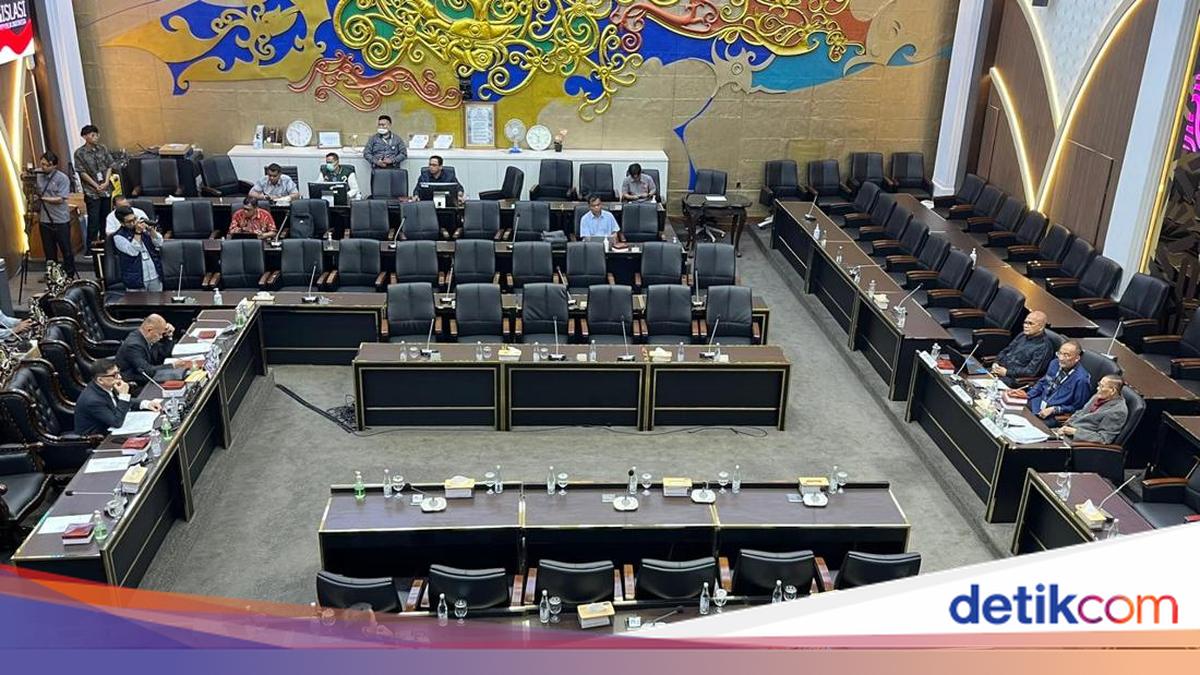
This was conveyed by Amien during a public hearing with the DPR Legislation Committee (Baleg DPR) regarding the monitoring of the Anti-Corruption Law at the DPR building, Senayan, Jakarta, on Monday (18/5/2026). Amien initially questioned the capacity of BPK personnel to handle all state loss calculation requirements, especially in regional areas.
“To complete the investigation, prosecution, and eventually the trial process, the presence of experts who calculate state financial losses at the investigation site is necessary,” said Amien. “If the investigation is in a regency, is the BPK capable of providing personnel? I doubt it. Especially if the corruption crime is valued at only Rp 300 million. In Jakarta, we might overlook Rp 300 million, but in a village, that is a very large amount.”
In his view, the Attorney General’s Office Circular regarding the calculation of state losses is a more appropriate reference. He mentioned that the calculation of state losses should not be monopolised by the BPK so that cases can be investigated more swiftly.
“Therefore, I conclude that the calculation of state financial losses for the purposes of criminal corruption proceedings should practically not be monopolised by the BPK. Thus, the Attorney General’s Circular is more appropriate to follow,” he said.
He also highlighted the methods used by the BPK for state loss calculations, noting that some calculations remain inaccurate. He argued that the most important factor is not which institution performs the calculation, but rather the standards and methods used.
Amien also touched upon the provisions in the Criminal Procedure Code (KUHAP), which state that evidence in court regarding state losses consists only of expert testimony and documents. He argued that if a defendant is unable to present experts to calculate state losses, the trial becomes unfair.
“In the KUHAP, there is no evidence titled BPKP, BPK, or any other agency. There is only expert testimony and documents. Therefore, if we adhere to the KUHAP, it must follow that path. In court, the right to present experts or documents belongs to both the Public Prosecutor and the defendant. If the defendant is not allowed to present expert evidence or documents, the trial is unjust. Structurally and systematically, the trial would be unfair,” he continued.
He suggested that former officials or former auditors from state institutions should still be permitted to serve as experts, including for the defence. “In my opinion, it should not be monopolised by the BPK. The Attorney General’s Circular is more appropriate. If, for example, a former BPK official, a former BPKP employee, or a former KPK official serves as an expert for the defendant, that should be permitted.”
As background, the Constitutional Court (MK) previously identified the BPK as the state financial audit institution referred to in Article 603 of the Criminal Code (KUHP). This was stipulated in MK Decision Number 28/PUU-XXIV/2026, delivered on Monday, 9 February 2026. The decision was made by nine constitutional judges. While the applicants sought clarity on the standards and authority for determining state losses, the MK ruled that state losses can be calculated based on findings from authorised agencies, but maintained that the BPK holds the mandate for auditing state finances in accordance with the Constitution.