
Former KPK Leader Highlights Weaknesses in Tracing Corrupt Assets
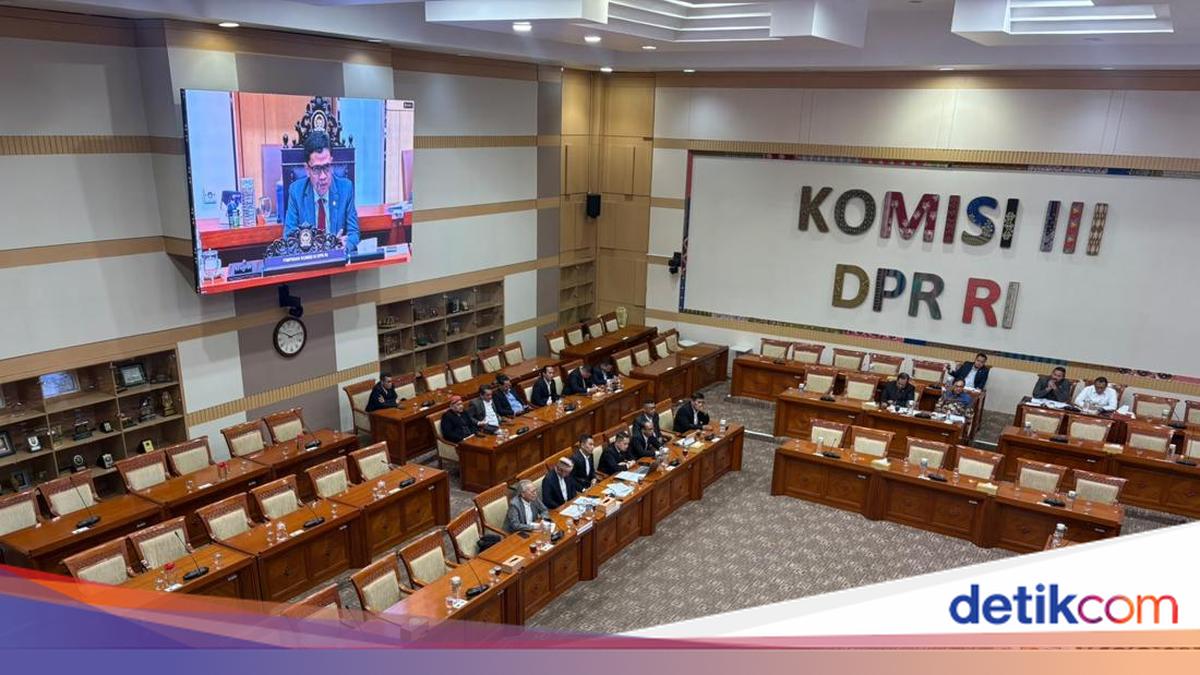
Commission III of the House of Representatives (DPR) held a Public Hearing (RDPU) with former KPK leader Erry Riyana regarding the Asset Forfeiture Bill. Erry highlighted that current asset tracing efforts have not yet reached their maximum potential.
The meeting took place in the Commission III room of the DPR, Jakarta, on Monday (21/09/2026). Erry initially noted that Indonesia already possesses numerous frameworks for asset recovery.
“The legal framework for asset recovery in Indonesia generally already includes many regulations covering asset recovery, or at the very least, legal instruments capable of seizing the proceeds of crime,” said Erry.
However, according to him, the problem lies in the incorrect perception of the proceeds of corruption and state financial losses. He assessed that, so far, corruption enforcement has focused solely on recovering state finances.
“Corruption has been viewed as an act that harms state finances. Consequently, it appears as though the focus of corruption eradication is merely how to return state financial losses,” he stated.
In reality, corruption is the act of unlawfully gaining profit for oneself. If state losses occur, they are merely a consequence of the corrupt act.
“Corruptors do not aim to harm the state or state finances; the loss is merely an excess of their actions,” he said.
Due to this misunderable, he noted that law enforcement does not focus on searching for the proceeds of crime, but rather on determining the magnitude of state losses. As a result, the tracing of corruptors’ assets has weakened.
“This misunderstanding not only leads to the criminalisation of policy, but also causes law enforcement to shift their focus from seeking the proceeds of crime to seeking the amount of state financial loss. This affects the weakening of techniques used to trace the proceeds of crime,” he said.
“It is as if it is sufficient to find and calculate the amount of state financial loss, and for that purpose, law enforcement can simply rely on auditors, both from the BPK (Audit Board of Indonesia) and BPKP (Finance and Development Supervisory Agency),” he added.
Source: jawawa.id (https://jawawa.id/newsitem/former-kpk-leader-highlights-weaknesses-in-tracing-corrupt-assets-1789977718)
Originally published by detikcom (https://news.detik.com/berita/d-8672297/eks-pimpinan-kpk-soroti-lemahnya-penelusuran-aset-hasil-korupsi), translated from Indonesian