
Former KPK Investigators Highlight Two Crucial Elements in Asset Forfeiture Bill Discussions
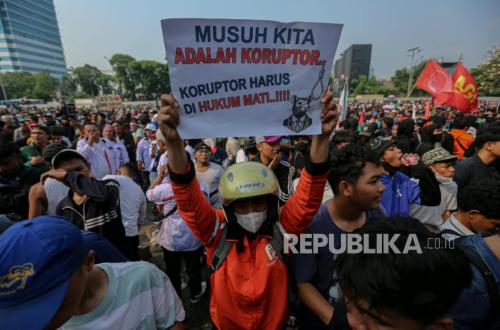
Anti-corruption activists are supporting an open agreement between the House of Representatives (DPR) and the public, urging the ratification of the Asset Forfeiture Bill into law by 15 December 2026. IM57+, a group comprising former investigators from the Corruption Eradication Commission (KPK), stated that the Asset Forfeiture Law must serve as a strengthening legal foundation in Indonesia’s efforts to eradicate corruption.
The Chairman of IM57+, Praswad Nugraha, stated that two essential conditions must be met in the process leading to the ratification of the Asset Forfeiture Bill. Most importantly, he noted, is the substantial obligation within the material of the Asset Forfeiture Bill itself. “The discussion of the Asset Forfeiture Bill must not only focus on when the regulation will be passed. It must also ensure that the regulated substance is truly capable of strengthening anti-corruption strategies,” Praswad told Republika on Sunday (30/8/2026).
Praswad noted that regarding the substance of the Asset Forfeiture Bill, the discussions in the House of Representatives (DPR) must not hinder the effectiveness and innovation of corruption eradication. “The passage of a law does not automatically make it effective if the provisions within it actually remove important aspects and innovations in fighting corruption,” said Praswad. In this regard, Praswad emphasised that the discussion of the Asset Forfeiture Bill must ensure the inclusion of clauses regulating the Unjust Enrichment of state officials.
“One of the substances that needs to be monitored in the Asset Forfeiture Bill is the regulation of illicit enrichment, or the unjust increase in wealth of an official,” said Praswad. The Asset Forfeiture Bill must ensure this principle is enshrined in the material. “This provision is vital to respond to situations where there is a significant disparity between the legitimate income and the wealth held by an official,” Praswad added.
This principle is necessary within the Asset Forfeiture Bill as a mechanism for state officials to be held accountable for the origins of their wealth. “This can lead to consequences if an official cannot reasonably explain the origin of their wealth. The discussion of the Asset Forfeiture Bill must ensure this important substance is maintained,” said Praswad.