
Former KPK Deputy Chief Responds to DEN Proposal on Corruption Rules and Business Risks
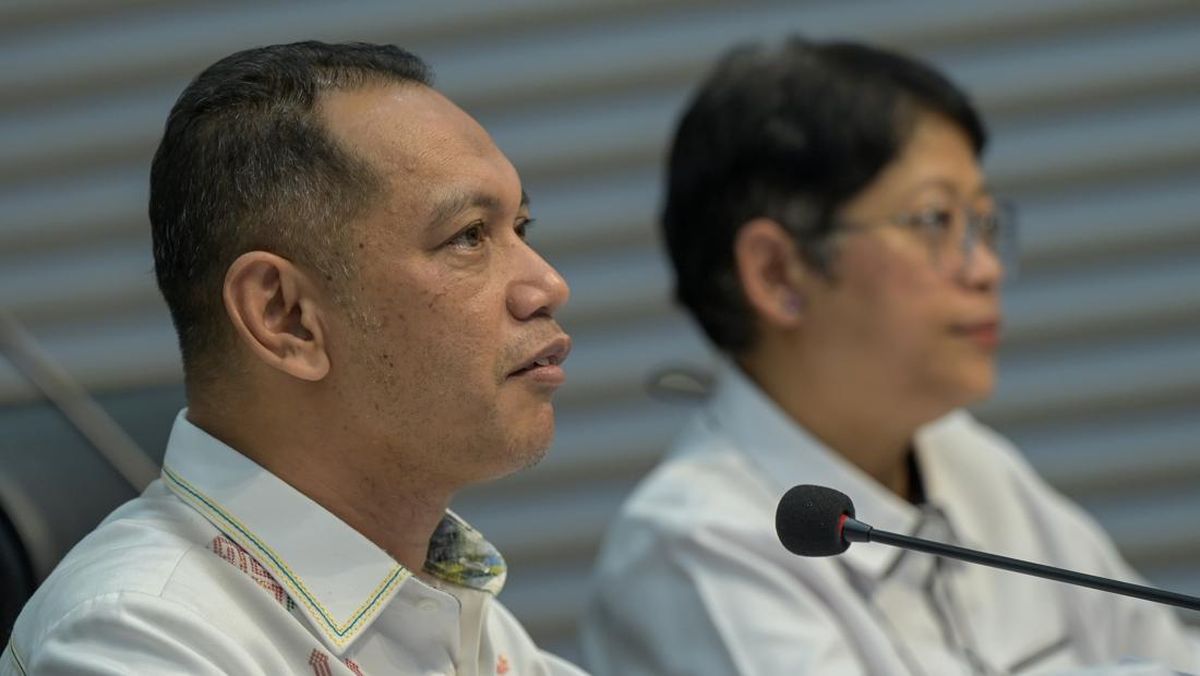
Former Corruption Eradication Commission (KPK) deputy chair Nurul Ghufron said rules on corruption offences should be evaluated to ensure there is a clear boundary between corruption and business risk.
Ghufron made the remarks in response to a proposal by National Economic Council (DEN) Chair Luhut Binsar Pandjaitan to review the definition of corruption offences, including the element of state losses.
In Ghufron’s view, a loss to state finances should not automatically be treated as a criminal offence if it results from an administrative error, negligence or a business decision made in good faith.
He said the proposal should be considered as part of an assessment of the effectiveness of Indonesia’s anti-corruption efforts. The review should not focus solely on the wording of the articles, but should also examine the appropriateness of criminalisation, the effectiveness of prevention, the reach of the law and the recovery of proceeds of corruption.
“Are the elements of Articles 2 and 3 sufficiently clear in distinguishing corruption from administrative errors, negligence, business risks or loss-making business decisions made in good faith?” Ghufron said, according to a written statement on Tuesday (27 October).
Ghufron said an evaluation of the rules must not be interpreted as an effort to reduce the number of corruption cases. Rather, any changes should ensure that perpetrators remain accountable while preventing conduct that is not corruption from being prosecuted as a criminal offence.
He said the effectiveness of anti-corruption efforts should also be measured by the success of prevention across sectors, including public procurement, licensing, budget management, state-owned enterprises (SOEs), regional government and the private sector.
“Has corruption declined in public procurement, licensing, budget management, SOEs, regional government and the private sector? We should not only count the cases successfully handled while prevention remains under-optimised,” he said.
Alongside clarifying the boundary between business risk and criminal offences, Ghufron said the review should assess whether the law reaches the various forms of corruption adequately.
The offences of concern include bribery in the private sector, bribery of foreign officials, trading in influence, and illicit enrichment—wealth whose source cannot be lawfully explained.
He stressed that any expansion or adjustment of the rules must continue to uphold the principle of legality and the protection of human rights.
Another important consideration is the recovery of assets derived from corruption. Ghufron said an evaluation should measure the value of assets identified, seized, confiscated and returned to the state.
Those results should also be compared with the costs of law enforcement to establish how effectively efforts are recovering state losses.
“Answers to these questions will lead to a substantive understanding of whether we need to evaluate, reconstruct or simply reformulate the elements of the corruption offences,” he said.
Ghufron called on the KPK, the Attorney General’s Office, the National Police and all relevant parties to be open to research linking the wording of legal provisions, patterns in law enforcement, the quality of court rulings, asset recovery and changes in Indonesia’s level of corruption.
He said the purpose of the review was not to make it easier for corruption offenders to be acquitted, but to ensure the law reaches corruption accurately without criminalising conduct that does not constitute corruption.
“The ultimate aim is not to reduce the number of cases or make it easier for perpetrators to be acquitted, but to ensure that the law properly reaches corruption and does not wrongly criminalise conduct that is not corruption,” he said.
The debate over removing state losses from the definition of corruption gained prominence after Luhut said President Prabowo Subianto had approved a DEN study stating that corruption should be limited to bribery and should not include the element of state financial losses.
Luhut later corrected his remarks. He explained that the recommendation to improve the Corruption Eradication Law would not remove state financial losses from the definition of corruption, and that Articles 2 and 3 of the law—or Articles 603 and 604 of the Criminal Code—would remain in place.
Luhut said the DEN recommendation focused on two points. First, it would clarify the elements of proof to make law enforcement more certain, objective and consistent. Second, it would broaden the scope of anti-corruption efforts by adopting offences recognised under the UN Convention against Corruption (UNCAC) that are not yet covered by national law.
UNCAC’s categories of corruption include bribery of national public officials; bribery of foreign public officials and officials of public international organisations; embezzlement, misappropriation or other diversion of property by a public official; trading in influence; abuse of office or authority; illicit enrichment; bribery in the private sector; embezzlement of private-sector property; laundering the proceeds of crime; concealment of the proceeds of crime; and obstruction of justice.
Meanwhile, Law No. 20 of 2001, the second amendment to Law No. 31 of 1999 on the Eradication of Criminal Acts of Corruption, defines at least 30 acts as corruption offences. One concerns state financial losses, as set out in Articles 2 and 3.
Source: jawawa.id (https://jawawa.id/newsitem/former-kpk-deputy-chief-responds-to-den-proposal-on-corruption-rules-and-business-risks-1793130623)
Originally published by CNN Indonesia (https://www.cnnindonesia.com/nasional/20261027170046-12-1420219/eks-bos-kpk-respons-usulan-den-terkait-aturan-korupsi-risiko-bisnis), translated from Indonesian