
Former Komnas HAM Chief: Human Rights Bill Answers Challenges of the Times
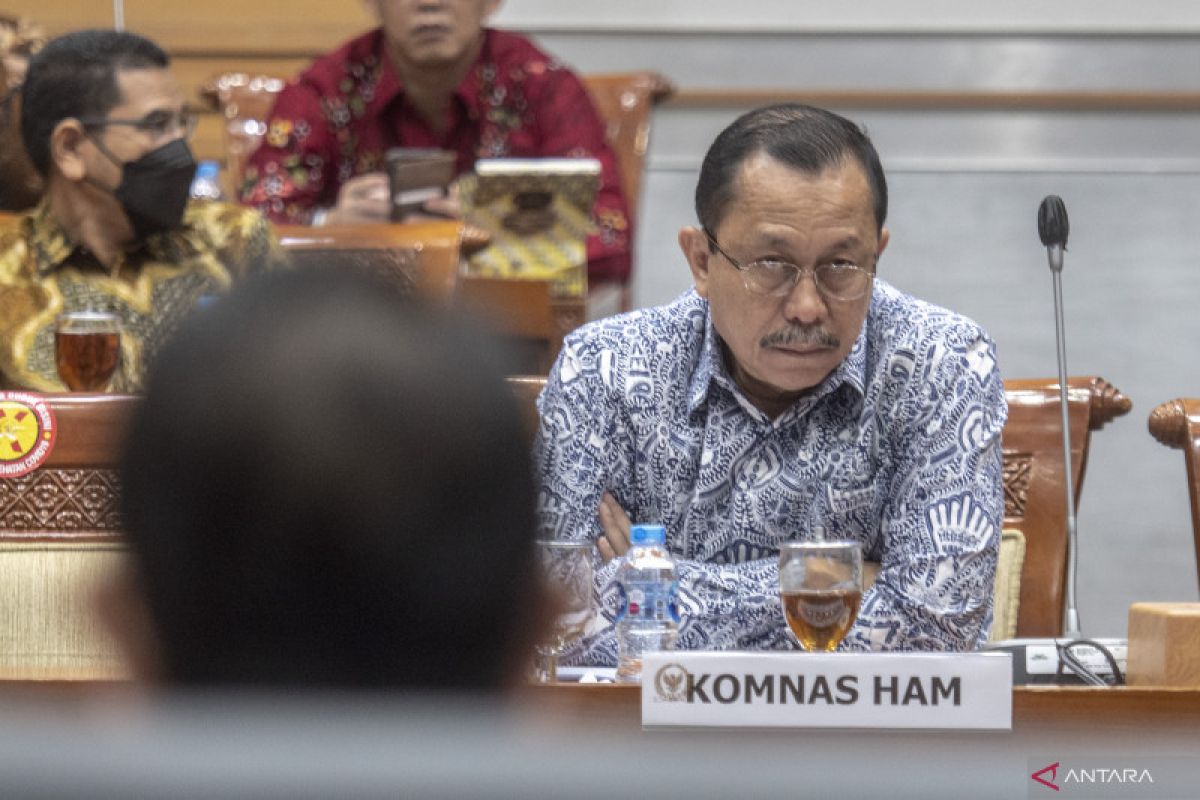
Jakarta (ANTARA) — Ahmad Taufan Damanik, who chaired the National Commission on Human Rights (Komnas HAM) from 2017 to 2022, has described the Human Rights Bill as an important step towards answering the challenges of the times and the evolving human rights issues of the past two decades.
Speaking at a discussion at the University of North Sumatra (USU) in Medan, North Sumatra, on Thursday, he said the bill not only updates the norms of Law Number 39 of 1999 on Human Rights but also strengthens state obligations, expands protection for vulnerable groups, and regulates corporate responsibility in respect of human rights.
“The revision of the Human Rights Law is absolutely necessary,” Ahmad said, as quoted from a statement received in Jakarta.
In his view, a range of new issues — such as the impact of corruption on citizens’ fulfilment of rights, environmental damage, protection for the elderly, and the rights of minority groups — now form an important part of what must be accommodated in regulation.
Law Number 39 of 1999 was drafted in a context different from today’s conditions, which is why the Human Rights Bill incorporates various new developments so that human rights protection remains relevant to contemporary challenges.
He stressed that the revision also clarifies understanding of the division of roles among state institutions.
Taufan explained that the bill does not grant new powers to particular ministries or institutions, but rather reaffirms the state’s obligation to respect, protect, fulfil, enforce, and advance human rights.
Komnas HAM, meanwhile, remains positioned as an independent institution performing an oversight (check and balance) function over the implementation of state obligations.
Furthermore, he revealed that the bill introduces several important innovations, including recognising corporations as subjects bearing responsibility for respecting human rights, strengthening the standing of Komnas HAM’s recommendations, providing protection for human rights defenders, and accommodating developments in international human rights law — including provisions on the limitation of rights based on the Siracusa Principles in certain circumstances.
“If anyone claims the bill was drafted without public participation — well, what is this here at the FISIP campus? This is precisely what meaningful participation means,” said one of the bill’s drafters.
As such, he considered the bill to have already heard input from academics, civil society organisations, and Komnas HAM, all of which has been gathered during the deliberation process.
Meanwhile, Juniarti Aritonang, Director of the North Sumatra Legal Aid and People’s Advocacy Institute (Bakumsu), said the revision of the Human Rights Law is an urgent necessity given that the existing regulation is more than 25 years old.
However, she emphasised that updating legal norms must be accompanied by strong implementation so that human rights protection is genuinely felt by the public.
“I too support this change to the Human Rights Law — it has been more than a quarter of a century,” Juniarti said.
According to Juniarti, several elements of the bill deserve appreciation, such as recognition of protection for indigenous communities and farmers, as well as strengthened provisions on corporate responsibility.
Nevertheless, she hoped these provisions could be made firmer so as to have greater practical force in the enforcement of human rights in Indonesia.
She also reminded that the deliberation process must continue to uphold the principle of meaningful participation by maintaining openness and consistency in both the academic manuscript and the draft bill.
Beyond producing quality regulation, a participatory process is considered an essential condition for building public trust in legislative products.
The Human Rights Bill is a revision of Law Number 39 of 1999 on Human Rights, which has been in force for more than two decades.
The revision has been drafted to align with developments in international human rights standards, clarify the division of state obligations in fulfilling human rights, and strengthen the institutions and mechanisms of human rights protection in Indonesia.
In addition to accommodating new issues such as the right to a healthy environment, protection of vulnerable groups, human rights defenders, and corporate responsibility, the bill is also expected to provide a more comprehensive legal foundation supporting the agenda of Respect, Protection, Fulfilment, Enforcement, and Advancement of Human Rights (P5HAM).
The Human Rights Bill is thus expected to address social, political, economic, and legal challenges that will continue to evolve in the future.
The revision is included in the National Legislation Programme (Prolegnas), targeting enactment in 2026. It is currently at the stage of a series of public tests and substantive deliberations with academics and relevant institutions.
Source: jawawa.id (https://jawawa.id/newsitem/former-komnas-ham-chief-human-rights-bill-answers-challenges-of-the-times-1785426887)
Originally published by Antara (Indonesian) (https://www.antaranews.com/berita/5673296/eks-ketua-komnas-ham-nilai-ruu-ham-jawab-tantangan-zaman), translated from Indonesian