
Former KAI Commissioner Says Stalled DDT Project is Root Cause of Bekasi Timur Station Tragedy
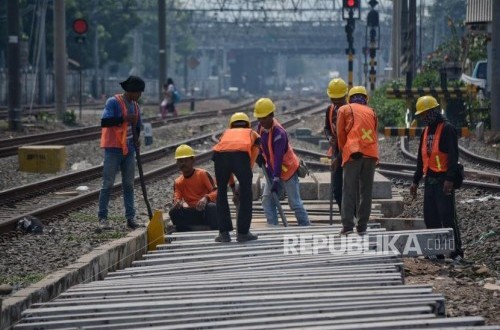
REPUBLIKA.CO.ID, JAKARTA – Former Commissioner of PT Kereta Api Indonesia (Persero) or KAI, Riza Primadi, has spoken out regarding the accident involving the Argo Bromo Anggrek train and the Jabodetabek KRL. In a LinkedIn post on Wednesday (29/4/2026), Riza stated that the tragedy at Bekasi Timur Station, which claimed many lives, is not merely a statistic. “In my view, this is a manifestation of systemic negligence fostered under the noses of policymakers,” Riza said. Riza highlighted discussions among netizens on Threads and X that are preoccupied with peripheral narratives. He described debates about signalling malfunctions or human error as superficial. “They overlook that the root problem is the absence of the Double Double Track (DDT) on that route. If the DDT Bekasi-Cikarang programme had been executed, yesterday’s bloody disaster would never have happened,” Riza said. As someone who was inside the system for eight years as KAI Commissioner, Riza views this incident with deep resentment. He claims to know exactly how these grand plans were formulated. “On the other hand, I also see how frustrating it is for KAI management colleagues to face thick bureaucratic walls with chaotic governance, ultimately making passenger lives seem secondary,” Riza continued. Operationally, Riza added, mixing KRL Commuter with long-distance trains on a double track will always harbour the potential for fatal dangers. He stated there are two permanent solutions to prevent the Bekasi Timur Station tragedy from recurring: DDT or Automatic Train Protection (ATP). Riza found it very odd that DDT is available from Jatinegara (JNR) to Bekasi (BKS), but suddenly disappears upon entering Bekasi Timur (BKST). “Yet, if you read the master plan, it’s very clear: MRI-CKR (Manggarai-Cikarang). The land has been acquired by KAI from the residents with a strong legal basis, but its execution is at a standstill,” he said. Riza continued that technically, ATP could be a solution so that the facilities (locomotives) and infrastructure (signalling) can communicate to prevent accidents or PLH in railway terms. The problem, he added, is that facilities are under KAI’s control, while infrastructure is managed by DJKA, the Ministry of Transportation. “Expecting them to synchronise amid the current governance? Insiders only respond with one word: complicated,” he added. Riza said that President Prabowo Subianto is talking about eliminating level crossings, which requires Rp4 trillion. He noted that complex social and economic issues are not just about building flyovers or underpasses. “Important, but in this case, the main issue is not solely level crossings. And resolving DDT makes far more sense,” Riza said. Riza referred to a kind of “deep state” in the bureaucracy on that side that makes this crucial project always take a long time. He assessed this as a polite term for negligence that claims lives. “So, stop blaming SOPs or field officers. This disaster is a great sin due to the uncertainty of infrastructure held hostage by sectoral egos and poor governance,” he revealed.