
Former Indonesian Finance Minister Says Malaysia Could Soon Become the Next High-Income Country
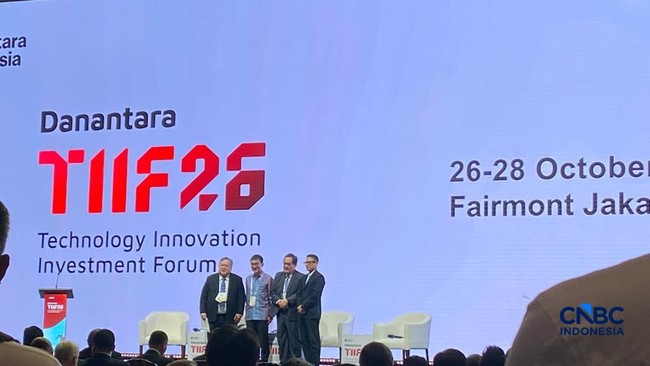
Former finance minister Bambang P.S. Brodjonegoro says Asia still faces challenges in helping more countries join the high-income economy group. He said the region also lags behind Central and Eastern Europe in driving economic transformation.
Bambang said the success of Central and Eastern European countries in growing their economies was supported by the European Union (EU), which helped not only with policy and economic matters but also encouraged industrialisation in the region.
By contrast, Asia’s past economic growth model relied heavily on manufacturing and exports. That strategy played a major role in driving economic progress in Japan, South Korea and several other Asian countries.
“Unfortunately, Asia is now somewhat behind the European Union. We do not have many countries that have successfully moved into the high-income group,” Bambang said in a presentation at Danantara.
He said Asia needs a new approach and growth model to catch up with Central and Eastern Europe.
According to Bambang, the EU’s experience in promoting industrialisation in Central and Eastern European countries in the early 2000s could offer lessons for Asia. He said the support was comparable to the role Japan played in helping develop industry in several Southeast Asian countries in the past.
“The European Union did not only support policy and the economy in Central and Eastern Europe, but also industrialised the region,” he said.
Bambang stressed that manufacturing and exports remain important for countries seeking high-income status. However, the strategy needs to be updated by strengthening the adoption of technology and innovation to generate greater added value.
Against this backdrop, Bambang sees Malaysia as the ASEAN country closest to reaching high-income status in the next few years. He said Malaysia’s success would be an important development for Southeast Asia, given that relatively few Asian countries have attained that income level.
“The closest at present is an ASEAN country, Malaysia. Perhaps in the next few years it will become a high-income country,” Bambang said.
He cautioned, however, that reaching that status requires a growth model capable of sustainably raising productivity and economic value added.
Bambang said technological development, including artificial intelligence (AI), would be an important factor shaping countries’ future economic competitiveness.
He said Asia’s next growth model should focus on adopting technology to generate higher value in manufacturing, agriculture and services. The use of technology, he added, must be supported by substantial investment in research and development (R&D) and innovation.
Bambang cited South Korea, which, according to his presentation, invests about 5.3% of gross domestic product (GDP) in research. Singapore, one of ASEAN’s biggest research investors, allocates around 1.5% of GDP.
Indonesia’s research investment, based on Bambang’s experience as research minister, is only about 0.3% of GDP.
He said Indonesia must significantly increase research investment to avoid falling behind in global competition and to build a higher-value economy.
“This is the time for Indonesia to become more serious and truly invest in R&D,” he said.
Source: jawawa.id (https://jawawa.id/newsitem/former-indonesian-finance-minister-says-malaysia-could-soon-become-the-next-high-income-country-1792997431)
Originally published by CNBC Indonesia (https://www.cnbcindonesia.com/news/20261026113613-4-779428/mantan-menkeu-ri-ungkap-malaysia-segera-jadi-negara-kaya-berikutnya), translated from Indonesian