
Former Indonesian Finance Minister Proposes State Control of Mining, Not Conglomerates
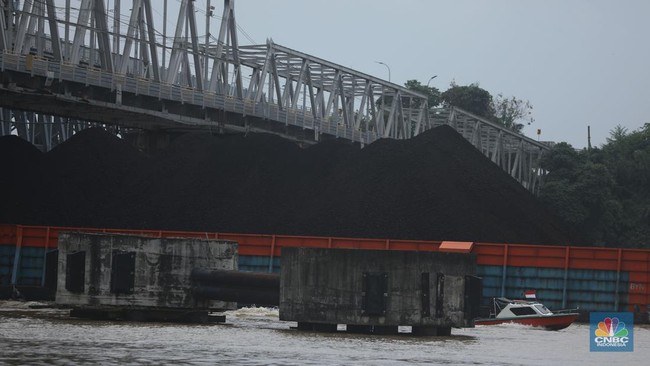
Jakarta, CNBC Indonesia — Fuad Bawazier, who served as finance minister in 1998, has proposed that the management and ownership of all of Indonesia’s mineral resources be placed under state control. The restructuring, based on Article 33 of the 1945 Constitution, is intended to address various problems in the mining sector, particularly the dominance of a small number of conglomerates.
Fuad said state control would still allow private companies to participate through business-friendly auctions or tenders. However, he stressed that primary ownership of mining assets should remain with the government.
“Let’s make it business-friendly; we understand that too. Let’s just be business-friendly. This is about Article 33. This is a way to address problems in Indonesia,” Fuad said on CNBC Indonesia’s Cuap Cuap Cuan podcast, as quoted on Wednesday (21 October 2026).
Fuad said that the dominance of private owners and conglomerates had led to various forms of financial transaction fraud in the mining sector. He said this included price manipulation, the falsification of export volumes through transfer pricing and under-invoicing, and foreign-exchange losses.
“They want to take control, and as a result every kind of fraud is committed. There’s transfer pricing, under-invoicing and all sorts of things. Volumes are reduced, right? Prices are manipulated, and then the invoices are understated,” he said.
Under the proposed arrangement, he said, mining companies could continue operating while transferring a shareholding to the government and improving management practices so that sales were conducted honestly and transparently.
He said the move was necessary to ensure that foreign-exchange earnings and profits from mining were not taken abroad for the benefit of a small group.
“Why should we be uncomfortable with just a handful of people? We need to be firm. Why should only a few people get to enjoy the money? The profits should be here in Indonesia, shouldn’t they? Not overseas,” he said.
He argued that asserting sovereignty over natural resources could bring order to the investment climate and help Indonesia regain its standing as a developed country. Legal certainty and firm regulation, he said, would ensure that national wealth was used for the prosperity of all Indonesians.
“This is only a matter of ownership. If it is done properly, we will be prosperous, our land will be fertile, and we will have plenty of foreign exchange,” he said.
Bahlil prioritises small businesses
Separately, Bahlil Lahadalia, Coordinating Minister for Downstreaming and Energy Transition as well as Minister of Energy and Mineral Resources, said the government was committed to promoting a more even distribution of economic opportunity through policies favouring micro, small and medium-sized enterprises (MSMEs) and regional businesses.
Drawing on his experience as a regional business owner, Bahlil said he had introduced four policies to support MSMEs and local entrepreneurs. They include granting mining permits to regional MSMEs and cooperatives without a tender, legalising community oil wells, prohibiting affiliated contractors and requiring local contractors to be prioritised, and reorganising coal production quotas.
Bahlil said regional businesses needed government support to compete fairly with large corporations. Without equitable regulations, he said, small local businesses would continue to struggle to secure a share of economic activity.
“Based on my experience as a business owner, regional entrepreneurs generally need affirmative action. Without support and assistance, it is difficult for them to compete on a large scale with established, larger businesses,” Bahlil said at the 2026 National Conference of the Indonesian Indigenous Entrepreneurs Association (HIPPI) in Jakarta on Monday (12 October 2026).
The first policy grants priority Mining Business Permits (IUPs) to MSMEs and regional cooperatives without a tender. Bahlil said it was intended to correct the previous auction system, which he said consistently favoured large businesses based in central Indonesia.
The provision is included in the Mineral and Coal Mining Law. “We amended the Mining Law to give cooperatives and MSMEs priority IUPs without a tender, restoring the right of local people to be masters in their own land,” he said.
The second policy legalises 43,000 community oil wells in areas including Sumatra, Java and Aceh. Under the regulation, wells that were previously considered illegal can operate officially. Pertamina purchases their production—around four to five barrels per well—at 80 per cent of the Indonesian Crude Price (ICP).
“People have assumed that only national and foreign businesses operate oil blocks. But Article 33 of the 1945 Constitution gives all Indonesians the opportunity to manage natural resources, provided they meet the requirements,” he said.
“Across the country, there are nearly 40,000 active oil wells. But in Sumatra, Java and Aceh, people have been operating wells in their back gardens since before Indonesia’s independence. They had no permits, so they were pursued by law enforcement. The officers were not at fault either, because the businesses were operating without permits,” he said.
Bahlil said he had instructed the director general to assess the number of community-owned wells, finding a total of 43,000. He said he then issued a ministerial regulation allowing the wells to be licensed so local people could manage them in their home regions. The wells are now operating without their owners being pursued, he said, producing four to five barrels per well per day. One barrel is 159 litres, and the oil is bought by Pertamina at 80 per cent of the ICP price. He said the policy was also creating jobs.
The third policy prohibits holders of IUPs from using affiliated contractors based in Jakarta. Mining companies must instead award supporting work to local businesses in their operating areas. “For companies holding IUPs, their contractors must not be affiliated; they should give the work to local businesses,” he said.
The fourth policy focuses on reorganising coal companies’ Work Plans and Budgets (RKABs). With Indonesia accounting for 43 per cent of global coal supply, the government has cut some quotas held by the largest companies and allocated them to regional MSME businesses with capacities of between 200,000 and one million tonnes.
Bahlil said the affirmative policies were designed to ensure that communities in the regions shared in the economic growth generated by downstreaming. “Downstreaming is important as a trigger for economic growth, but high growth without an even distribution is not right, in my view. That is where the government must step in to promote a fairer distribution,” he said.
Source: jawawa.id (https://jawawa.id/newsitem/former-indonesian-finance-minister-proposes-state-control-of-mining-not-conglomerates-1792565501)
Originally published by CNBC Indonesia (https://www.cnbcindonesia.com/news/20261021115954-4-778139/eks-menkeu-ri-usulkan-tambang-dikuasai-negara-bukan-konglomerat), translated from Indonesian