
Former Finance Minister Who Helped Resolve Crisis Named National Hero
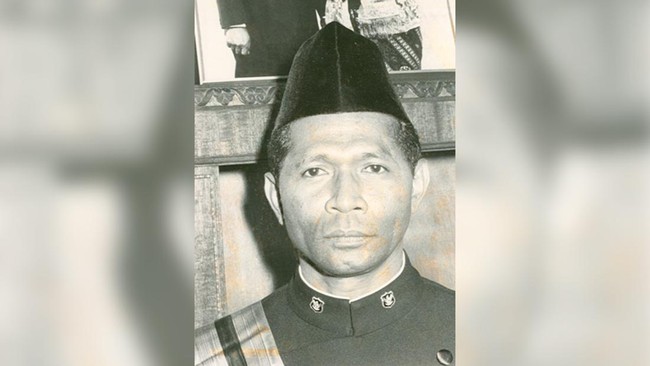
The government has announced 18 recipients of the 2026 National Hero title. Among them is Franciscus Xaverius Seda, better known as Frans Seda, a figure from Maumere, East Nusa Tenggara (NTT), who played an important role in restoring Indonesia’s economy after the 1966 crisis.
According to the Finance Ministry’s account, “The Finance Ministry Organisation Through the Years”, Frans Seda began leading the Finance Department on 25 July 1966 under the Ampera Cabinet. At the time, Indonesia was facing extremely difficult economic conditions. Inflation had soared to 650% in a year, state revenue had slumped, and government spending far exceeded the country’s financial capacity.
The situation meant the government had to change economic policy urgently. For years, budget deficits had been covered by printing money, which in turn exacerbated price rises.
Frans Seda then pushed for fundamental changes to public financial management. One of his main measures was to introduce a balanced-budget system.
Under this policy, government spending had to be aligned with the state’s revenue capacity. The government could no longer spend freely without taking account of where the funds would come from.
The change began to appear in the preparation of the 1967 budget. For the first time, government expenditure was organised on the basis of projected state revenue and divided into two main categories: routine spending and development spending.
Routine spending covered the government’s operational needs, while development spending was directed towards national development programmes.
The balanced-budget policy was also part of an effort to end deficit financing through money-printing. The government sought to control growth in the money supply, which had contributed to hyperinflation.
Alongside the budget reforms, Frans Seda also tightened oversight of the banking sector. Credit allocation was directed towards more productive economic activity, particularly to revive the production and distribution of goods.
The government also began moving away from an economic model under extensive state control, giving market mechanisms greater scope. Prices previously kept under tight government control were gradually adjusted to economic conditions.
The next step was to restore Indonesia’s economic relations with the international community. At the time, Indonesia was dealing with arrears on foreign debt and struggling to secure aid and foreign capital.
Frans Seda helped promote the reopening of relations with Western countries and international financial institutions. This formed part of a programme to rebuild international confidence in Indonesia.
One important outcome was the establishment of the Inter-Governmental Group on Indonesia (IGGI) in 1967. The group of countries and donor institutions provided a forum for coordinating economic assistance to Indonesia.
The stabilisation measures began to produce results. According to figures recorded in the government’s Financial Notes and State Budget, the rise in Jakarta’s cost-of-living index, which reached 650% in 1966, fell to 112% in 1967. It declined further to 85% in 1968 and 9.9% in 1969.
The improvement resulted from a combination of fiscal, monetary and trade policies, along with international assistance. However, the budget reforms introduced during Frans Seda’s tenure were an important foundation for the economic recovery.
Frans Seda served as Finance Minister until 6 June 1968. Although his term was relatively short, the shift in the management of the state budget during that period became an important part of the history of Indonesian economic policy.
His name is now remembered not only as that of a former Finance Minister, but also as a figure who helped establish the foundations of fiscal discipline in Indonesia as the country faced an economic crisis in the early years of the New Order.
Source: jawawa.id (https://jawawa.id/newsitem/former-finance-minister-who-helped-resolve-crisis-named-national-hero-1794304235)
Originally published by CNBC Indonesia (https://www.cnbcindonesia.com/entrepreneur/20261109142826-25-783583/menkeu-ri-sukses-atasi-krisis-diangkat-jadi-pahlawan-nasional), translated from Indonesian