
Former CIA Chief: US and NATO Militaries Are Not Ready for Drone Warfare
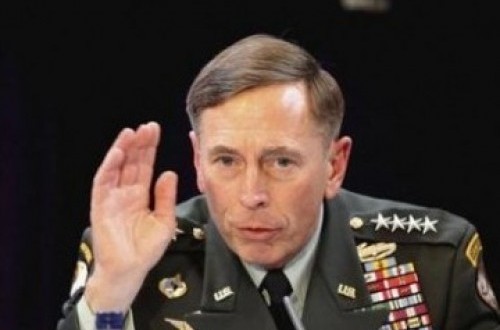
JAKARTA — Former US Central Intelligence Agency director General (Retd) David Petraeus has warned that the US military and NATO member states have not made the fundamental changes needed to confront modern warfare, which is increasingly dominated by unmanned aircraft, or drones. The Russia-Ukraine war has demonstrated a revolutionary change in the conduct of battle, he said, but Western armed forces have been too slow to adapt their doctrine, organisation and weapons systems.
Petraeus delivered the warning at an American Primary Aluminum Association event in Washington on 16 October 2026. His remarks drew renewed attention after US defence publication Defense News published an in-depth report on Friday (23 October 2026).
Petraeus said the war in Ukraine had shown that drones and unmanned weapons systems were no longer merely supplements to conventional combat power. They had become central to reconnaissance, targeting and the destruction of enemy forces.
“This is a war of unmanned systems. Tanks can no longer survive on a battlefield like that,” Petraeus said, according to Defense News.
The former commander of US Central Command (CENTCOM) and US and NATO forces in Afghanistan said the changes on the Ukrainian battlefield were far more fundamental than the introduction of new weapons technology.
In his view, no NATO country, including the United States, had carried out the comprehensive institutional transformation demanded by the evolution of warfare in Ukraine.
“No NATO country, not even the United States, has made the revolutionary and urgent institutional changes that should be made based on what we are seeing in Ukraine, which is the future of warfare,” Petraeus said.
He stressed that the United States needed a new concept of warfare affecting every part of its armed forces, from the organisation of combat units and education and training to weapons procurement, personnel policy and the management of military bases.
His assessment does not mean that the United States and NATO lack drones or counter-drone capabilities. Petraeus’s criticism is primarily that the institutional changes needed to prepare for warfare involving unmanned systems on a massive scale have not been implemented comprehensively.
Ukraine and Russia deploy thousands of drones every day
Petraeus said Western military circles still often underestimate the scale of drone use in the Russia-Ukraine war.
He estimated that each side used around 10,000 drones a day. The figure illustrates the demand for unmanned systems in modern combat, although it is Petraeus’s estimate and should not be treated as independently verified daily operational data.
Petraeus also said unmanned systems were responsible for more than 90 per cent of Russian casualties in some frontline areas of Ukraine.
That figure should be understood as an assessment made by Petraeus. The proportion of personnel casualties is not the same as the proportion of targets attacked using drones.
Ukraine’s Defence Ministry has previously said that drones were used in more than 90 per cent of attacks on enemy targets recorded in its military operational system. Those targets include personnel, combat vehicles, artillery systems, logistics facilities and Russian electronic warfare equipment.
In an official report on 22 June 2026, Ukraine’s Defence Ministry said its unmanned systems units had recorded more than 800,000 verified strikes on Russian targets since the start of the year. Ukraine estimated that about 167,000 Russian personnel had been killed or seriously wounded in those operations.
The figures are operational claims by the Ukrainian government and have not been independently verified. However, the reported number of attacks illustrates the central role drones play in Ukraine’s military strategy.
Small unmanned aircraft, including first-person-view (FPV) drones, can be used to monitor troop movements and attack vehicles or defensive positions. They enable military units to carry out precision strikes using weapons that are relatively inexpensive compared with some conventional systems.
At the same time, the widespread use of drones has made the movement of armoured vehicles and concentrations of troops increasingly vulnerable to detection.
Petraeus said this development was changing the role of conventional military equipment that had been a mainstay of modern armed forces for decades.
Tanks, armoured fighting vehicles and artillery operating in the open face the threat of constant surveillance and drone attacks from multiple directions.
Nevertheless, the vulnerability of armoured vehicles in Ukraine does not mean that tanks have lost all military utility. Their effectiveness increasingly depends on counter-drone protection, electronic warfare, concealment and coordination with other combat elements.
Ukraine builds a new system of warfare
Petraeus said Ukraine’s most important advantage was not simply the number of drones it produced, but its ability to integrate the technology into its command-and-control system.
In an interview with CBS News in April 2026, Petraeus explained that Ukraine had developed an operational system linking reconnaissance, target identification, decision-making and strikes within a single network.
One important component is DELTA, a digital battlefield management platform used by the Ukrainian military to integrate information from various sources.
The system enables commanders and operators to build a picture of the battlefield, identify enemy positions and coordinate strikes more quickly.
Petraeus said the ability to combine all these technologies was one of the strengths of Ukraine’s military innovation.
In his assessment, the integrated reconnaissance and strike system had improved Ukrainian forces’ ability to monitor enemy movements near the frontline.
The shift has also been supported by the creation of a dedicated military branch responsible for unmanned systems.
In 2024, Ukrainian President Volodymyr Zelenskyy ordered the creation of the Unmanned Systems Forces as a separate component of the armed forces.
The dedicated unit means drone capabilities are not treated solely as a support function for land or air forces, but are managed through their own organisational structure.
Petraeus said Ukraine’s approach should provide an important lesson for NATO countries.
Military innovation, he said, cannot be achieved simply by adding dozens of drones to existing combat units. The required changes could include replacing or reorganising some conventional units as formations specifically designed for warfare using unmanned systems.
Source: jawawa.id (https://jawawa.id/newsitem/former-cia-chief-us-and-nato-militaries-are-not-ready-for-drone-warfare-1792831893)
Originally published by Republika (https://news.republika.co.id/berita/tne5w6451/eks-bos-cia-militer-amerika-dan-nato-belum-siap-hadapi-perang-drone), translated from Indonesian