
Former Chinese Premier Zhu Rongji Dies at 97
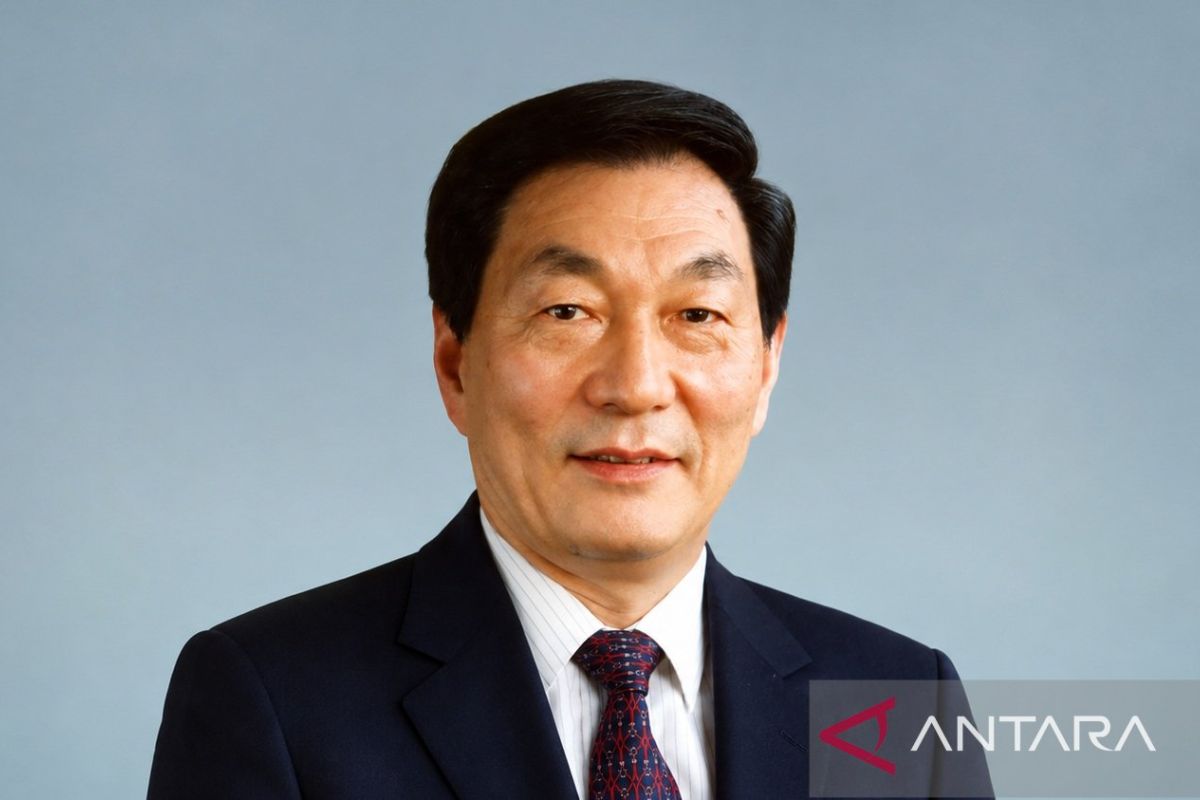
Former Chinese Premier Zhu Rongji died in Beijing on Wednesday at 11:06 a.m. local time at the age of 97 following an illness, according to state media. Zhu served as premier from 1998 to 2003 and was a key figure in China’s accession to the World Trade Organisation (WTO), opening the country’s factories to international markets and attracting foreign investment.
Serving alongside then-President Jiang Zemin, Zhu pioneered reforms to the fiscal and taxation systems. He carried out a major overhaul of the tax regime, focusing on a fairer distribution of the tax burden, simplifying the tax system, and introducing a rational tax-sharing system between central and local governments. He also actively promoted financial system reforms, further regulated the functions of the central bank, deepened the reform of commercial banks, the foreign exchange system, and the securities and futures markets, and pushed for the establishment of a unified and open national financial market system with orderly competition and strict regulation.
Zhu made the reform of state-owned enterprises the main link in the economic structural reform. He stressed the need for maximum efforts to promote the re-employment of laid-off workers and to strengthen the social security system. He also advanced housing reform, gradually replacing the employee housing allocation system with monetary housing subsidies and helping to perfect a multi-tiered urban housing provision system with affordable housing as its main component. These changes helped keep China’s economic growth above 8 per cent per year during the 2000-2010 period, with peak growth reaching 14.2 per cent in 2007.
Zhu was born on 23 October 1928 in Changsha, Hunan Province, the same central Chinese province that produced Chairman Mao Zedong. He studied in the Electrical Engineering Department of Tsinghua University in Beijing from 1947 to 1951 and joined the Chinese Communist Party (CPC) in October 1949. From 1951 to 1983, Zhu worked in various locations and held several positions related to economic affairs in local and central government departments and agencies. He was branded a “rightist” in 1957 for praising reforms in Hungary and Yugoslavia and was exiled to the countryside to perform manual labour during the Cultural Revolution (1966–1976). His name was rehabilitated in 1979, and his career took off, leading to his appointment as deputy director of the now-defunct State Economic Commission from 1983 to 1987.
Between 1987 and 1991, he successively served as deputy secretary of the CPC Shanghai Municipal Committee, mayor of Shanghai, and secretary of the CPC Shanghai Municipal Committee. In Shanghai, he pushed the city government to adjust its industrial structure, cultivate new development strengths, enhance international competitiveness, and pursue an export-oriented development path. In 1991, Zhu was appointed vice premier of the State Council, following his former superior Jiang Zemin, who had been summoned to Beijing by Deng Xiaoping to become party leader. In October 1992, Zhu was elected to the Political Bureau of the CPC Central Committee and its Standing Committee, and led the day-to-day work of the State Council.
In June 1993, he concurrently served as Governor of the People’s Bank of China, actively promoting reform and opening-up policies and China’s modernisation drive. He organised various measures to tackle the debt chain problem known as “triangular debts.” He also studied and developed plans to improve the macroeconomy, making a significant and effective contribution to cooling an overheating economy, controlling inflation, and achieving a “soft landing.” He pushed for the rectification and restoration of order in the fiscal and taxation sectors, accelerated fiscal and tax reforms, and helped improve China’s financial regulatory system. In September 1997, Zhu was re-elected to the Political Bureau of the CPC Central Committee and its Standing Committee.
Zhu broke with a leadership culture that considered itself infallible by publicly acknowledging official failures and being willing to take responsibility for them. He once apologised on national television for his cabinet’s failure to protect the public following an explosion at a school in southern China that killed at least 42 people, mostly children. In March 1998, Zhu was appointed Premier of the State Council. Facing the impact of the Asian financial crisis and catastrophic floods in China, he implemented the Party Central Committee’s plan to shift from a moderately tight fiscal and monetary policy to a proactive fiscal policy and a prudent monetary policy, expanding domestic demand and deepening reforms in key areas, thereby maintaining stable and rapid economic growth.
Zhu led the effort to secure WTO membership after marathon negotiations that had begun in the 1980s. Membership cemented free trade as a national commitment and gave Zhu a tool to force local officials to stop granting special protection to certain companies. His efforts nearly failed during a visit to Washington in 1999 when the Clinton administration rejected the offer as inadequate, while his political opponents at home accused him of making too many concessions. Zhu persevered, however, and China officially joined the organisation in December 2001.
Source: jawawa.id (https://jawawa.id/newsitem/former-chinese-premier-zhu-rongji-dies-at-97-1786600445)
Originally published by Antara (Indonesian) (https://www.antaranews.com/berita/5692184/mantan-pm-china-zhu-rongji-meninggal-dunia-pada-usia-97-tahun), translated from Indonesian