
Former BPK Chairman Proposes Two Options to DPR for Corruption Law Revision
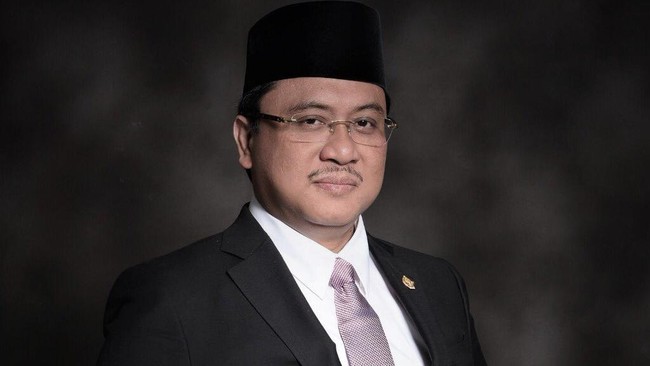
The Legislation Committee of the House of Representatives (DPR) is currently examining opportunities for a limited revision of Law Number 31 of 1999 concerning the Eradication of Corruption Crimes. This move comes in response to Constitutional Court Decision Number 28/PUU-XXIV/2026 regarding the authority for calculating and determining state losses.
During a Public Hearing held on Tuesday (19/5/2026), the Committee hosted two key experts: Agung Firman Sampurna, Chairman of the Audit Board of Indonesia (BPK) for the 2019-2022 period, and Alexander Marwata, Vice Chairman of the Corruption Eradication Commission (KPK) for the 2015-2024 period.
In his presentation, Agung highlighted inconsistent regulations, particularly regarding Article 32 of Law Number 31 of 1999, which often leads to multiple interpretations in practice, specifically concerning the mechanism and authority for determining state losses. “As a result, overlapping authorities and dualistic interpretations arise, which risk weakening legal certainty in the proof of corruption crimes,” Agung stated.
He emphasised that the BPK is an independent state institution responsible for auditing the management and accountability of state finances. As a ‘Supreme Audit Institution’, the BPK possesses the authority to assess and determine state losses. To strengthen the harmony of the national legal system and clarify the BPK’s constitutional authority, Agung provided two policy recommendations to the DPR Legislation Committee.
His first option is a limited amendment to Law Number 31 of 1999. He suggested updating the norms within Article 32 and its explanations to align with constitutional developments and the state financial law system. The proposed changes would ensure that:
The assessment and determination of state losses are conducted according to the BPK’s constitutional authority as regulated in Article 23E paragraph (1) of the 1945 Constitution.
The law aligns with Article 10 paragraph (1) of Law Number 15 of 2006 regarding the BPK, which grants the BPK the authority to assess and/or determine the amount of state losses.
The law adheres to Supreme Court Circular (SEMA) Number 4 of 2016, which affirms the BPK as the authorised agency for declaring state losses, and aligns with Constitutional Court Decisions Number 25 of 2016 and Number 28 of 2026.
Agung noted that this approach would achieve explicit and systematic synchronisation between legal regimes by removing ambiguous norms in the Anti-Corruption Law.
The second option involves a limited amendment to Law Number 15 of 2006 by adding a provision in the closing section. This single article would state that upon the law’s commencement, Article 32 and its explanations in the Anti-Corruption Law are declared invalid and shall be adjusted to the provisions for determining state losses as regulated under the BPK Law.
According to Agung, this second approach serves as a concise and focused solution, as it achieves harmony directly through the legislation governing the BPK’s authority as a Supreme Audit Institution, thereby eliminating regulatory dualism and ensuring all mechanisms for determining state losses refer to the constitutional framework of state financial auditing.