
Former Agent: Secret Service Failed to Protect Trump Despite Shooter Being Detected
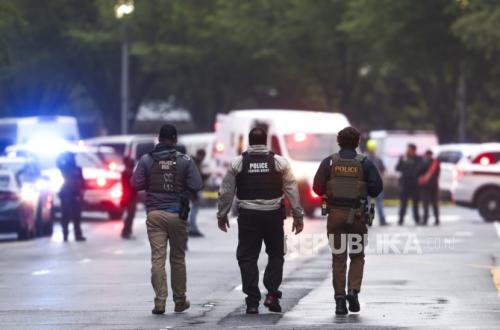
A former Secret Service agent, Tim Miller, has assessed that the US presidential security agency failed in its primary mission while protecting Donald Trump during the 2024 shooting incident in Butler, Pennsylvania. According to him, the failure occurred even though the perpetrator, Thomas Matthew Crooks, had been detected carrying a weapon several minutes before opening fire. “The Secret Service has a no-fail mission. Yet they failed in Butler. The failure occurred in fundamental aspects, such as securing the line of sight, controlling the building roof, intelligence coordination, and tactical coordination,” Miller said in an interview with GB News. Miller’s assessment is reinforced by an official report from the Office of Inspector General (OIG) of the US Department of Homeland Security, released on Thursday. The report revealed that the Secret Service knew Thomas Matthew Crooks was carrying a weapon and was in a shooting position approximately two minutes before eight shots were fired at Trump. According to the chronology in the report, local law enforcement first reported the presence of a suspicious man on the roof of a building at 6.09 pm local time. However, about two minutes later, at exactly 6.11 pm, Crooks fired eight shots at Trump, with one bullet grazing the US president’s right ear. The OIG report concluded that the failure was triggered by weak internal policies, limited intelligence information sharing, and poor coordination between the Secret Service and local law enforcement. As a result, information regarding the developing threat on the ground was not immediately relayed to Trump’s protective detail. One of the key findings in the report was the Secret Service’s failure to detect Crooks’ drone, which was used to survey the campaign site before the shooting occurred. The OIG also found an error by an operator who had received only about 20 minutes of training, while a damaged ethernet cable was only repaired about 30 minutes after the perpetrator completed his reconnaissance. The report was compiled based on 92 interviews, a review of more than 70,000 documents, and a reconstruction of the shooting site using a three-dimensional (3D) model. The OIG also revealed that Trump’s campaign team had previously rejected a Secret Service proposal to park a van that could have blocked the perpetrator’s line of sight. The vehicle was deemed too close to Trump’s position, raising concerns it would interfere with camera angles during the campaign event. Furthermore, communication coordination with local law enforcement was also deemed problematic. The Secret Service did not receive 102 radio transmissions from local police because communications were conducted through separate communication rooms. During the same period, Trump’s security team received only five phone calls and three text messages regarding Crooks. In fact, several messages mentioning that the perpetrator was carrying a firearm never reached the president’s protective detail. “The limited communication regarding the suspicious person did not create a sense of urgency for Secret Service personnel to immediately convey that information to President Trump’s protective detail,” the OIG report concluded.