
Forging mental resilience with a skateboard
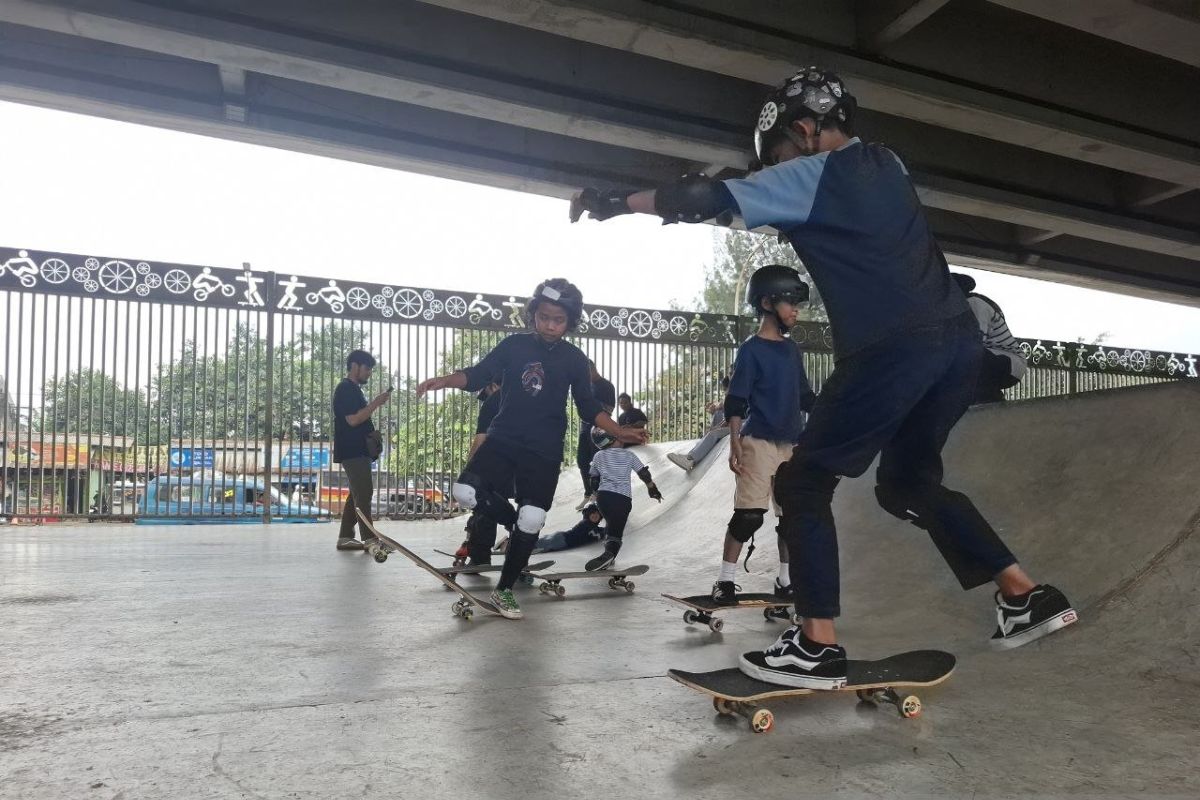
Before a child successfully lands an ollie, the most basic jump in skateboarding, they must fall hundreds of times on average. Hundreds, not dozens. The board slips away, knees hit the concrete, ankles twist, yet they stand up, reposition their feet, and try again. The Pullias Center for Higher Education at the University of Southern California began researching skateboarding not because of its debut at the Tokyo 2020 Olympics, but because of this very process of falling and getting back up. They found that the repetition of physical failure occurring before competition, not during it, is the core of what makes this sport different from almost all other sports commonly known to children. When gliding on a board, a child’s brain is not resting. It processes many things simultaneously: where the body should lean, how hard the foot must press, when to jump, and how to land. All of this happens in less than a second, repeatedly, every training session. This repetition forms new connections in the brain. Each time a child fails and tries again, their neural pathways strengthen, until the point where a movement that once required intense thought eventually flows automatically, like pedalling a bicycle. Two systems in the body receive a rigorous workout they rarely get from other sports. First, the balance system in the inner ear, which continuously detects the direction and speed of body movement. Second, signals from muscles and joints that inform the brain of the position of each body part, even without looking. When stimulated intensely and repeatedly, these two systems have been proven to help calm the nervous system. For children with ADHD whose brains struggle to find a point of calm, skateboarding provides the precise stimulation needed to get there. What makes these findings even more compelling is that the part of the brain regulating balance is not solely about balance. Research from the Albert Einstein College of Medicine published in the journal Science in 2019 proved that the cerebellum, the part of the brain at the back of the head long thought to only manage motor coordination, has a direct pathway to the brain’s dopamine centre. Dopamine is the chemical that makes the brain feel satisfied and motivated. This means that every time a child successfully lands a trick, after dozens or hundreds of failures, it is not just a feeling of happiness that is triggered; their brain is literally retraining its motivation system. The most unexpected finding came from a children’s service agency in Canada. Hull Services in Alberta handles children who have experienced severe trauma, violence, neglect, and behavioural disorders. The agency uses a neuroscience-based therapeutic approach developed by psychiatrist Dr Bruce Perry. This approach is built on one simple principle: that the brain develops from the bottom up.